
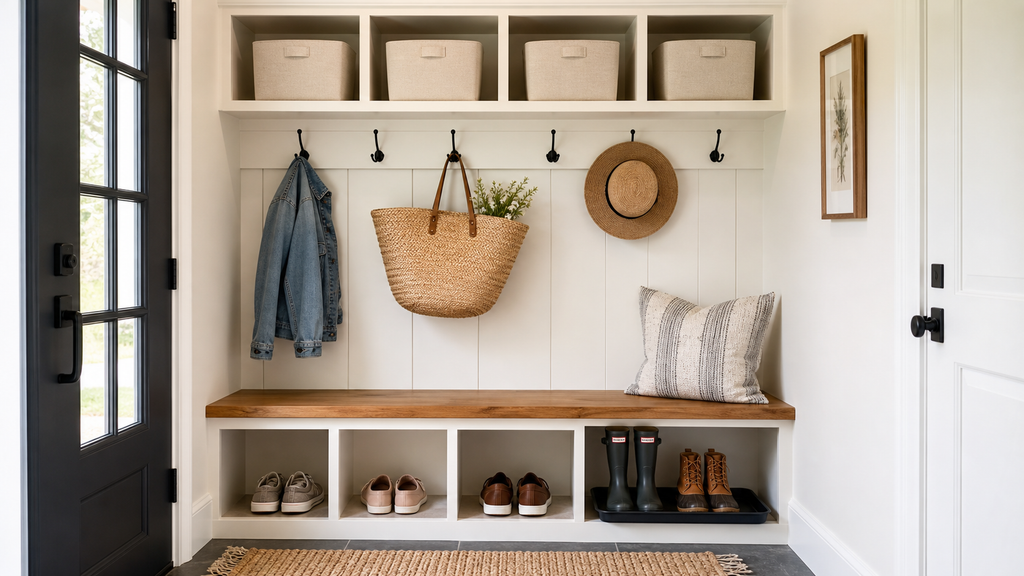
Smart Mudroom & Drop Zone Ideas for Small Spaces (Step-by-Step)
💡 Affiliate Disclosure: PetchCrea is reader-supported. When you buy through links on our site, we may earn an affiliate commission at no additional cost to you. As an Amazon Associate, I earn from qualifying purchases. We only recommend products that genuinely help you optimize and organize your space.
Your home’s entryway or back garage door is the ultimate transition point. It is where daily life collides with home order: muddy shoes, heavy backpacks, damp raincoats, dog leashes, mail, and keys all enter at once. Without an intentional storage system, this entry point quickly devolves into a chaotic dumping ground.
The secret to keeping your entryway clean is establishing a designated Drop Zone.
Whether you have a spacious mudroom suite, a narrow pass-through hallway off the garage, or a small laundry room combo, a well-planned drop zone gives every incoming item a specific home the exact second you step through the door.
In this guide, you will learn how to design a high-functioning entryway drop zone using smart cubbies, heavy-duty hooks, shoe benches, and separate wet/dry zones that fit even the tightest home footprints.
5 Essential Elements of a High-Functioning Drop Zone
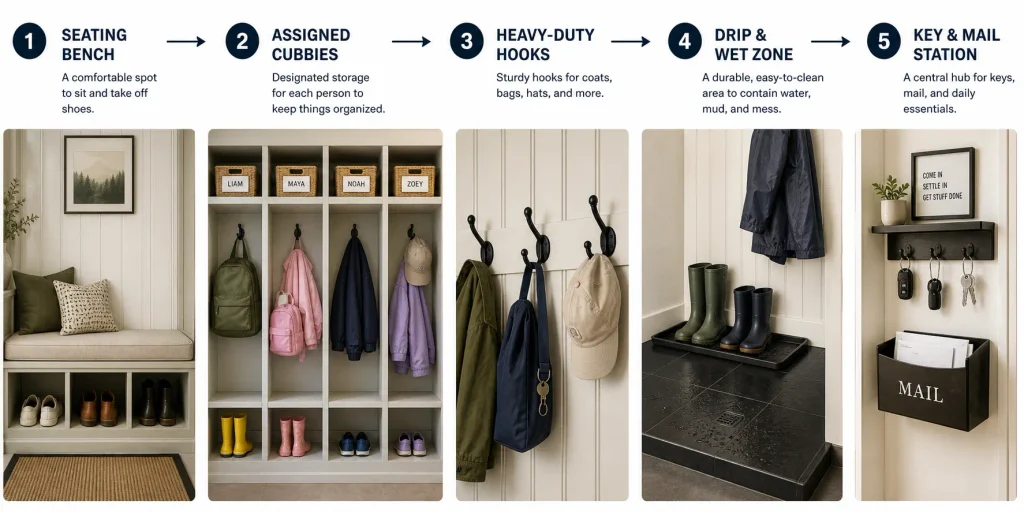
A great mudroom setup does not need to take up a whole room. To stop entryway clutter permanently, your drop zone should incorporate five functional elements arranged in sequence:
1. Seating & Shoe Bench
Having a place to sit down while putting on or removing shoes is essential. A simple 24- to 36-inch wide bench creates a natural pause point upon entry, stopping family members from walking through the house in dirty footwear.
Keeping entryways free of scattered shoes and loose clutter aligns with CDC home fall-prevention guidelines, ensuring walkways remain clear for family members carrying heavy bags.
2. Assigned Family Cubbies & Bins
Assigning one dedicated cubby or storage bin to each family member prevents daily gear from mixing together. Use woven wicker baskets or canvas bins inside cubbies to hold seasonal accessories like winter hats, gloves, scarves, and dog walking gear.

- No More Wrinkly Floppy Woven Baskets: Prepare to have your socks knocked off (and then neatly organized), when you take …
- 28% More Storage Space: When compared with round storage bins of the same size (11”x11”), our fabric storage cubes offer…
- Soft and Gentle Organizer Bins: Crafted from high-quality materials, our storage bins are oh-so-sturdy and cute, and rea…
3. Heavy-Duty Wall Hooks & Pegs
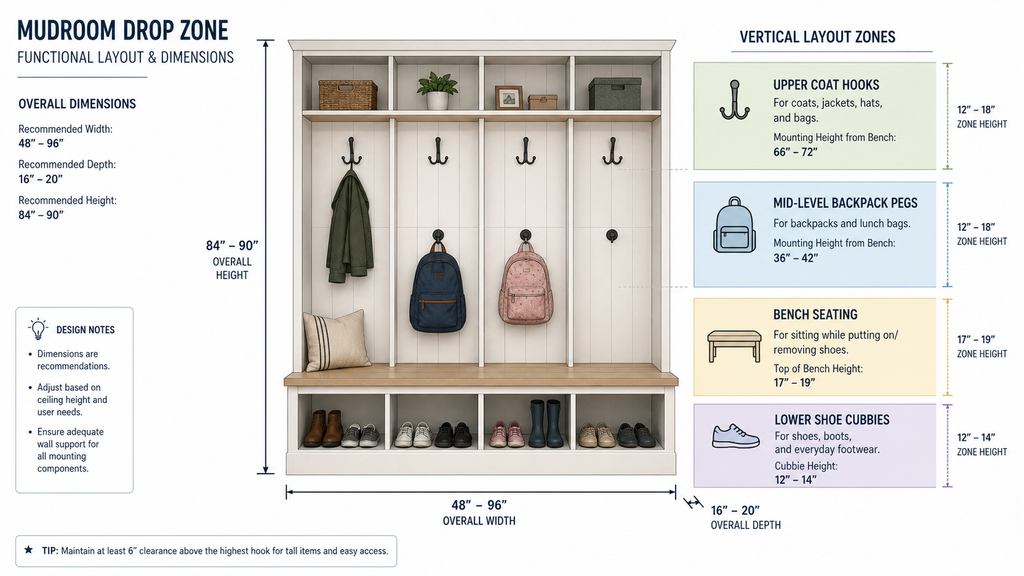
Hooks are much faster and easier to use than traditional coat hangers—especially for children. Install heavy-duty wall-mounted hooks at two different heights: upper hooks (mounted 60 to 66 inches high) for adult coats, and lower hooks (mounted 36 to 48 inches high) so kids can hang up their own backpacks and jackets.
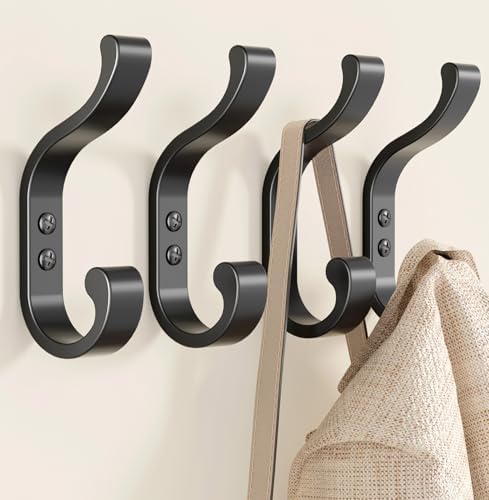
- Heavy Duty Hooks- Hold up to 30 pounds without bending or breaking. These wall-mounted coat hooks are good for heavy win…
- Never rust – These wall mounted coat hooks have a reinforced exterior coating that prevents rust and corrosion even in h…
- Install in seconds – Coat hooks wall mounted, super easy to install. Just drill / install wall anchors / install screws …
4. Separate Wet Zone & Boot Tray
Never place soaking wet umbrellas or muddy snow boots directly next to dry fabric backpacks. Designate a separate « wet zone » featuring a raised rubber boot tray with drainage ridges. This allows air to circulate around wet soles, drying footwear while containing slush and mud.

- Keep Floors Clean & Dry: This boot tray for wet shoes traps water, mud, and snow, protecting your floors from messy boot…
- Heavy Duty & Non-Slip: The surface is made of polyester material and the backing is reinforced rubber, our shoe mat tray…
- Easy to Clean: Just rinse or wipe clean. Indoor/outdoor use. The waterproof shoe drying mat helps keep your entryway cle…
5. Keys, Mail & Tech Charging Station
Keep daily essentials like keys, sunglasses, wallets, and mail from colonizing your kitchen counters by placing a small wall-mounted pocket or tabletop tray right at eye level beside the door. Adding a USB charging dock turns this spot into a convenient mobile phone landing pad.
For entryways that double as cleaning storage, store footwear sprays and surface cleaners in upper cubbies and select products certified by the EPA Safer Choice program to keep homes chemical-safe.
Layout Configurations for Entryways & Combos
Matching your drop zone configuration to your architectural footprint ensures smooth traffic flow without creating hall bottlenecks.
1. The Single-Wall Nook Layout
Best for narrow entry hallways or small foyer alcoves. This compact setup uses a single 3- to 5-foot wall section, combining a slim shoe bench below with a floating shelf and coat hook board above.
2. Combined Laundry & Mudroom Pass-Through
Common in homes where the primary family entrance passes through the laundry room from the garage. The key to a successful laundry/mudroom combo is separating dirty and clean zones:
- Dirty Entrance Zone: Position shoe benches, boot trays, and coat hooks right beside the garage entry door.
- Clean Processing Zone: Position washing appliances, folding counters, and clean linen cabinets further down the room path.
3. Garage Corridor / Mud Alcove
If interior entryway space is extremely tight, build your drop zone inside the attached garage directly adjacent to the interior access door. Use weather-resistant modular shelving and heavy-duty steel pegboards to store sports gear and outdoor boots.
Open Cubbies vs. Enclosed Tall Cabinets
Choosing between open cubbies and closed cabinetry comes down to routine speed versus visual clutter.
| Feature | Open Cubbies & Hook Rails | Enclosed Tall Utility Cabinets |
|---|---|---|
| User Convenience | Instant Access: Items can be hung or grabbed in one second without opening doors. | Requires opening cabinet doors; items can accumulate behind closed doors. |
| Visual Appearance | Displays coats and bags; requires neat baskets to look tidy. | Sleek & Hidden: Completely conceals bulky gear, brooms, and vacuums. |
| Airflow & Drying | Excellent: Wet coats and shoes air-dry quickly in open space. | Restricted airflow; wet items must be dry before storing inside. |
| Best For | High-traffic family doors, kids’ daily gear, and small spaces. | Sleek front foyers, tall broom/vacuum storage, and formal entries. |
CHECK OUR LAUNDRY ROOM ORGANIZATION GUIDE
Durable Flooring & Finish Selection
Entryways take a beating from foot traffic, water splatters, and dragged equipment. Selecting moisture-resistant, easy-to-clean materials prevents premature wear.
- Flooring: Choose hard, non-porous flooring like Luxury Vinyl Plank (LVP), porcelain tile, or sealed natural brick. Avoid unsealed hardwood or water-sensitive laminate near entry doors.
- Washable Runners: Place a low-pile, washable runner rug or jute mat in front of the bench. This traps grit, damp footprints, and dirt before it reaches interior living spaces.
- Wipeable Wall Paint: Use semi-gloss or satin finish interior paint on mudroom walls. Lower-grade flat paints absorb scuffs from dirty shoes and backpacks, whereas satin finishes wipe clean easily with a damp cloth.
Common Entryway Mistakes to Avoid
- ⚠️ Putting Wet Gear Next to Dry Backpacks: Stacking soaking wet coats or boots under fabric school bags causes damp odors and mold.
- ⚠️ Omitting a Bench: Forcing family members to balance on one foot while removing shoes leads to shoe prints on walls and kicked-off piles on the floor.
- ⚠️ Buying Baskets Before Sorting Gear: Purchasing decorative bins before purging outgrown shoes and listing daily essentials results in wrong-sized storage.
- ⚠️ Mounting Hooks Too High for Kids: If children cannot reach the hooks easily, their coats and backpacks will end up on the floor every time.
Frequently Asked Questions (FAQ)
1. How much space do I need for a small entryway drop zone?
You can create an effective drop zone in a space as small as 3 feet wide by 15 inches deep. A narrow shoe bench with wall hooks and a top shelf above utilizes vertical height without blocking entry walkways.
2. How high should coat hooks be mounted in a mudroom?
Mount adult coat hooks at 60 to 66 inches above the floor. For young children, install a secondary row of lower hooks at 36 to 48 inches so they can hang up their own gear independently.
3. How do I prevent damp smells in a combined laundry and mudroom?
Ensure dirty athletic gear and wet footwear have open airflow to dry completely. Use a raised rubber boot tray, open wire or mesh storage baskets, and keep room relative humidity between 30% and 50%.
4. What is the best bench depth for a mudroom?
A comfortable shoe bench should measure 15 to 18 inches deep and sit 18 inches high from the floor. This provides stable seating without intruding into narrow hallway walkways.
5. How can renters create a drop zone without damaging walls?
Renters can use freestanding shoe bench racks, over-the-door pocket organizers, and heavy-duty peel-and-stick adhesive wall hooks to organize coats and bags without drilling holes.
Conclusion & Final Takeaway
An organized mudroom drop zone transforms your daily morning and evening routine. By combining sturdy seating, assigned cubbies, multi-height wall hooks, and a dedicated wet boot tray, you stop entryway chaos at the door and keep the rest of your home clean and calm.