Disclosure: As an Amazon Associate, I earn from qualifying purchases.
How to Organize a Small Kitchen: The Complete Guide
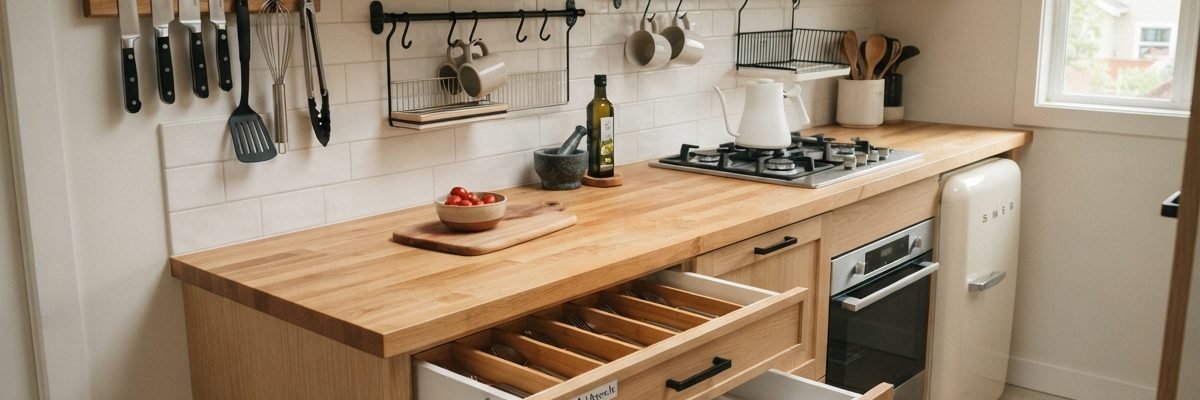
A small kitchen can feel overwhelming fast. When every cabinet is full, the countertop is crowded, and drawers are packed with random items, it becomes harder to cook, clean, and simply enjoy the space.
The good news is that a small kitchen does not need a full renovation to feel more functional. With the right organization system, you can make even a compact kitchen easier to use, easier to clean, and much more enjoyable day to day.
In this complete guide, you’ll learn how to organize a small kitchen step by step. We’ll cover cabinets, drawers, pantry storage, countertops, the refrigerator, vertical storage, and the best space-saving furniture ideas. You’ll also find practical tips, common mistakes to avoid, and links to more detailed guides for each area.
If you want to go deeper on specific kitchen zones, you can also read:
Quick Navigation
ToggleThe Biggest Challenges in a Small Kitchen
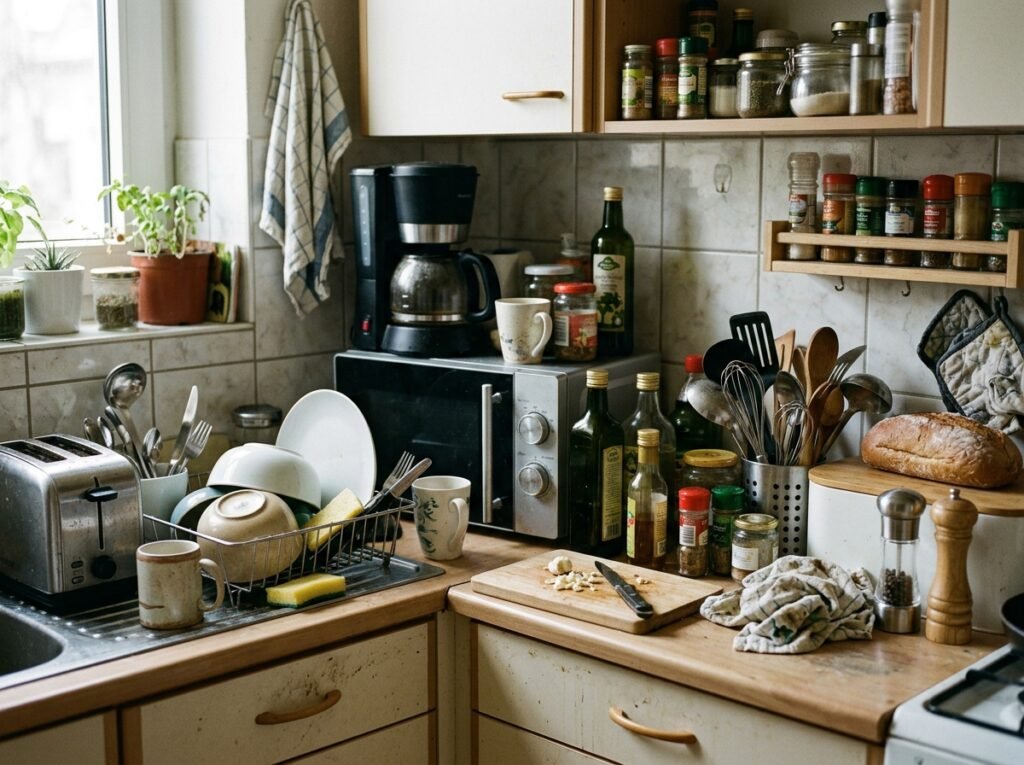
Small kitchens usually face the same problems: not enough cabinet space, drawers that fill up too quickly, limited countertop space, and very little room for appliances or extras.
The real issue is often not the size of the kitchen itself, but the lack of a clear system. When everything is stored without a plan, even a decent amount of space can feel chaotic. When each item has a purpose and a place, the same kitchen suddenly feels much more manageable.
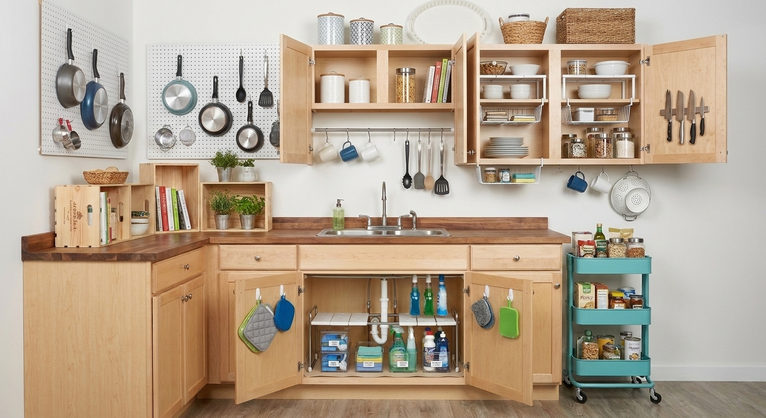
How to Organize Kitchen Cabinets
Kitchen cabinets should store the items you use often, in a way that makes them easy to reach and easy to put back.
1 . Start by sorting everything
Empty one cabinet at a time and group items by category:
-
plates and bowls
-
glasses and mugs
-
pots and pans
-
food storage containers
-
small appliances
-
baking tools
-
cleaning supplies
2. Store by frequency of use
Keep everyday items at eye level or in easy-to-reach lower cabinets. Store seasonal, rarely used, or backup items higher up or farther back.
3. Use simple organizers
Helpful cabinet tools include shelf risers, baskets, clear bins, stackable containers, and drawer inserts. The goal is not to add clutter with more products, but to create more visible and usable space.
For a more detailed guide, you can link this section to:
Cabinet Organization Ideas for Small Kitchens
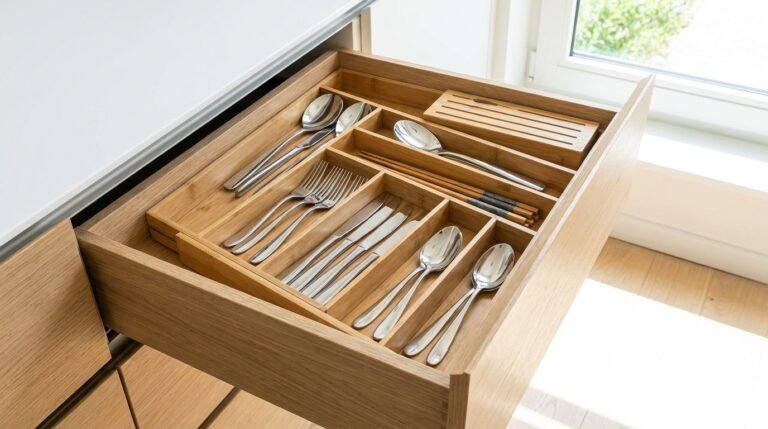
How to Organize Kitchen Drawers
Drawers often become the most disorganized part of a kitchen because they hold many small items that are easy to toss in quickly and forget about later.
-
Keep only what belongs in the drawer
Reserve drawers for items you use often, such as cutlery, cooking tools, measuring spoons, peelers, and other small kitchen essentials.
-
Divide by category
Try creating dedicated drawers for:
-
cutlery
-
cooking utensils
-
prep tools
-
small gadgets
-
Add drawer dividers
Dividers help stop items from mixing together and make it much faster to find what you need.
For a more detailed breakdown, link this section to:
How to Organize a Small Kitchen Drawer
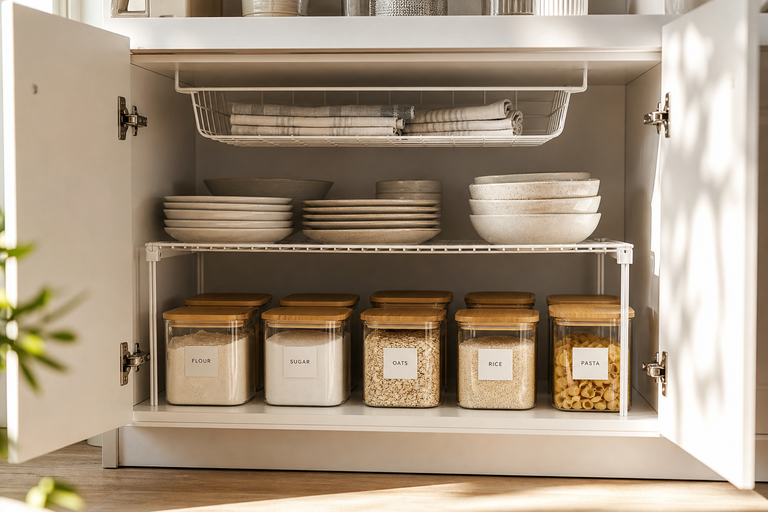
How to Organize a Pantry in a Small Kitchen
Even if you don’t have a full pantry, you can still create a pantry system inside cabinets, shelves, or a corner of your kitchen.
-
Group food by type
For example:
-
dry goods
-
snacks
-
breakfast items
-
canned foods
-
spices and seasonings
-
baking ingredients
-
Use clear containers
Clear containers make it easier to see what you have, reduce duplicates, and keep food looking neat. They also help you use vertical space more efficiently.
-
Label everything
Labels are especially useful if multiple people use the kitchen. They make it easier to put things back in the right place and help keep your system consistent.
How to Keep Countertops Clear
In a small kitchen, countertop space is precious. The more surfaces you leave open, the easier the kitchen will be to use.
Keep only daily-use items visible
Try to limit countertop items to things you use every day, such as a coffee maker, a kettle, or a fruit bowl. Everything else should be stored in cabinets, drawers, or vertical storage solutions.
Create zones
You can think of the countertop in terms of work zones:
-
prep zone
-
cooking zone
-
cleaning zone
-
breakfast zone
When every surface has a purpose, the kitchen feels more intentional and less crowded.
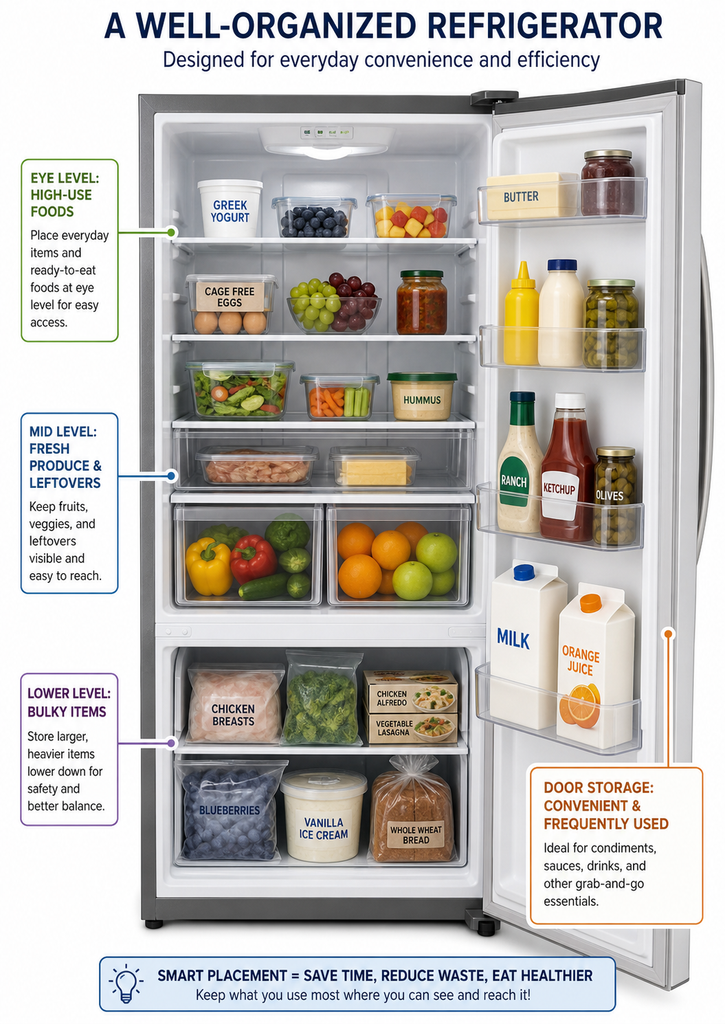
How to Organize Your Refrigerator
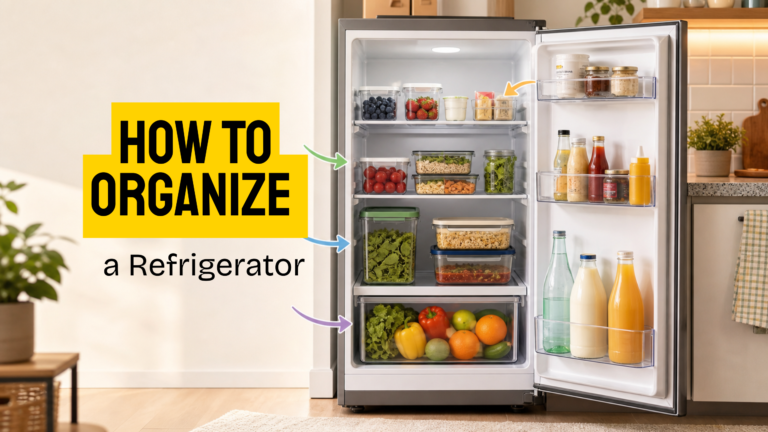
A well-organized refrigerator saves time, helps reduce waste, and makes meal prep easier.
-
Create simple fridge zones
-
dairy
-
drinks
-
leftovers
-
fruits and vegetables
-
condiments
-
items to use soon
-
Use bins and containers
Bins help group similar foods together and make the fridge much easier to clean. Transparent containers also make it easier to see what you already have.
-
Don’t overfill the shelves
A fridge that is too full is harder to navigate and more likely to hide forgotten food. Leave enough space for airflow and visibility.
Keeping leftovers visible is useful, but it is also worth knowing how long leftovers last in the refrigerator before deciding what stays.
For a more detailed article, connect this section to:
How to Organize a Refrigerator Without Wasting Space
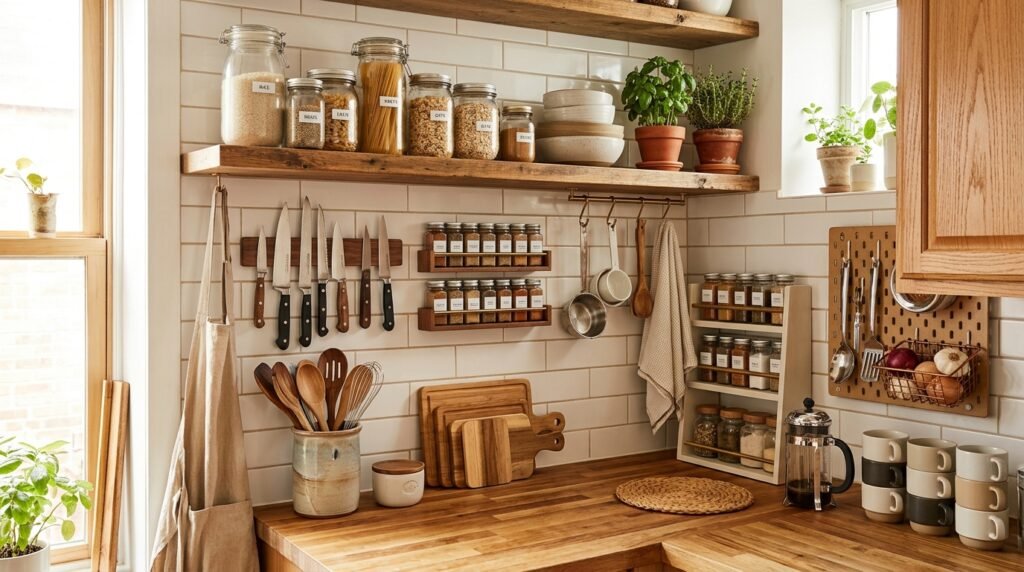
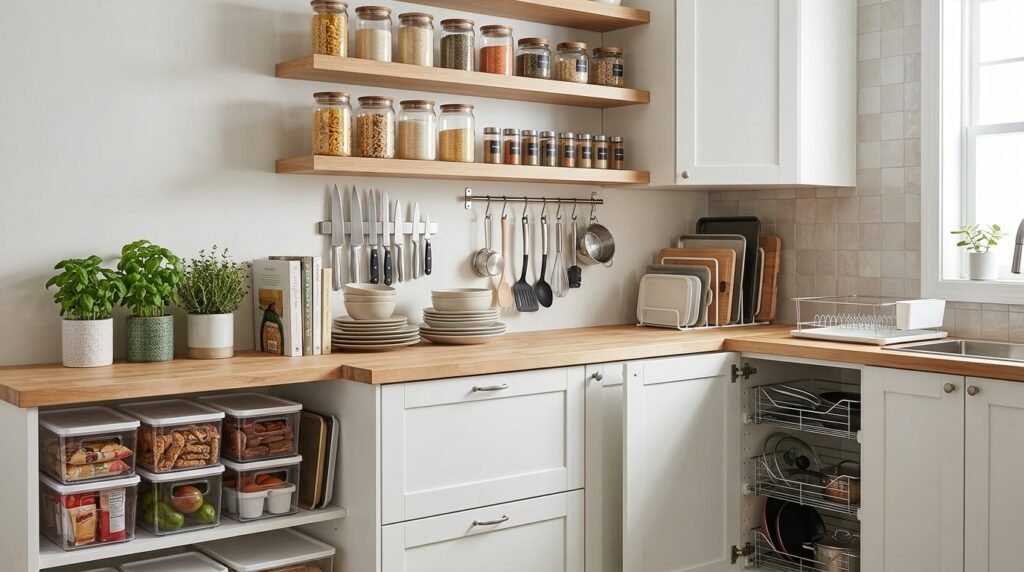
Vertical Storage Ideas for Small Kitchens
When floor space is limited, the best way to create more storage is to use the walls and height of the room.
Ideas that work well:
Vertical storage is one of the most effective ways to make a small kitchen feel more open while still increasing its capacity.
If you want to include a related guide, link to:
DIY Floating Shelves for Small Spaces
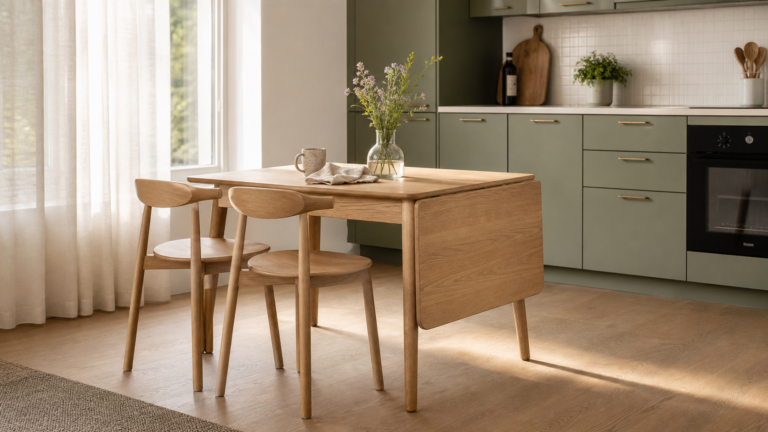
Best Furniture and Storage Solutions for Small Kitchens
In some kitchens, the right furniture can solve problems that storage products alone cannot.
Useful space-saving furniture ideas:
-
folding kitchen tables
-
slim rolling carts
-
drop-leaf tables
-
wall-mounted tables
-
multi-purpose storage units
-
narrow shelving units
If you want to support this section with a product-focused post, link to:
Best Kitchen Tables for Small Spaces
Step-by-Step Small Kitchen Organization Method
Step 1: Empty one area at a time
Start with a single cabinet, drawer, or shelf so the process feels manageable.
Step 2: Group similar items together
Keep matching items in the same category so you can see how much space each group really needs.
Step 3: Remove duplicates and unused items
Keep only what you actually use. If you have too many duplicates, your storage will fill up fast again.
Step 4: Assign a home for every category
Every item should have a clear place so it is easy to return after use.
Step 5: Add the right storage tools
Use the simplest tools that solve the actual problem. That might be a divider, a basket, a shelf riser, or a wall hook.
Common Mistakes to Avoid
-
buying organizers before decluttering
-
keeping too many items on the countertop
-
storing rarely used items in the easiest-to-reach spots
-
using too many different containers and styles
-
forgetting to measure before buying storage products
-
not using vertical space
-
mixing unrelated items in the same drawer or cabinet
FAQ
How do I organize a very small kitchen?
Start by decluttering, then create zones for cabinets, drawers, pantry items, countertop essentials, and vertical storage. A simple system works better than trying to make everything fit at once.
What should I store in kitchen cabinets?
Cabinets are best for dishes, cookware, food containers, dry food, and other items you use regularly but do not need on the countertop.
How do I maximize storage in a tiny kitchen?
Use wall space, shelf risers, clear bins, drawer dividers, and furniture that serves more than one purpose. The key is to reduce waste and make every inch easier to use.
How do I keep my kitchen counters clutter-free?
Only keep daily-use items on the countertop. Everything else should have a clear storage place in a cabinet, drawer, or wall-mounted organizer.
What is the best way to organize a small pantry?
Group similar foods together, use clear containers, label everything, and keep frequently used items visible and easy to reach.
Conclusion
Organizing a small kitchen is not about making it look perfect. It is about making the space easier to use every single day. When you sort by category, assign clear zones, use vertical storage, and remove unnecessary items, even a compact kitchen can become much more functional.