How to Organize a Refrigerator Without Wasting Space
Disclosure: As an Amazon Associate, I earn from qualifying purchases.
A refrigerator can be technically tidy and still feel impossible to use. One container ends up hiding behind another, the vegetables disappear into the back, and somehow the one thing you need is always underneath three bottles.
Learning how to organize a refrigerator is less about making every shelf look perfect and more about making limited space work harder for you.
There is no single layout that works for every home. A compact apartment fridge, a family refrigerator, and a fridge belonging to someone who mostly eats ready-made meals will all need different setups.
In this article, you’ll learn how to clear clutter, create practical zones, improve visibility, use awkward spaces wisely, and decide when a storage bin is actually worth the space it takes. The goal is simple: a refrigerator that is easier to use, not just nicer to look at.
Start by Taking Everything Out—But Don’t Turn It Into a Two-Hour Project
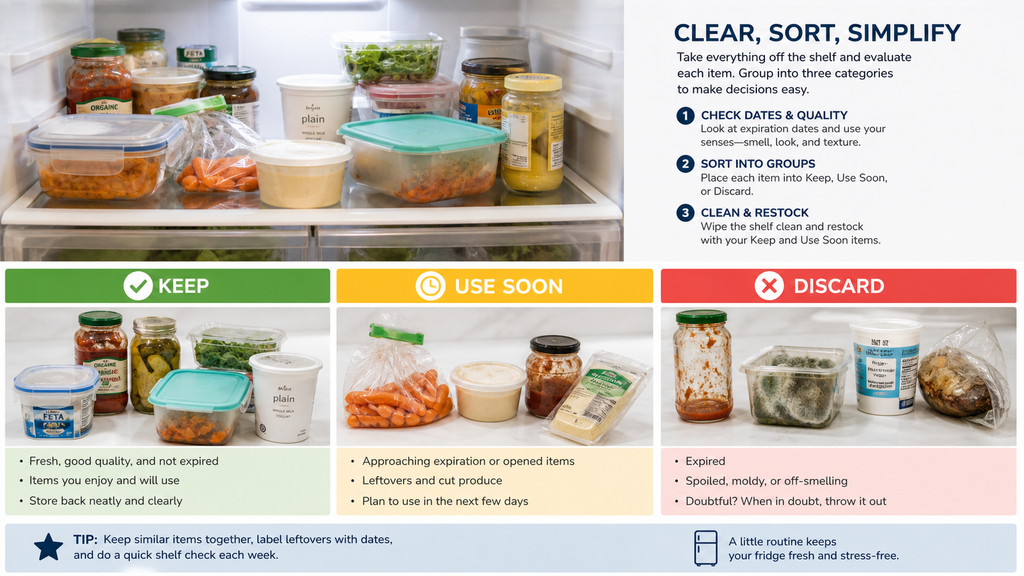
Before you figure out how to organize a refrigerator, you need to see what is actually taking up the space. The trick is not to turn this into a full kitchen excavation.
Empty one section at a time
If your counter is already crowded, do not dump the entire refrigerator onto it. Start with one shelf, drawer, or door compartment. Take everything out, wipe the area, and put back only what belongs there.
This approach is especially useful in a small kitchen because you always have somewhere to put things back. No temporary food mountain required.
Group food by what you actually use
As you work, make a few simple groups:
- Ready-to-eat food and leftovers
- Produce
- Breakfast items
- Drinks
- Sauces and condiments
- Ingredients for cooking
You do not need a perfect system yet. You are simply making the contents easier to understand.
Let go of “just in case” space
Check dates and be honest about mystery containers, duplicates, and ingredients that have been sitting untouched. If you keep something only because you might use it someday, it is worth asking whether that future use is realistic.
For a renter with almost no counter space, cleaning the top shelf and door compartments first may be enough. Put those items away before tackling the next zone.
No-purchase tip: Use whatever containers you already own to group similar foods. You may discover you need fewer organizers than you thought.
The goal is not an empty refrigerator. It is a refrigerator where the food you actually use has room to be seen and reached.
Once the clutter is under control, the next step is giving each part of the refrigerator a clear job.
Give Every Part of the Refrigerator a Job
A tidy refrigerator can still be frustrating when everything is technically organized but nothing is easy to find. The fix is surprisingly simple: instead of trying to make every shelf look balanced, give each area a clear job.
Think about how to organize a refrigerator in terms of access and size. The foods you reach for constantly should be easiest to see, while bulky or less-used items can take the less convenient spaces.
Use eye-level shelves for foods you reach for most
Your eye-level shelf is valuable real estate. Keep leftovers, breakfast foods, snacks, or frequently used ingredients here so they do not disappear behind taller containers.
A simple rule works well: the more often you use something, the easier it should be to see and reach.
Put taller or heavier items where the shelf allows
Do not fight fixed shelf heights. If a bottle or large container only fits comfortably on one shelf, let it have that space. Before rearranging, check the available height and depth so you are not constantly squeezing things underneath it.
Use lower shelves for larger or less frequently accessed foods
Lower shelves can handle bulkier containers or foods you do not need several times a day. This keeps large items from blocking the things you actually use.
Treat the refrigerator door as convenience storage
The door is useful for items that fit comfortably there, such as condiments or drinks, but every refrigerator is different. Avoid forcing bottles into narrow shelves just because an organization guide says they belong there.
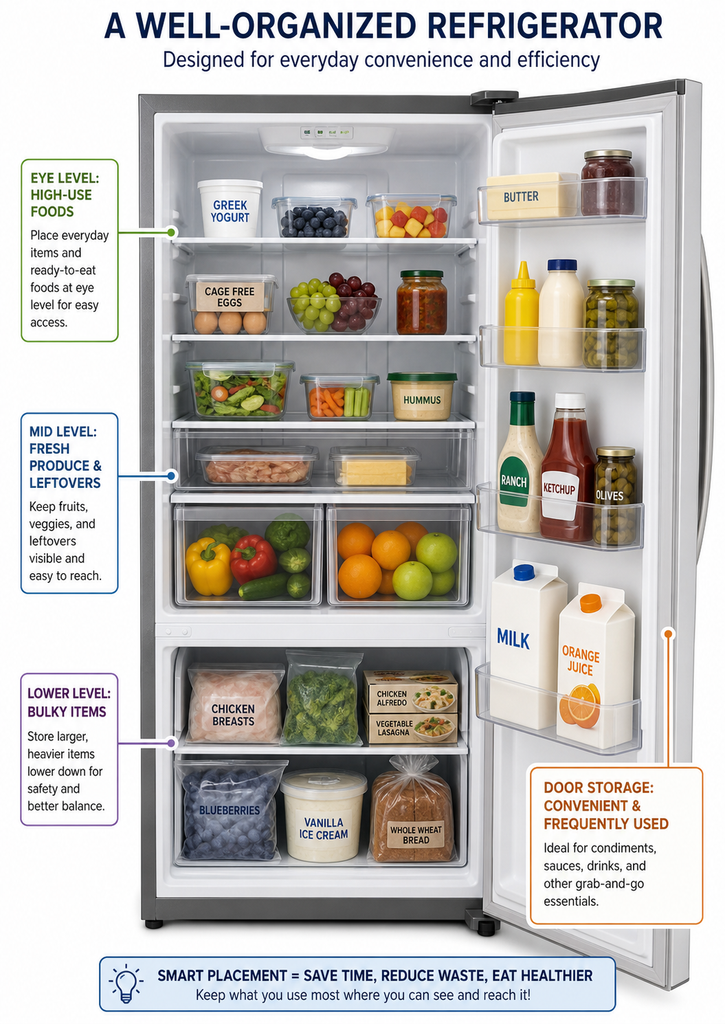
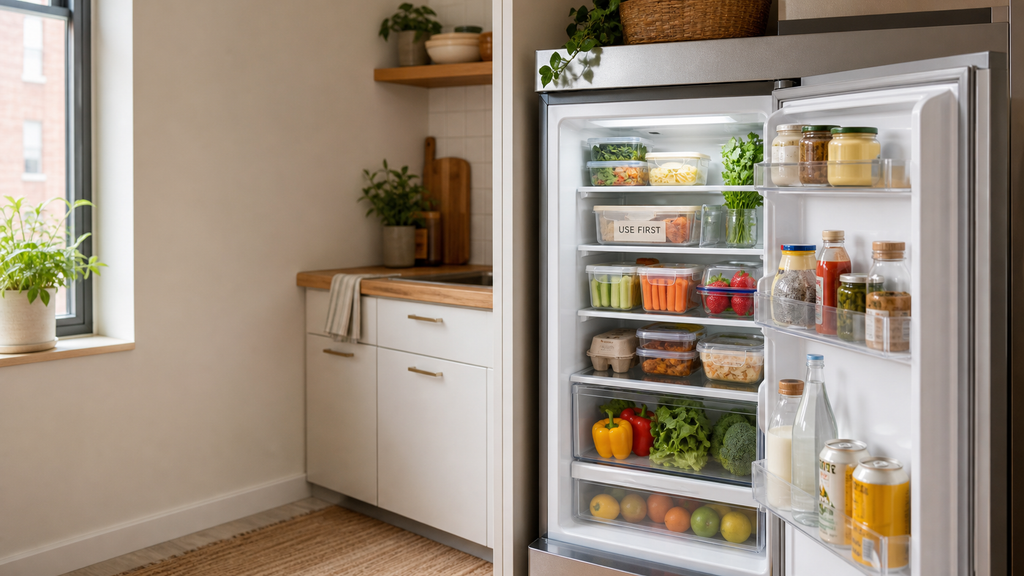
In a narrow apartment refrigerator, for example, the middle shelf can become the “use first” zone for leftovers and opened foods, while taller bottles stay elsewhere.
No-purchase tip: You do not need special refrigerator organizers to create zones. Move two or three existing items and test the layout for a few days before buying anything.
Once every area has a purpose, the next challenge is making sure food stays visible instead of getting buried behind everything else.
Organize the Fridge Around Real Life, Not an Instagram Fridge
A refrigerator can look perfectly arranged and still be completely wrong for the people using it. The best way to organize a refrigerator is to build around your routines, not around a picture-perfect layout.
Create a “use first” zone
Choose one clearly visible spot for leftovers, opened produce, and anything that needs to be eaten soon. It could be one corner of a shelf or the front of a drawer. The important part is that everyone knows what belongs there.
Keep everyday items together
Group foods that are used in the same routine. Breakfast foods might share a shelf, while lunch ingredients stay together for easy morning access. This saves you from opening the refrigerator and hunting through every shelf.
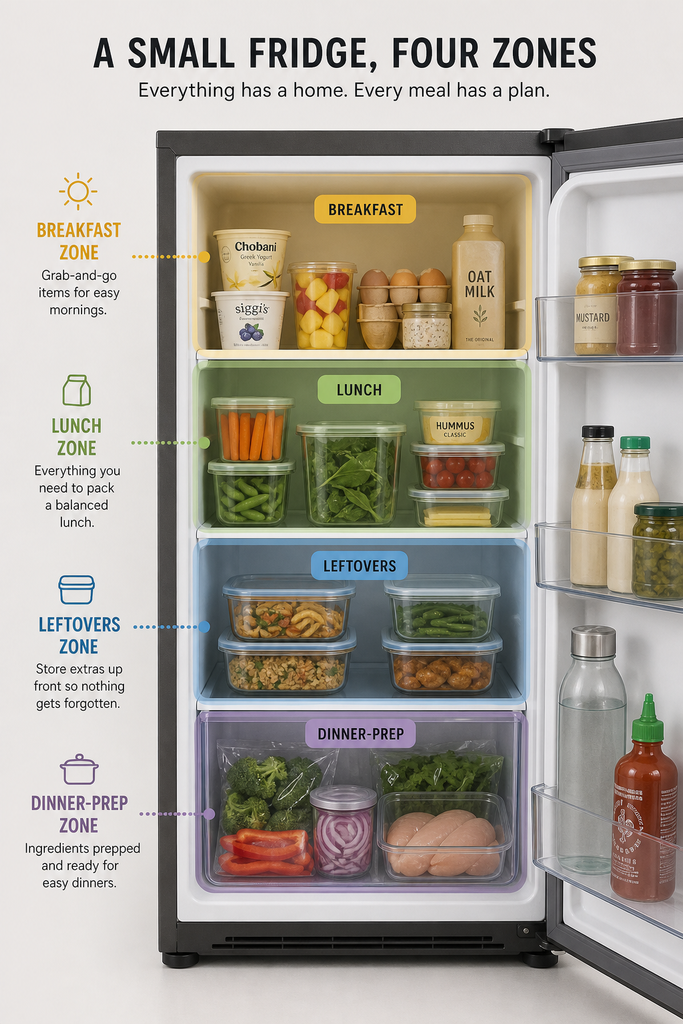
Store food according to your household’s habits
There is no single refrigerator organization system that works for everyone. A household that cooks every evening may need plenty of space for fresh ingredients, while someone who relies on ready-made meals may prioritize leftovers and grab-and-go foods.
For example, a couple in a small apartment might keep lunch ingredients together on one shelf because that is their busiest weekday routine. The setup may look less “perfect” than a staged fridge, but it works.
No-purchase tip: Try rearranging your current shelves for a few days before buying anything. Your habits will tell you more than an organization chart can.
Once your zones match real life, the next step is making sure food stays visible instead of getting buried behind other containers.
Make a Small Refrigerator Easier to See Into
A refrigerator can have plenty of space and still feel packed when food disappears behind other food. Deep stacks are especially troublesome in a small fridge because the container at the back is often the one nobody remembers exists.
Stop hiding food behind food
Try to keep smaller items toward the front and avoid building tall piles whenever you can. When you have several containers to store, arrange them so each one is at least partly visible.
Use shallow containers before large bins
Shallow containers can make leftovers and opened foods easier to spot without taking over an entire shelf. Before buying anything, check the shelf’s width, depth, and available height. A container that fits the width may still waste space if it is too deep or tall.
Keep similar items together without over-sorting
Group similar foods, but keep the system simple. For example, put leftovers together rather than creating separate categories for rice, vegetables, sauces, and snacks. Too many tiny categories can make putting groceries away feel like a filing job.
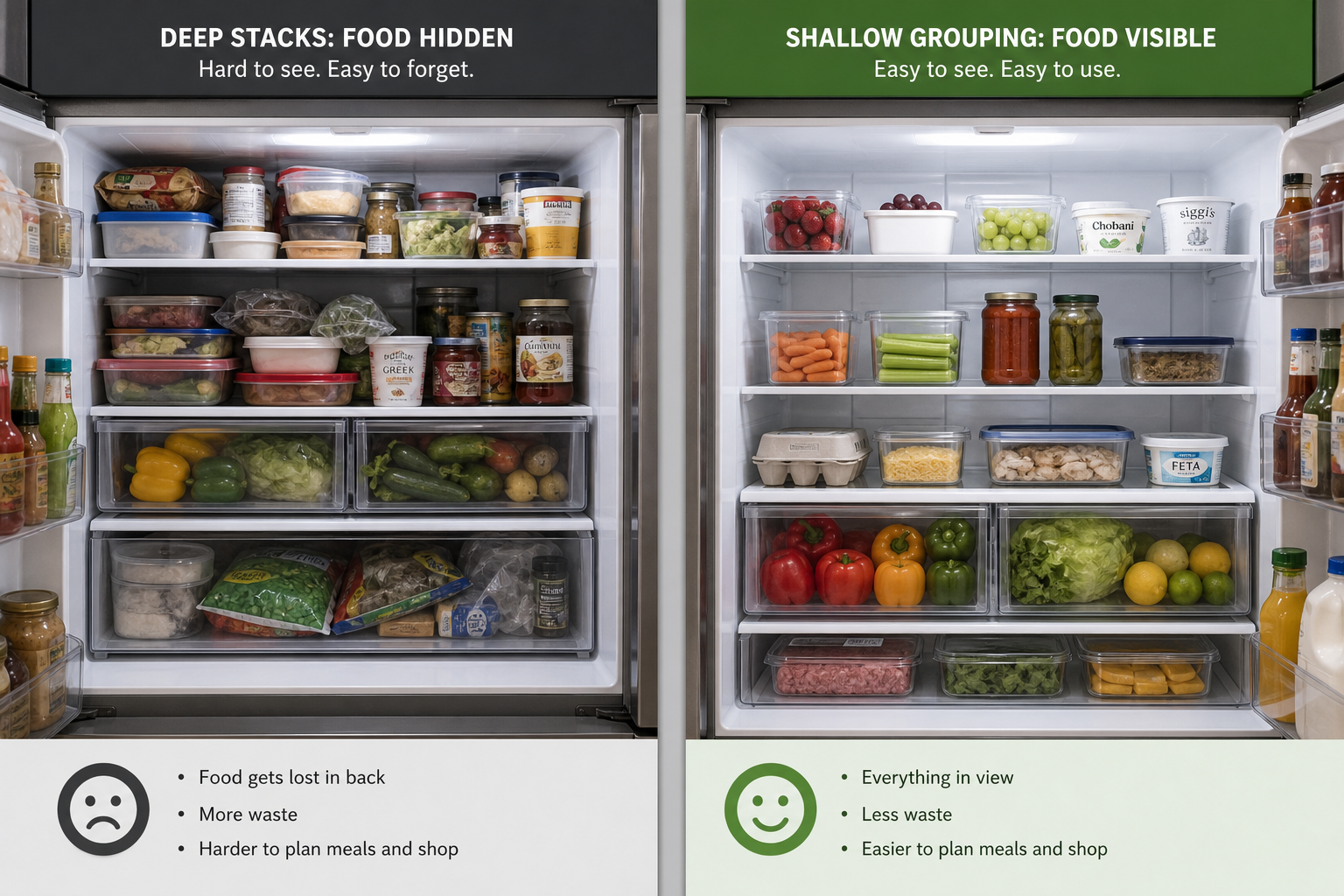
In a small apartment fridge, five random leftover containers could become one easy-to-reach group at the front of a shelf. A small clear bin may help contain that group if the shelf is particularly deep, but only if its dimensions fit comfortably.
No-purchase tip: Before buying an organizer, move existing containers forward and test the arrangement for a few days. Sometimes visibility is a layout problem, not a storage-product problem.
With the contents easier to see, the next step is dealing with those awkward refrigerator spaces that never seem to fit anything neatly.
Use Refrigerator Bins and Containers Only Where They Solve a Specific Problem
It is easy to assume that learning how to organize a refrigerator means buying a drawer full of matching bins. In a small fridge, though, more containers can sometimes mean less usable space.
When a bin is actually useful
A refrigerator bin can earn its spot when it solves a clear problem. A narrow container might keep small packets together, corral grab-and-go snacks, or create a removable “use first” zone for leftovers and opened foods.
The key is to ask, “What problem will this container solve?” before you buy it.
When a bin makes things worse
Oversized bins can waste vertical space, hide food at the back, and make cleaning shelves more awkward. They can also turn one simple group of items into a bulky block that is harder to rearrange.
In a very small refrigerator, four large matching bins may look impressive but leave less room for the food you actually need.
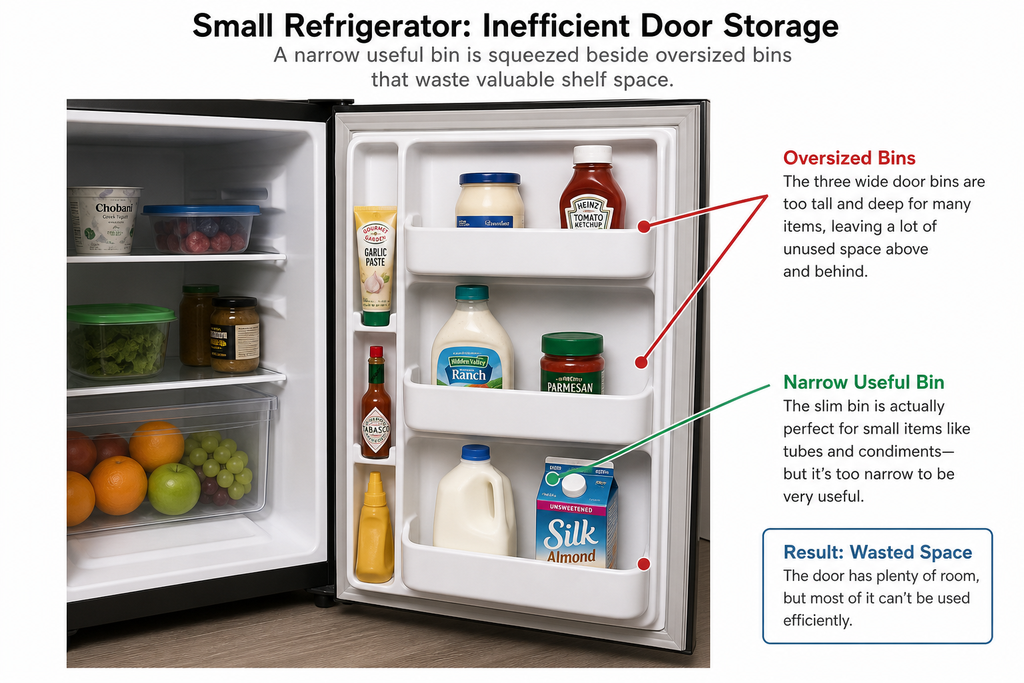
Choose storage that fits your refrigerator not the other way around
Measure the shelf width, depth, and available height first. Also check whether shelves, drawers, or door compartments change shape further back. Never assume a product will fit because it looks compact in a photo.
For example, a tiny fridge might need just one narrow bin for open packets rather than a complete matching set.

- Versatile Organization: Perfect for organizing a wide range of items such as clothes, pantry staples, kitchen tools, and…
- Clear Design for Easy Visibility: The transparent construction allows you to quickly see what’s inside each bin without …
- Built-In Handles: Each bin features built-in handles that provide a secure grip, making it easy to pull the bins out of …
No-purchase tip: Repurpose a container you already own for a few days before buying a dedicated refrigerator organizer. If the setup works, you have identified the type of storage you actually need.
Once the right containers are in place, the next challenge is making awkward shelves and bulky items work together.
Organize Awkward Refrigerator Spaces Without Wasting Them
A cramped refrigerator often has one shelf that feels too short, another with wasted space above everything, and a bottle that seems determined to roll into the wrong place. The trick is to work with those awkward dimensions instead of fighting them.
Work around fixed shelves
When shelves cannot be adjusted much, group food by height. Keep taller bottles and large containers together rather than trying to squeeze them into shorter sections.
Make use of vertical gaps
Look for unused space above short containers. Stackable containers can help here, but only when they are stable and still leave enough clearance to remove the items easily. Measure the available height before buying anything.
Deal with large bottles and bulky food
Give bulky items their own area instead of scattering them across several shelves. A renter with fixed shelves, for example, might reserve the tallest section for milk, juice, and large containers.
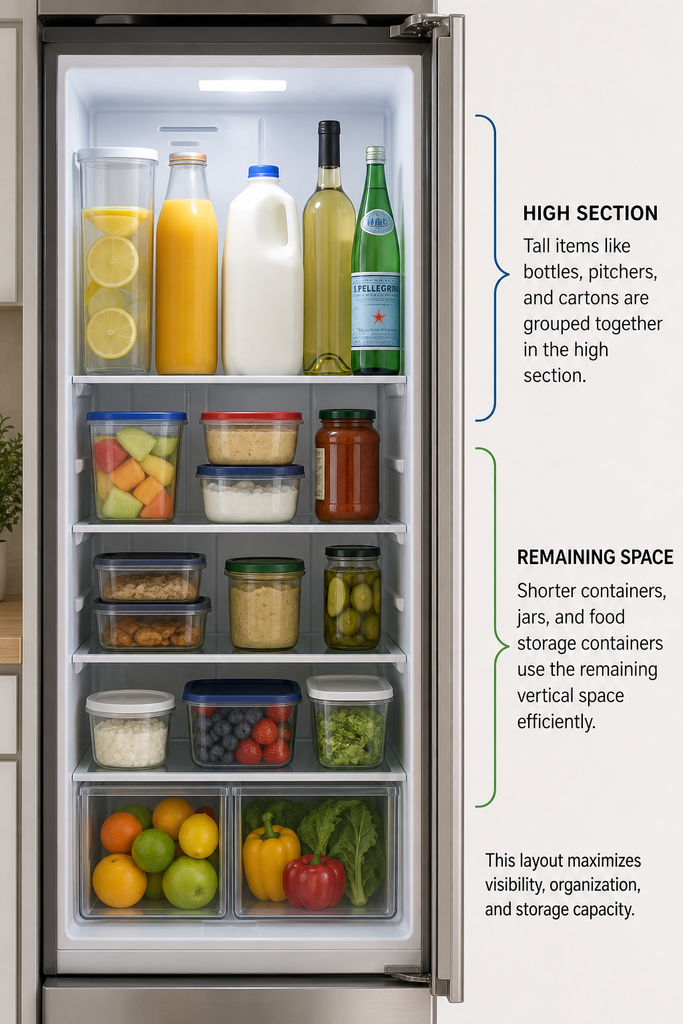
No-purchase tip: Rearrange containers by height first. You may find that simply grouping short and tall items differently creates more usable space.
Once the awkward spaces are under control, the refrigerator door is the next place to make working space count.
Don’t Forget the Refrigerator Door
When you organize a refrigerator, the door can become one of your easiest storage areas—or the place where every bottle you cannot find another home for ends up.
Use door shelves for easy-grab items
Keep frequently used items where they are simple to reach. Condiments, drinks, and other suitable items can work well here, depending on your refrigerator’s design.
Avoid turning the door into a dumping ground
Try giving each shelf a basic purpose instead of filling every available gap. Too many small jars and bottles make it difficult to see what you have, and they can turn a quick search into a tiny scavenger hunt.
Keep your most-used condiments together
In a small apartment refrigerator, one door shelf might hold everyday sauces and condiments, while another holds drinks or similarly sized bottles. Grouping them makes the space easier to scan and easier to put away.
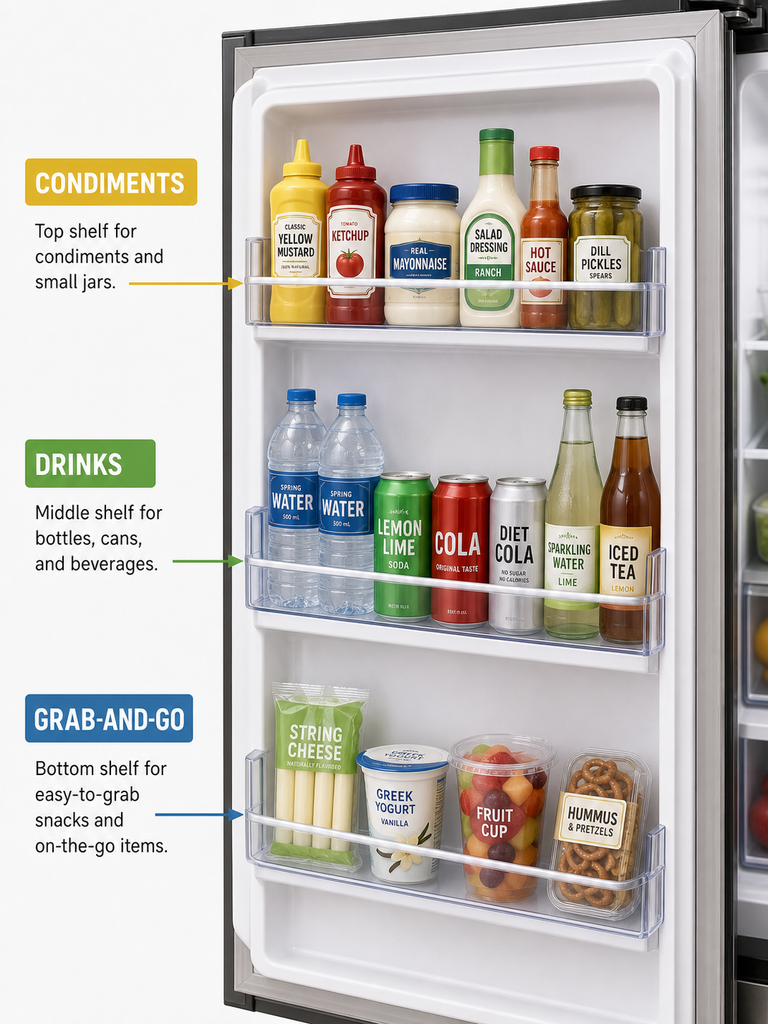
No-purchase tip: Remove rarely used bottles from the most convenient shelf and place them elsewhere. You may create more useful space without adding a single organizer.
A narrow door-bin divider can help with a specific clutter problem, but measure the available width first. Otherwise, skip it—the built-in shelf may already be enough.
With the door under control, it is time to make the whole system easy enough to maintain.
Make the System Easy to Maintain
A refrigerator can look beautifully organized on Monday and completely chaotic by Friday. The answer is not to reorganize it every few days. It is to make the system easy to repeat.
Put food back in the same zones
Once you organize a refrigerator into simple zones, keep using them. Leftovers go in the same area, drinks return to the same shelf, and everyday condiments have a predictable home. That way, putting groceries away takes less thought.
Keep a visible “eat me first” area ( Refrigerator food safety)
Choose one easy-to-see spot for leftovers, opened produce, and food that should be used soon. Visibility matters here. If something gets pushed to the back, it is much easier to forget.
Do a quick reset when the fridge starts filling up
You do not need a major refrigerator overhaul. Before a weekly grocery trip, check the “use first” area, combine similar foods, and remove anything that should no longer be there.
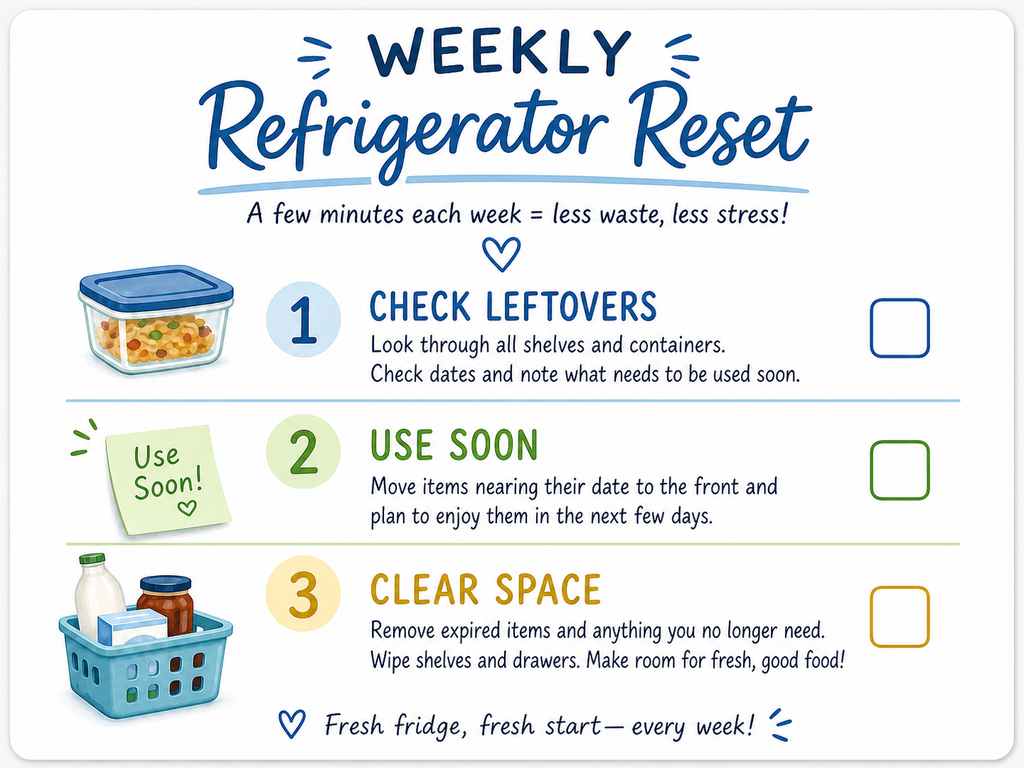
No-purchase tip: Set a two-minute reset habit before grocery shopping. A small routine is usually easier to maintain than a complicated organization system.
Once the system becomes automatic, you can focus on creating a simple layout that works for your refrigerator and your household.
A Simple Refrigerator Layout for a Small Apartment Kitchen
Knowing the principles is helpful, but eventually you want to know: where should everything actually go? Here is a simple refrigerator organization layout you can adapt to a compact apartment fridge.
A sample layout
Top shelf: Lighter items and foods you do not reach for constantly.
Middle shelf: Everyday foods, leftovers, and your visible “use first” zone.
Keeping leftovers visible is useful, but it is also worth knowing how long leftovers last in the refrigerator before deciding what stays.
Lower shelf: Larger containers, taller items, or ingredients that need more space.
Crisper: Produce that belongs there based on your household’s usual storage habits.
Door: Condiments, drinks, and other suitable grab-and-go items.
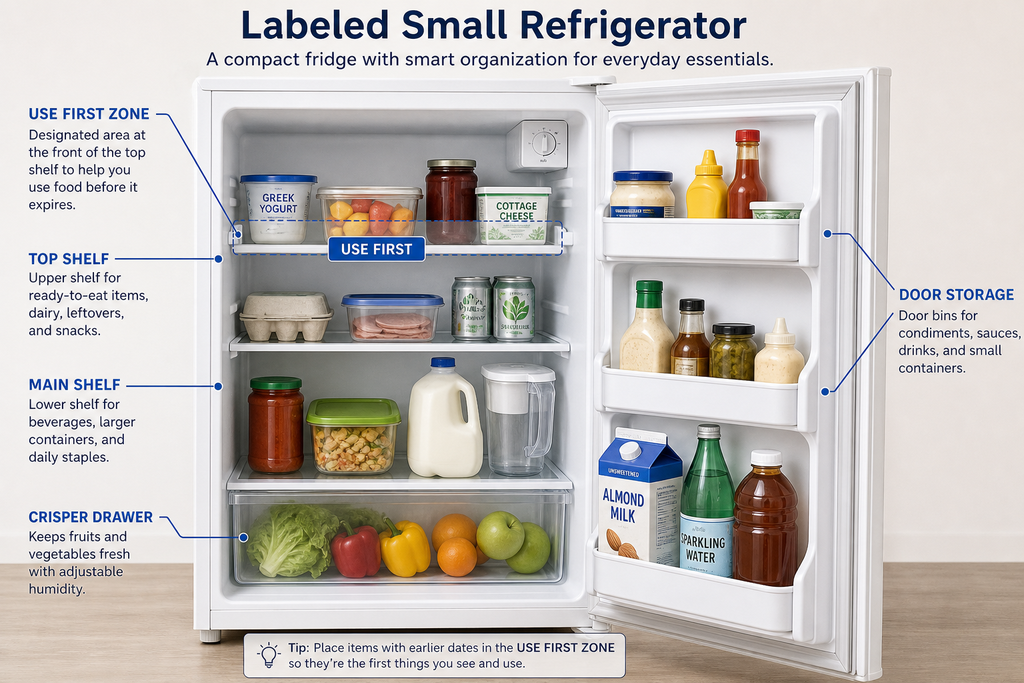
This is only a starting point. Refrigerator designs vary, and so do households. When you organize a refrigerator, the best arrangement is the one that fits your shelf heights, food habits, and daily routine.
For a compact fridge with two main shelves and narrow door storage, keeping everyday foods in the middle can make them easier to see without constantly moving larger containers.
No-purchase tip: Try the layout for several days before making permanent changes. Your routine will quickly show which zones need adjusting.
Once your fridge has a workable layout, there are a few common mistakes worth avoiding so you do not undo all that progress.
What Not to Do When Organizing a Refrigerator
It is tempting to think that more bins, more categories, and more perfectly stacked containers automatically mean better organization. In a small refrigerator, the opposite can be true.
Don’t buy organizers before measuring
Measure the shelf width, depth, and available height before buying anything. Also check for shelves, drawers, hinges, or door edges that reduce usable space.
A renter might buy a large matching set of refrigerator bins, only to discover that the bins make an already narrow shelf harder to use. More storage products do not help when they take away the space you are trying to create.
Don’t create too many tiny categories
You do not need a separate zone for every type of food. Keep categories broad enough to be useful. “Breakfast,” “leftovers,” and “condiments” are usually easier to maintain than a dozen tiny groupings.
The goal is to find things quickly, not run a miniature filing system every time you unpack groceries.
Don’t fill every inch of available space
An organized refrigerator still needs breathing room for visibility and access. When every gap is packed, food gets hidden and putting things away becomes frustrating.
Leave enough space to remove containers without rearranging half the shelf.
Don’t copy a refrigerator setup that does not match your household
A family that cooks from scratch every evening will have different storage needs from someone who keeps mostly ready-to-eat meals. Your refrigerator should reflect what you actually buy, use, and reach for.
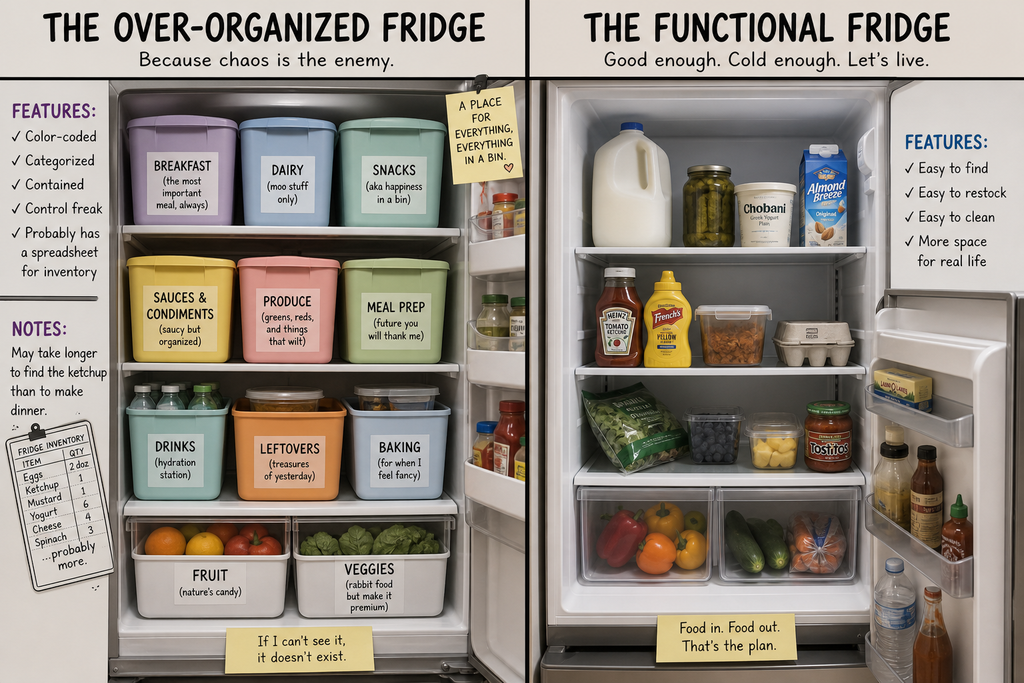
No-purchase tip: Before buying anything, remove one unnecessary container or category and see whether the refrigerator becomes easier to use.
The Best Refrigerator Organization Is the One You Can Keep Up
A well-organized refrigerator is not supposed to look like a showroom every day. It is supposed to make ordinary life a little easier.
When you organize a refrigerator, focus on four things: keep frequently used foods visible, use simple categories, make awkward spaces work for you, and add storage products only when they solve a specific problem.
For a small kitchen, that can be enough. You do not need a complete makeover or a shelf full of matching accessories.
Start with one shelf today. Clear it, group what you actually use, and give the space a simple purpose. Once that works, the rest of the refrigerator becomes much easier to tackle.
Conclusion
The simplest way to organize a refrigerator is to stop trying to make every shelf perfect and instead make the space work for your daily routine. Keep frequently used foods visible, group similar items without overcomplicating things, and use awkward spaces for the items that actually fit there.
The most important part? Start small. Clear one shelf, create a simple “use first” area, and see how it feels for a few days. You may discover that you need fewer storage products than you expected.
Every kitchen is different, especially in small apartments and rental homes, so your ideal setup may look different from someone else’s. For more small-space ideas, explore Best Kitchen Tables for Small Spaces.
What is the one refrigerator shelf you could improve today?