Small Home Office Ideas That Make the Most of Your Space
This article contains affiliate links. If you purchase through these links, we may earn a small commission at no extra cost to you.
Your dining table is covered in notebooks, your laptop is balanced beside a coffee mug, and somehow the only comfortable chair in the house has become your office chair. Sound familiar?
Creating a workspace in a small home can feel like playing furniture Tetris. There may not be a spare room waiting to become an office, and adding a bulky desk can make an already-tight space feel even tighter. The good news? You don’t need a perfect home office—or a complicated system.
These small home office ideas will help you find a workable spot, choose furniture that fits, control clutter, and make the workspace easier to hide when you’re finished. Because the goal isn’t to make your home look like an office. It’s to make working at home fit into your life without taking over the room.
Start With the Space You Already Have
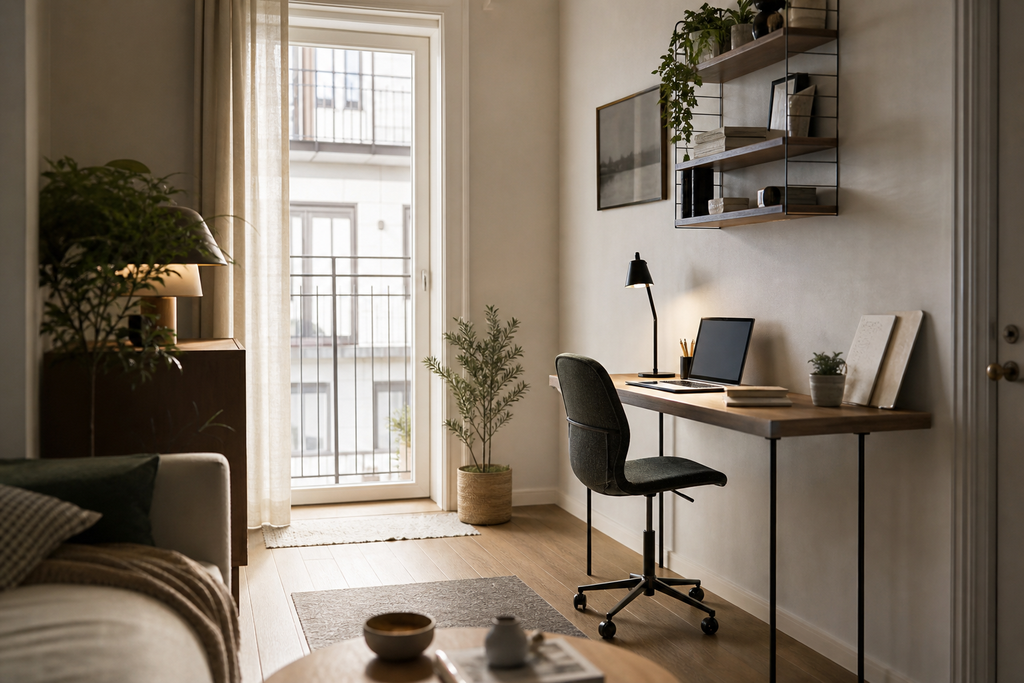
Before you start shopping for a desk, take a look around. One of the simplest small home office ideas is also the easiest to overlook: you may already have a workable spot.
A bedroom corner, empty hallway wall, part of the dining area, or even the end of a kitchen can become a small workspace. What matters is more than floor space. Check the natural light, noise, privacy, nearby outlets, and whether you need to pack the office away later.
For example, a renter might have a 36-inch stretch of wall beside a wardrobe—just enough room for a compact desk without giving up an entire room.
And honestly, that’s the goal: find the space first. Then you can choose furniture that actually fits it.
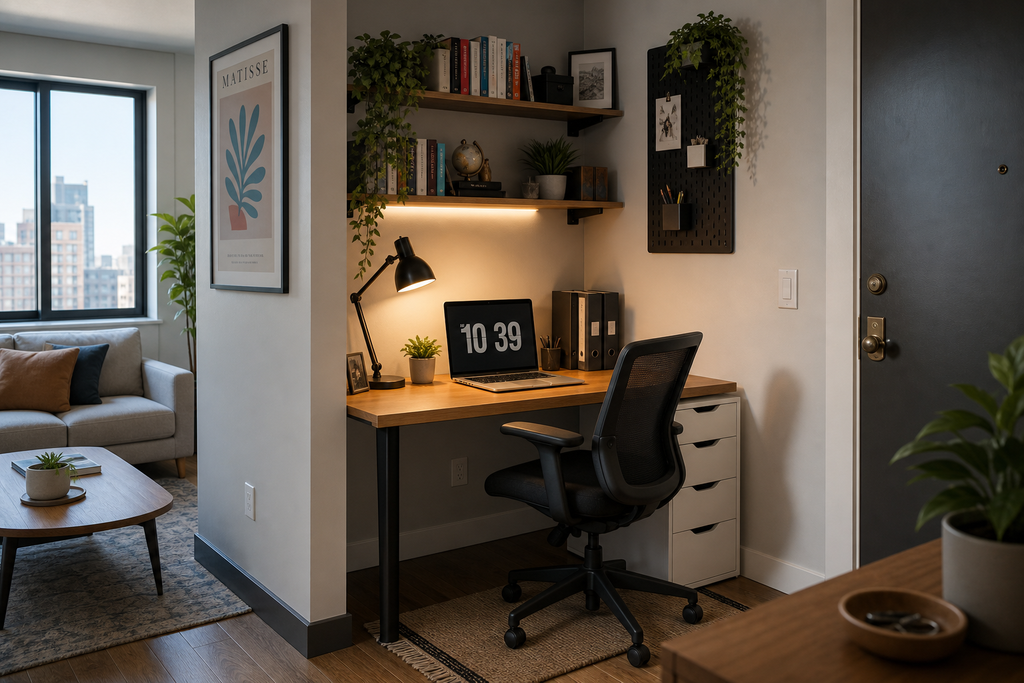
Decide What Your Small Home Office Actually Needs to Do
Once you’ve found a possible spot, don’t rush to fill it with furniture. First ask: what actually needs to happen here?
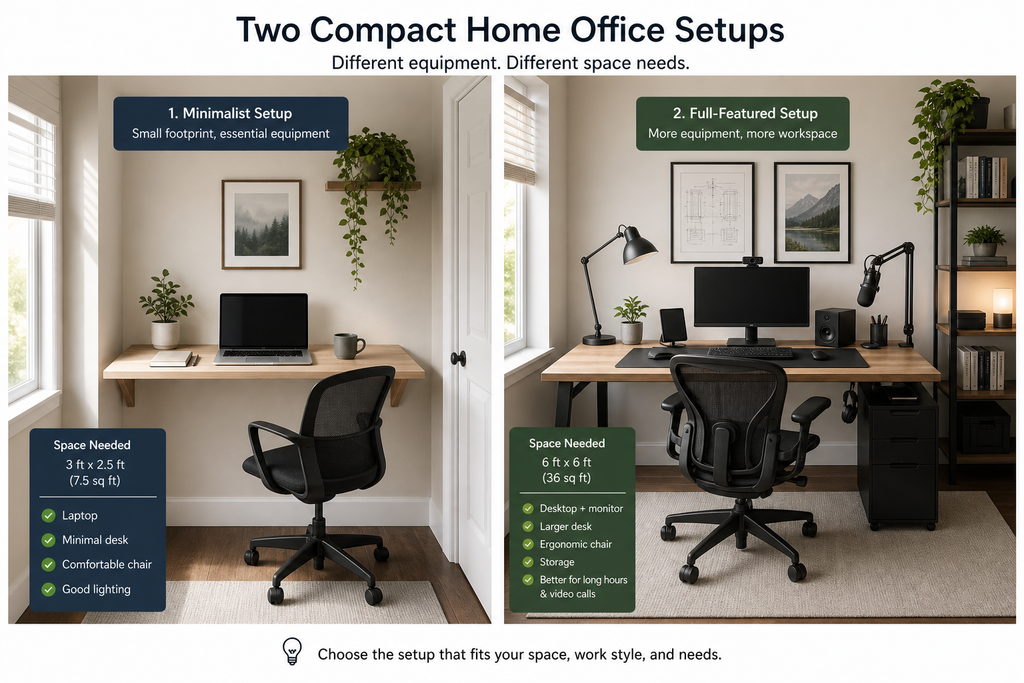
A laptop-only workspace needs surprisingly little. Writing, studying, video calls, paperwork, or crafting may need more surface area. And if you’re working every day, comfort matters more than it does for an occasional setup.
For example, someone working remotely from a laptop might be perfectly happy with a narrow 32-inch desk. Add two monitors, a keyboard, and paperwork, and suddenly that same desk feels like an airport security tray.
The useful small home office idea here is simple: plan for your actual work, not your imaginary office. Once you know what the desk needs to hold, choosing the right size becomes much easier.
Choose a Desk That Matches the Room, Not Just the Trend
Now that you know what your workspace actually needs to hold, you can choose a desk without letting Pinterest make the decision for you.
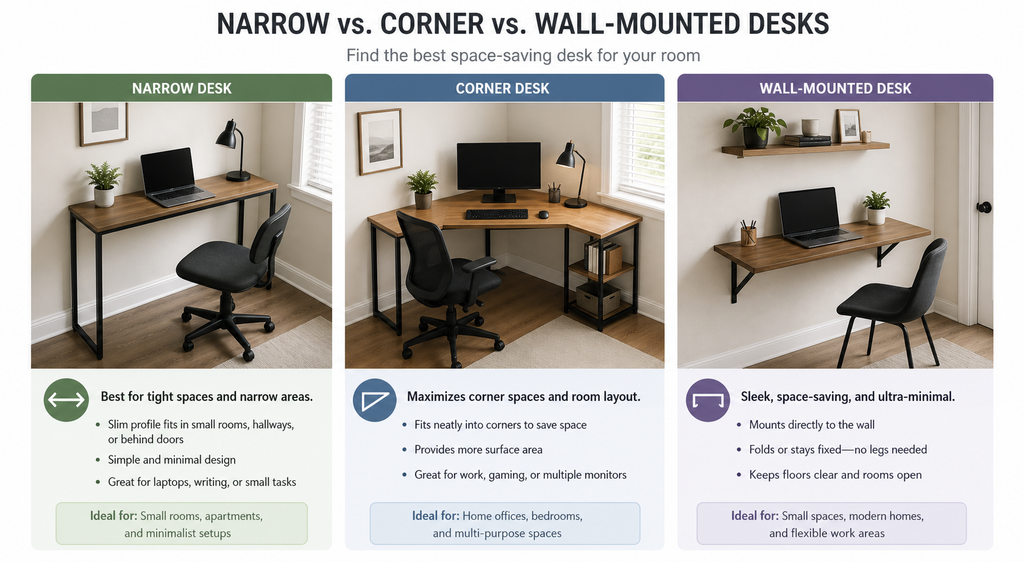
Narrow Desks for Shallow Spaces
If floor space is tight, pay attention to depth, not just width. A 15–18-inch-deep desk can work nicely for laptop-only work along a bedroom wall. Before buying, measure the walkway too.
A desk that looks compact in a product photo can still make a room awkward if its depth leaves you constantly bumping into it.
Corner Desks for Awkward Spaces
An L-shaped desk can make an unused corner useful, especially in a bedroom. The catch? It may use more floor space than expected, so measure the whole footprint first.
Corner desks make sense when you’re working with an awkward room shape, but they aren’t automatically space-saving just because they fit into a corner.
Floating and Wall-Mounted Desks
When every inch counts, a wall-mounted desk keeps the floor clear. It’s handy in a hallway or tiny bedroom, although installation and wall strength matter.
This can be especially useful when you need a work surface but don’t want another set of legs occupying the floor.
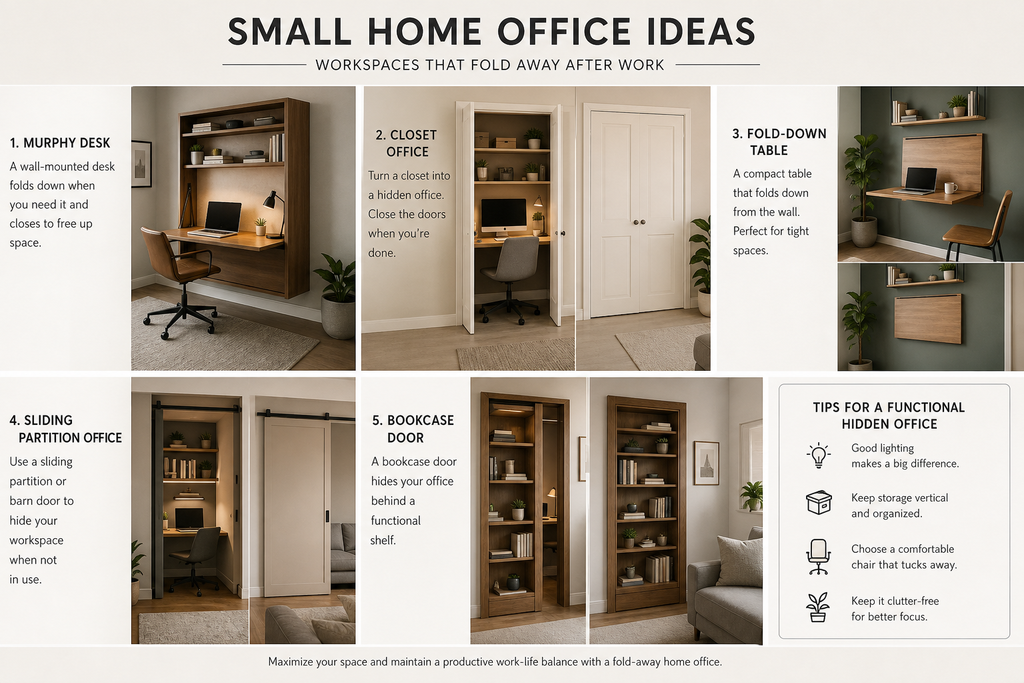
Need the Space Back After Work? Make the Office Disappear
A desk that works beautifully at 9 a.m. can feel like a permanent reminder of work by 7 p.m. In a small home, that’s not always ideal.
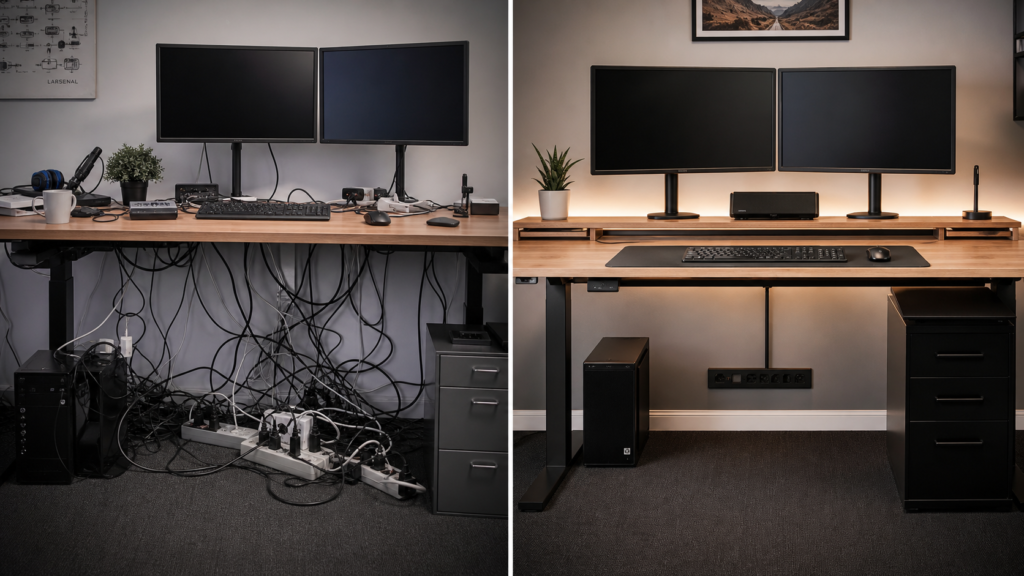
Give daily supplies, documents, tech accessories, cables, and occasional items their own homes. A drawer can handle notebooks and paperwork, while implementing effective desk cable management and a cable organizer box keeps chargers from becoming desk spaghetti.
Folding Desks
These are useful for renters or occasional work because you can simply fold the workspace away when you’re finished. A pre-assembled option like the Need Small Folding Computer Desk folds flat in seconds and slides easily behind a door or under a bed when the day is done.
They’re also handy if the same room needs to serve several purposes throughout the day.
Drop-Down Wall Desks
When floor space is almost nonexistent, a wall-mounted option can create a workspace without permanently occupying the floor. Installing a sturdy drop-leaf surface like the Haotian Wall-Mounted Drop-Leaf Desk gives you a dedicated work surface when raised and drops flat against the wall after hours.
Desk Inside a Cabinet or Storage Unit
This can keep office clutter out of sight in a bedroom or living room.
A cabinet-style workspace can be particularly useful when your office shares a room with everyday living space. Close the doors, and the laptop, cables, and paperwork disappear from view.
Dual-Purpose Furniture
A console, dining table, or dressing table can also become a desk when needed.
For example, a wall-mounted desk can fold away after work, giving the living area back its breathing room.
Don’t Forget the Chair—It’s Part of the Space Problem
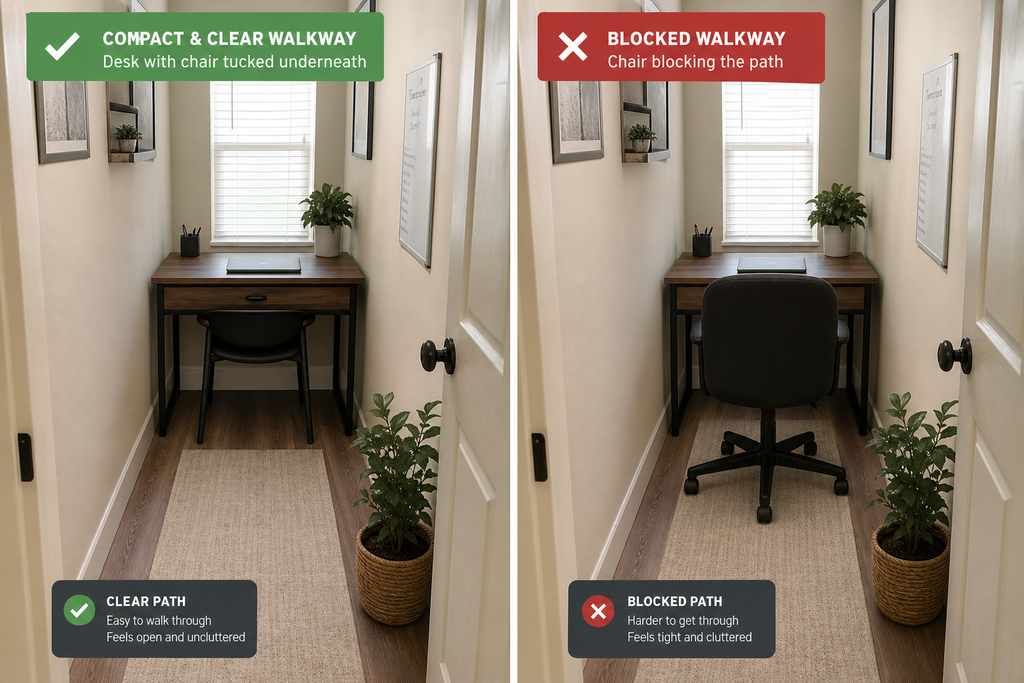
You’ve measured the desk, found the spot, and figured out what you’ll use it for. There’s just one sneaky detail left: the chair.
A compact desk can fit perfectly against a wall, yet a bulky office chair might block a bedroom door or eat up your only walkway. Check the chair’s depth, armrests, and whether it tucks fully underneath. If you need to move it often, consider whether wheels actually suit your flooring.
For example, a smaller chair that slides completely under a desk may work better than squeezing a larger office chair into the same space. An armless, low-back option like the SMUG Armless Swivel Desk Chair provides ergonomic lumbar support without blocking walkways.
Sometimes, one of the simplest small home office ideas is simply choosing furniture that knows when to get out of the way.
Use Vertical Space When the Floor Is Already Full
Once the desk and chair are behaving themselves, storage is the next little headache. But if the floor is already full, don’t add another cabinet just because you need somewhere for notebooks.
Look up instead.
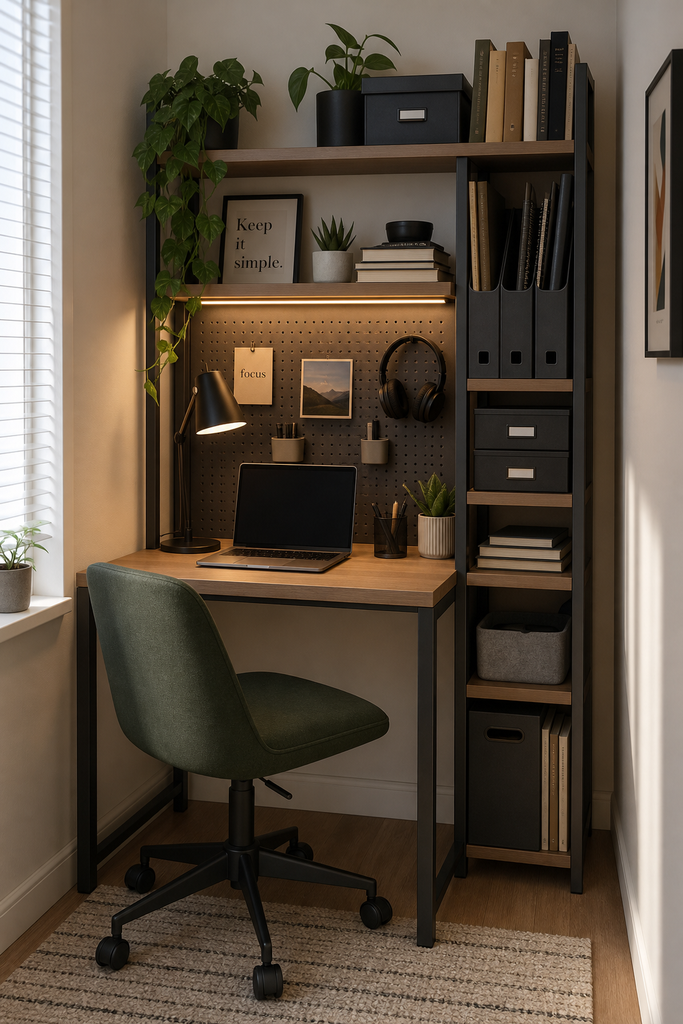
Wall shelves, pegboards, narrow shelving, file holders, or floating cabinets can keep supplies off the desk and floor. Even a simple shelf above a small workspace can make a difference.
For example, a 24-inch-wide desk could have two shelves above it for notebooks, headphones, and everyday supplies. Keep frequently used items within easy reach, though. There’s little point storing your notebook somewhere that requires a climbing expedition.
Wall shelves, pegboards, narrow shelving, file holders, or floating cabinets can keep supplies off the desk and floor. Adding a Wall Control Metal Pegboard Organizer allows you to hang headphones, office stationery, and small bins right at eye level without taking up desktop real estate.
These small home office ideas work especially well when floor space is limited, while keeping the storage focused on things you actually use.
Small Home Office Storage Should Reduce Clutter, Not Just Hide It
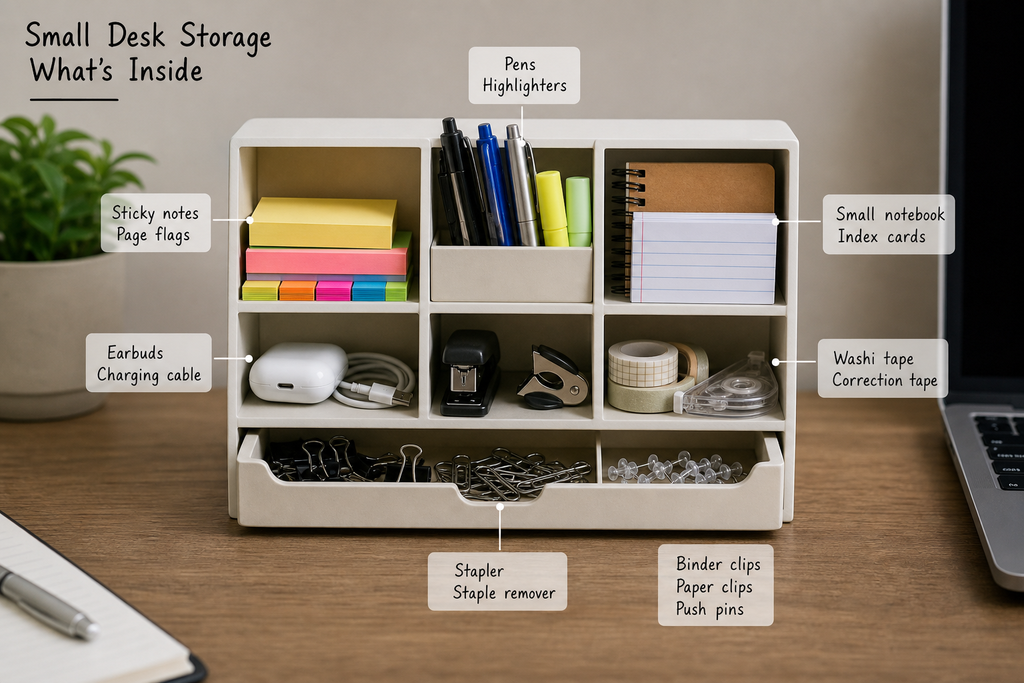
Vertical storage helps, but there’s a catch: a shelf full of random office bits is still clutter. In a small workspace, everything needs somewhere to go.
Give daily supplies, documents, tech accessories, cables, and occasional items their own homes. A drawer can handle notebooks and paperwork, while a cable box keeps chargers from becoming desk spaghetti. A narrow rolling cart can hold printer supplies without permanently claiming floor space.
For example, a small apartment office might need only one drawer, one cable box, and a slim cart.
A narrow rolling cart can hold printer supplies without permanently claiming floor space. A compact model like the Pipishell 3-Tier Slim Rolling Utility Cart can slide beside your desk during working hours and roll into a closet when dinner starts.
The goal isn’t to hide everything. It’s to make finding and putting things away easy.
Make a Tiny Workspace Comfortable Enough to Actually Use
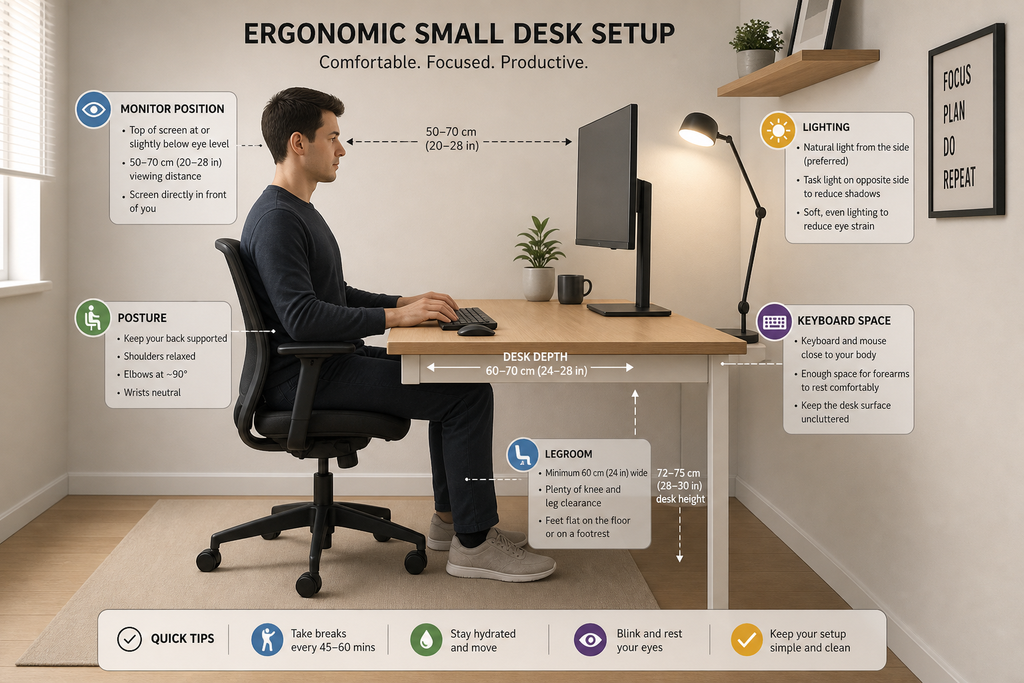
Once everything has a place, there’s one thing you shouldn’t squeeze out of the plan: comfort. A tiny workspace still needs to be somewhere you can actually work for more than twenty minutes.
Check the desk height, legroom, keyboard space, and where your laptop or monitor sits. Consulting official OSHA computer workstation guidelines can help you maintain neutral posture and reduce physical strain, even when working with limited square footage.
Here’s the slightly annoying part: saving six inches of floor space isn’t much of a victory if it creates eight hours of daily discomfort.
For example, a 20-inch-deep desk might technically fit, but leave a monitor sitting uncomfortably close. A slightly deeper desk could take up more room while making the setup far more usable.
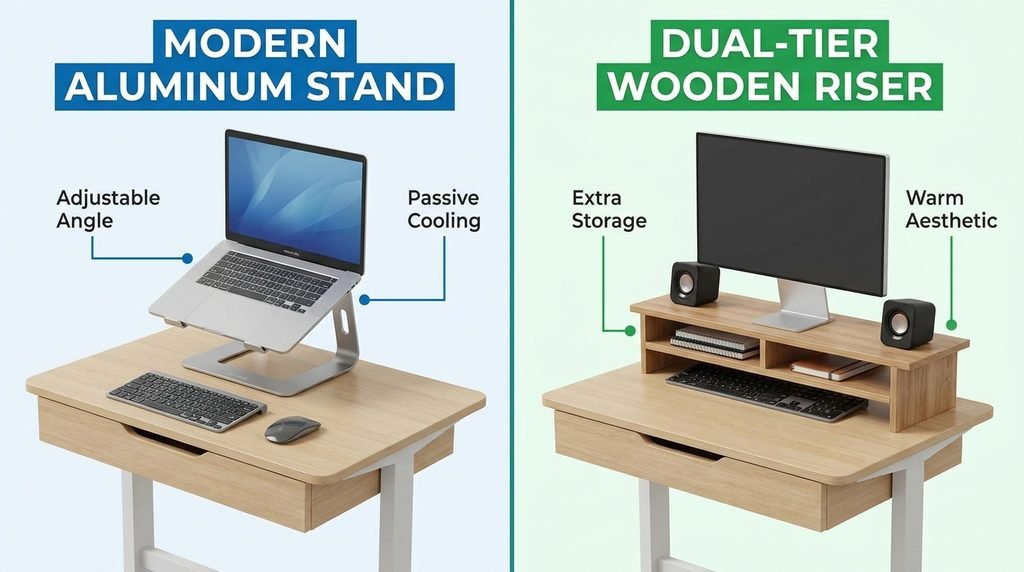
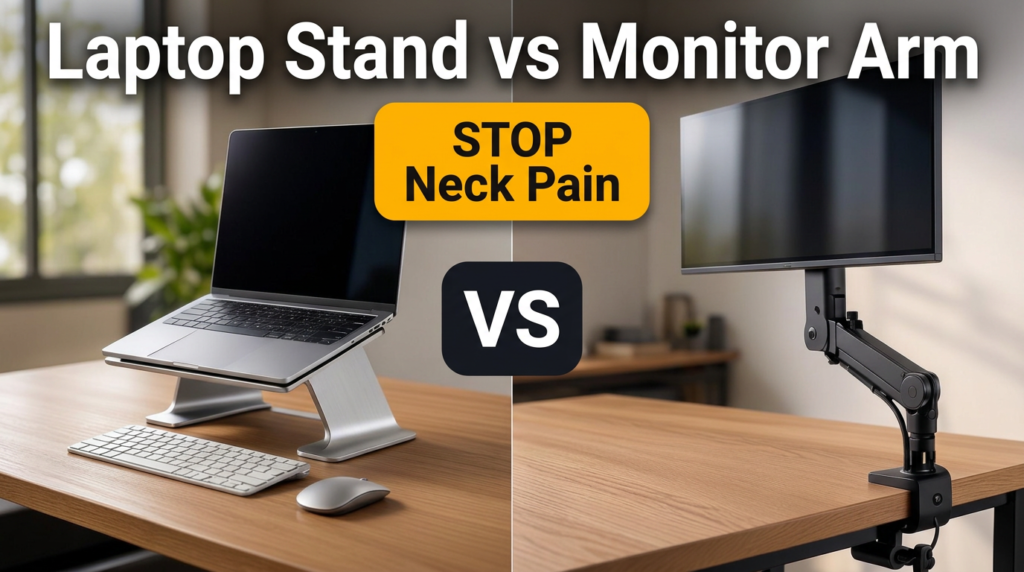
A monitor stand, laptop stand, suitable chair, or compact desk lamp can help, but start with the layout before buying anything. Elevating your screen with a simple Soundance Aluminum Laptop Stand brings your display to eye level and leaves space underneath for your external keyboard.
A monitor stand, laptop stand, suitable chair, or compact desk lamp can help, but start with the layout before buying anything.
Lighting Can Make a Small Office Feel Less Like a Corner
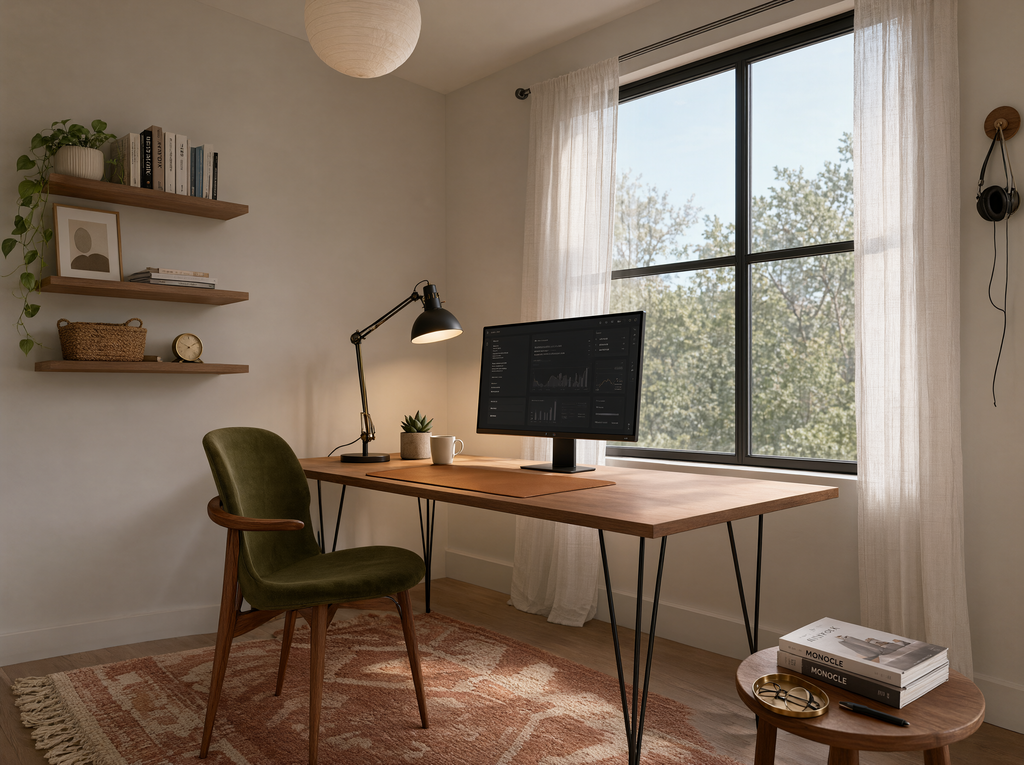
Once your workspace is comfortable, lighting can make a surprisingly big difference. A desk tucked into a dark corner can feel a little gloomy, even when everything else is working.
Natural light helps, but don’t automatically put your monitor directly in front of a window. Glare can turn a productive afternoon into a battle with your screen. When positioning your display, follow best practices for preventing digital eye strain by placing light sources perpendicular to the screen.
For example, a bedroom desk beside—not directly facing—a window can get useful daylight without putting the monitor in the glare zone.
A compact wall light or desk lamp can help too, as long as it doesn’t steal valuable workspace. A clamp-on light such as the EppieBasic Clamp-on LED Desk Lamp provides wide, adjustable illumination while keeping your desktop completely clear.
Hide the Office When the Workday Is Over
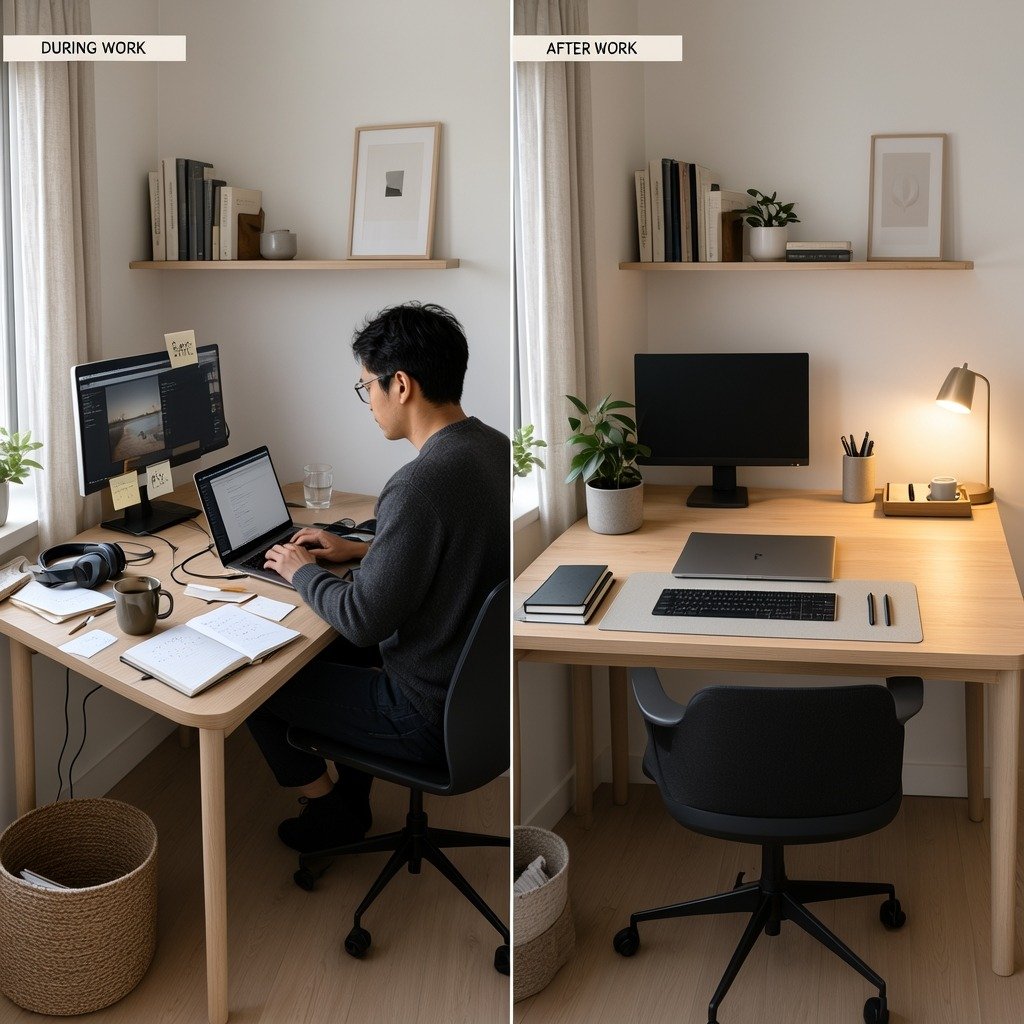
Good lighting helps your workspace feel better during the day, but what happens when the workday ends? In a small home, leaving a laptop, paperwork, and cables everywhere can make the whole room feel like an office.
A simple closing routine can fix that. Put the laptop away, hide paperwork, coil cables, push in the chair, and close any cabinet or fold the desk. According to NIH guidance on working well from home, setting distinct physical and mental boundaries at the end of the day is essential for reducing stress when your living room doubles as an office.
It doesn’t need to take ten minutes.
For example, a living-room workstation can look surprisingly tidy in two minutes when everything has a designated home. Cable storage, baskets, or folding furniture can help, but you can start with what you already have.
Small Home Office Ideas for Different Parts of the Home
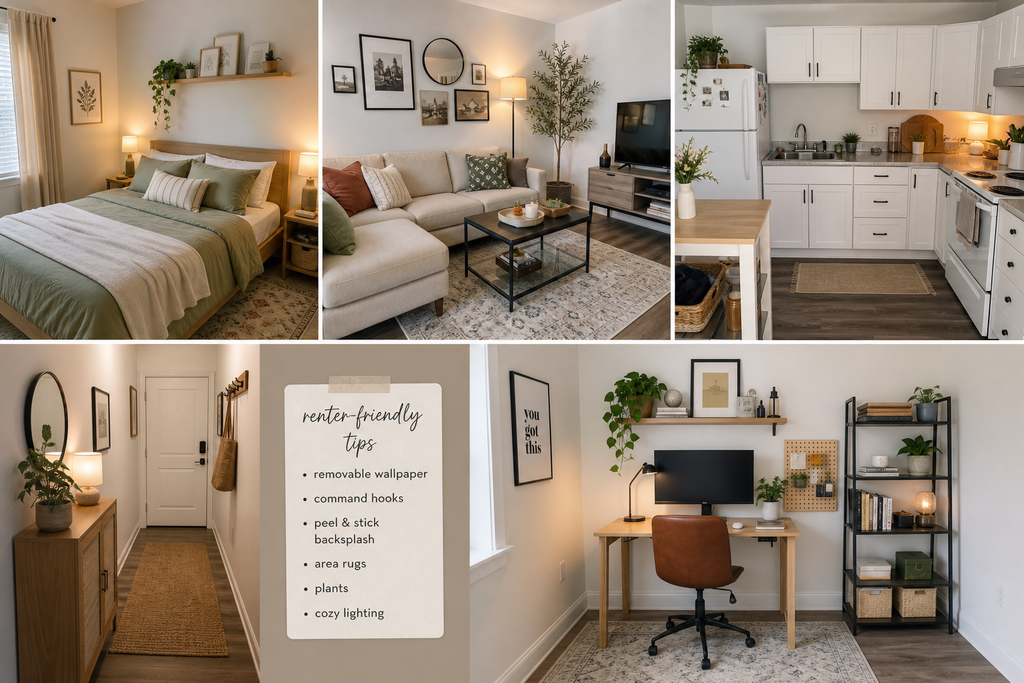
Once you’ve figured out how to pack away your workspace, the next question is where it should actually live. And the answer doesn’t have to be a spare room.
Small Home Office in a Bedroom
Keep the desk visually quiet and avoid letting paperwork spill into the sleeping area. A compact desk that can tuck against a wall helps.
If possible, give the workspace a clear boundary so your work equipment doesn’t slowly migrate onto the bed, nightstand, and every other available surface.
Small Home Office in a Living Room
Choose furniture that blends with the room, especially if the workspace stays visible. Folding or movable options make it easier to reclaim the space.
A cabinet desk or attractive console-style workspace can also help the office feel like part of the room rather than a separate zone dropped into it.
Small Home Office in a Kitchen or Dining Area
Shared surfaces need a quick reset. Keep work equipment contained so dinner doesn’t happen beside a pile of paperwork.
A small rolling cart, storage basket, or nearby cabinet can make it easier to move everything out of the way when the table needs to become a dining space again.
Small Home Office in a Hallway or Landing
A shallow wall-mounted desk can work, but check chair clearance carefully.
A hallway may look like unused space, but you still need enough room to sit down and get up without turning the entire passage into an obstacle course.
Renter-Friendly Small Home Office
Freestanding desks, removable organizers, and storage baskets avoid unnecessary permanent installation.
If you’re considering a wall-mounted desk, check your lease and the wall requirements before reaching for the drill.
The right small home office idea depends on the room—and how that room already needs to function.
A Few Small Home Office Mistakes You’ll Be Glad You Avoided
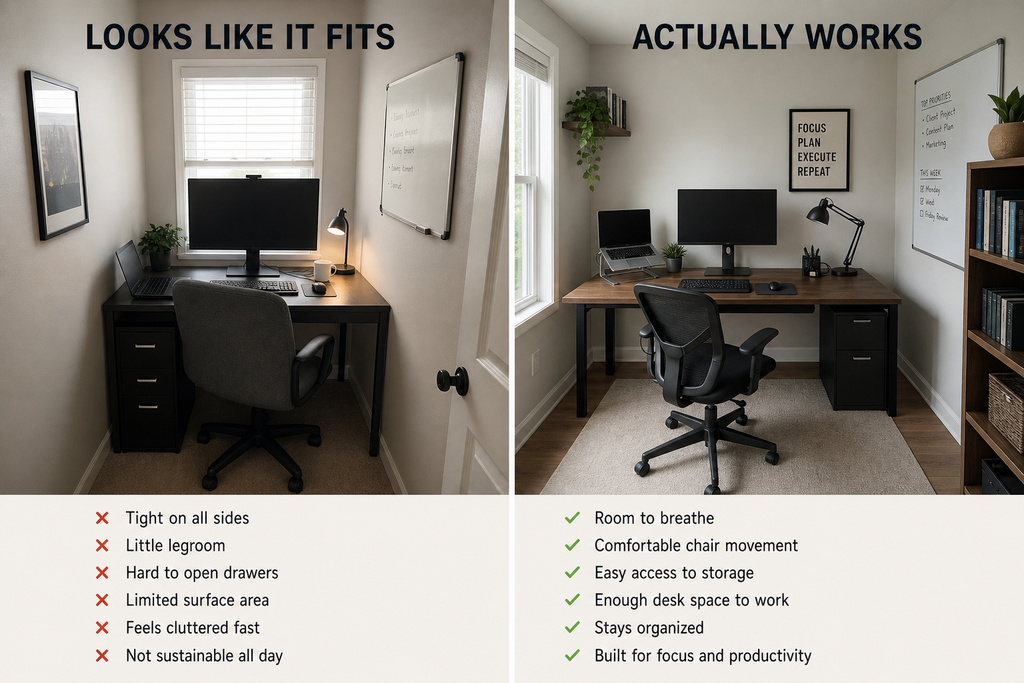
With so many small home office ideas to choose from, it’s easy to get focused on making everything fit and forget how the room actually works.
Don’t measure the desk width and stop there. Check depth, chair clearance, lighting, cables, and whether doors can still open. A desk squeezed between a wardrobe and wall may technically fit, but not if pulling out the chair makes the wardrobe door impossible to open.
The same goes for oversized chairs, bulky storage, too many shelves, and wall-mounted furniture that isn’t suitable for your wall. And don’t sacrifice comfort just to save a few inches.
A little breathing room is part of the setup too.
5–15 Product Comparison Categories That Actually Matter
After avoiding the obvious small home office mistakes, you’re in a much better position to compare furniture. And this is where product specifications can actually be useful—if you know which ones matter.
Instead of comparing desks by looks alone, check these 12 details:
| Comparison category | Why it matters |
|---|---|
| Overall dimensions | Confirms it fits your space |
| Desk depth | Often matters more than width |
| Height | Affects comfort and chair fit |
| Folded/closed dimensions | Important for desks that disappear |
| Workspace size | Shows usable surface area |
| Storage capacity | May reduce the need for extra furniture |
| Chair clearance | Helps protect walkways |
| Weight | Matters if you move the desk regularly |
| Fold/convert mechanism | Shows how easily it changes |
| Wall-mount requirements | Important for renters |
| Cable management | Helps control visual clutter |
| Material and maintenance | Affects everyday use |
The trick is not finding the desk with the most impressive specification sheet. It’s finding the one that solves your particular problem.
For example, someone with almost no floor space might prioritize folded dimensions, while a renter may care more about wall-mount requirements. A laptop-only setup has different needs from a desk holding two monitors.
That makes these small home office ideas much more useful than a generic “best desks” ranking. Compare furniture by what your room needs it to do, then check the measurements before buying.
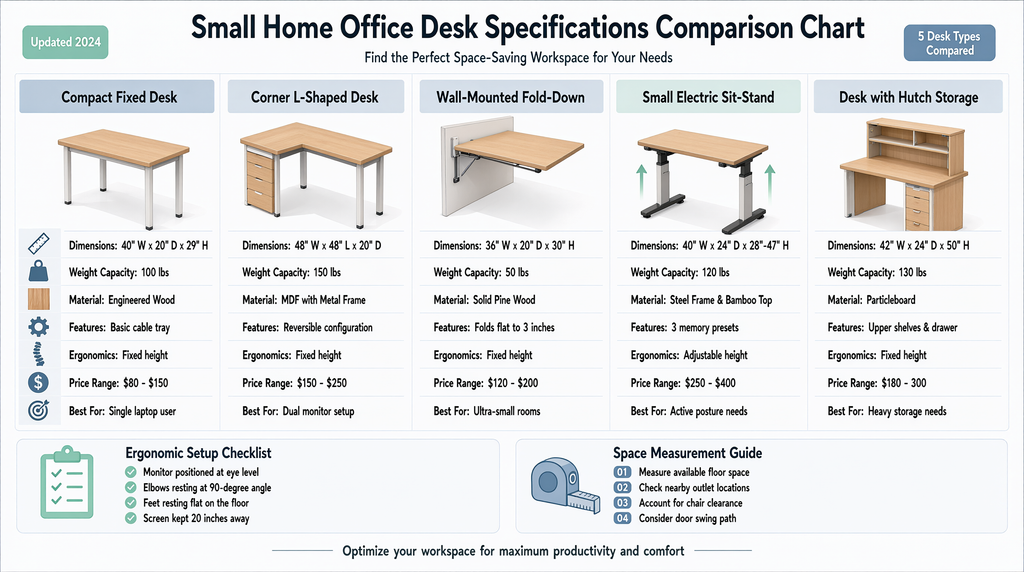
Small Home Office Ideas: A Simple Decision Guide
By this point, you probably have a better idea of what your space can—and can’t—handle. So instead of overthinking every option, here’s a simple way to narrow things down.
If floor space is extremely limited: Consider a wall-mounted or folding desk.
If you rent: Start with freestanding furniture and removable organizers rather than permanent installations.
If the office shares your living room: Look for closed storage, convertible furniture, or a desk that blends into the room.
If you have an awkward corner: A corner desk can work well, but check walking and chair clearance first.
If you mostly use a laptop: A shallow, compact desk may be all you need.
If you use multiple monitors: Prioritize desk depth, cable management, and comfortable screen positioning over finding the absolute smallest desk.
If storage is the headache: Look upward with shelves or vertical organizers.
If you hate seeing work after hours: Choose something that folds, closes, rolls away, or hides your equipment.
These small home office ideas aren’t about finding one perfect setup. They’re about matching the workspace to how your home actually works.
The Best Small Home Office Is the One That Works With Your Home
After comparing all those options, there’s really no single desk or setup that works for everyone. The right choice depends on how you use your space.
A tiny floating desk might be perfect for a laptop, but frustrating if you use two monitors. A folding table can be brilliant for occasional work and less convenient for eight-hour days. A storage-heavy desk may control clutter but feel too bulky if you need flexibility.
Here’s the thing: the goal isn’t to squeeze an office into the smallest possible space. It’s to create a workspace that gives you what you need while leaving your home feeling like home.
That’s the heart of good small home office ideas. Different homes need different solutions—and the best setup is the one that works with yours, not against it.
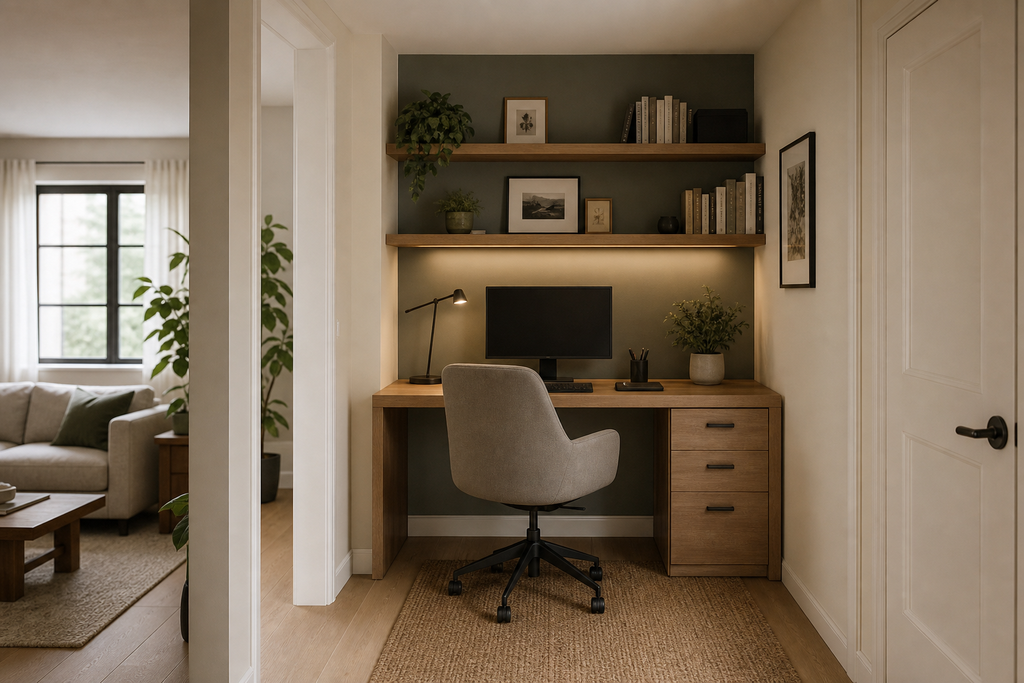
Conclusion
You don’t need a spare room—or a picture-perfect setup—to create a home office that works. The most useful small home office ideas usually start with something much simpler: use the space you already have, choose furniture that fits how you work, and make it easy to clear everything away when the day is done.
Maybe your first step is choosing the right compact desk, or perhaps tackling desk cable management to immediately make the setup feel less intrusive in a shared room.
You don’t have to fix everything at once. Pick one annoying problem and solve that first. Measure the space, make one small change, and see how it feels.
What could you make work a little better today?