How to Declutter Your Home Room-by-Room (Without the Stress)
💡 Affiliate Disclosure: PetchCrea is reader-supported. When you buy through links on our site, we may earn an affiliate commission at no additional cost to you. As an Amazon Associate, I earn from qualifying purchases. We only recommend products that genuinely help you optimize and organize your space.
Feeling overwhelmed by household clutter is rarely a matter of having too little space—it is usually a matter of having too many items without a defined home. When closets spill over and flat surfaces become dumping grounds for mail, bags, and random tools, daily routines take longer and feel twice as exhausting.
Clearing physical clutter does more than open up floor space—environmental psychology research on home clutter shows that organized surroundings significantly lower cortisol levels and daily stress.
The good news? You do not need to dedicate an entire weekend or turn your house upside down to regain control. The secret to sustainable decluttering is giving the useful answer first: always purge before you buy storage containers, tackle flat surfaces first to gain immediate visual momentum, and establish a simple 15-minute daily reset system.
Whether you live in a compact apartment or are trying to streamline a busy family home, this practical guide walks you through a stress-free, step-by-step decluttering framework that keeps clutter from coming back.
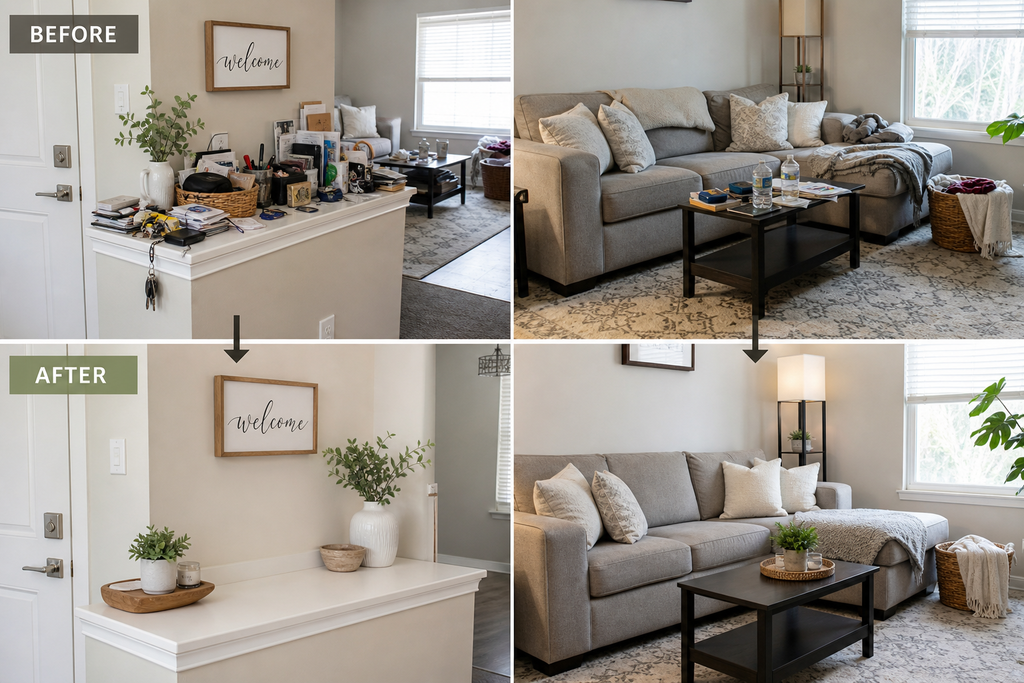
The Golden Rule: Declutter Before You Buy Storage Bins
The single biggest mistake most people make when organizing is running to the store to buy decorative baskets, clear acrylic bins, and storage drawers before sorting through their belongings.
When you buy containers first, you end up neatly organizing items you do not need, use, or even like. Storage bins should contain and protect what you keep—not store non-essential clutter.
- Purge First: Sort through every drawer, shelf, and corner to remove expired, broken, or unused items.
- Measure Second: Count the exact volume of remaining items and measure your shelf clearances before purchasing storage.
- Containerize Last: Place remaining essentials in functional, matching bins that fit your space perfectly.
When purging old cleaning supplies, never pour expired bleach or harsh chemical solvents down household drains; dispose of them according to EPA household hazardous waste disposal regulations.

- 【Large Capacity & High Quality】Each 120qt stackable storage bin with lid measures 27.56 x 16.73 x 15.55 inches (front wi…
- 【Magnetic Front Open Doors & 4x Wheeled】The large storage bins with doors provide two options: front doors opening or to…
- 【Stackable, Collapsible, and Anti-tipping】Comes with anti-tip kits that can be used as door locks or used to fix the box…
The 4-Step PetchCrea Decluttering System
To avoid feeling paralyzed by a large mess, break the job down into four clear, actionable steps.
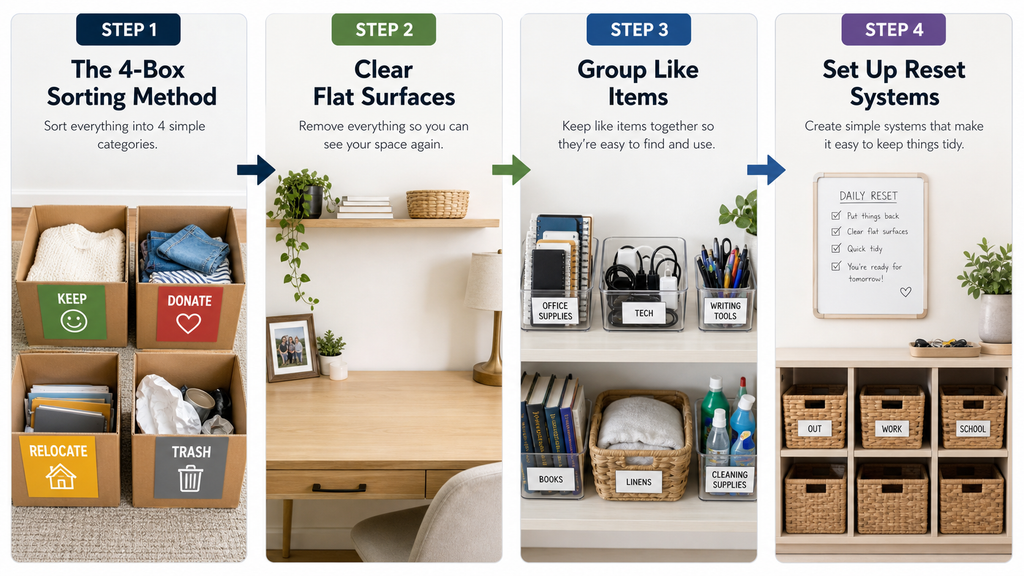
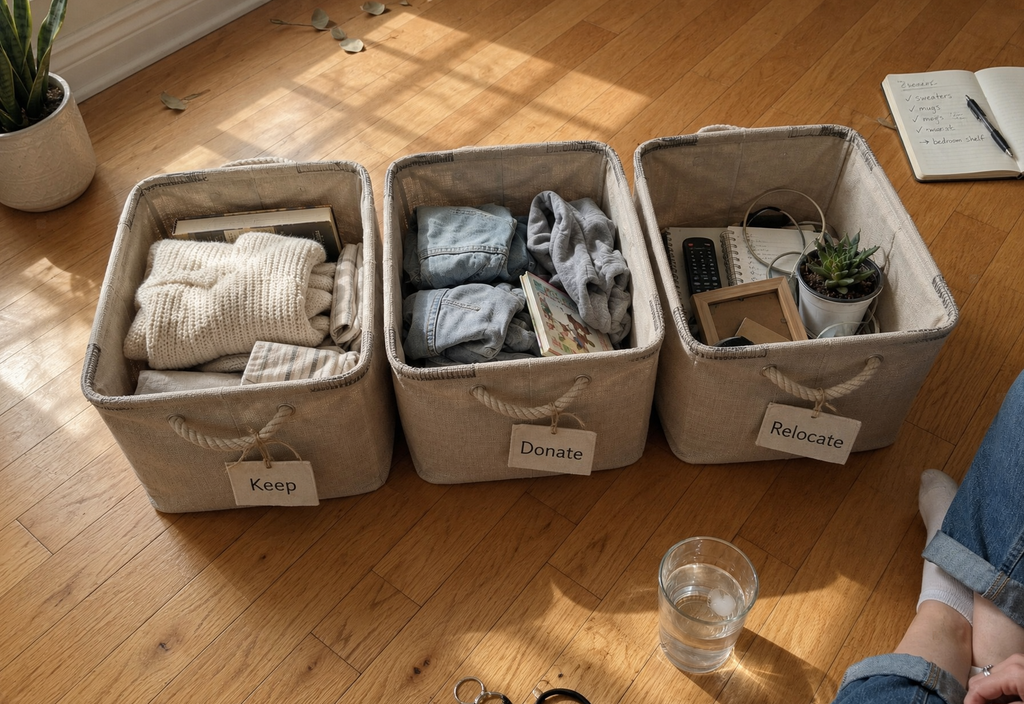
Step 1: The 4-Box Sorting Method
Whenever you tackle a drawer, closet, or room, bring four containers or bags with you:
- Keep: Items that are actively used, fit well, and belong in this specific room.
- Relocate: Items that belong in another room (e.g., coffee mugs sitting on bedroom nightstands).
- Donate / Sell: Good-condition items that you no longer wear, use, or need.
- Trash / Recycle: Expired, broken, or unsalvageable items.
Step 2: The Flat Surface Rule
Flat surfaces—kitchen counters, dining tables, entryway benches, and washer lids—are clutter magnets. When one item lands on a flat surface, it sends a visual signal that more items can be placed there. Focus on clearing flat surfaces first to give yourself an instant boost of visual calm and operational space.
Step 3: Group Like Items Together
Gather all similar items from across the space before deciding what to keep. For instance, gather all stain removers, extra lightbulbs, or winter scarves into one spot. Seeing the total quantity all at once makes it easier to spot duplicates and make confident purging decisions.
Step 4: The Permanent Donation Basket
Set up an attractive, permanent donation basket in a central area—such as the laundry room or primary closet. As you come across outgrown clothes or unused home goods during your weekly routine, drop them straight into the basket. When it fills up, take it directly to a local donation center.
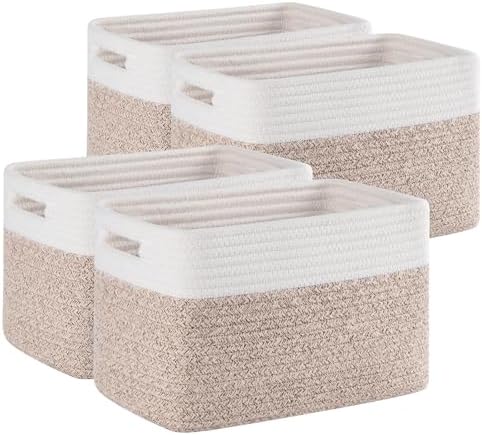
- Cotton
- Durable and Safe: SIXDOVE Soft Woven Storage Basket. Made of high-quality natural cotton rope, these storage baskets are…
- Stylish and Elegant: SIXDOVE Cotton Rope Storage Basket. The woven design of these baskets adds a touch of rustic charm …
Room-by-Room Decluttering Checklist
Different rooms suffer from different types of clutter. Use this quick checklist to streamline the high-friction areas in your home.
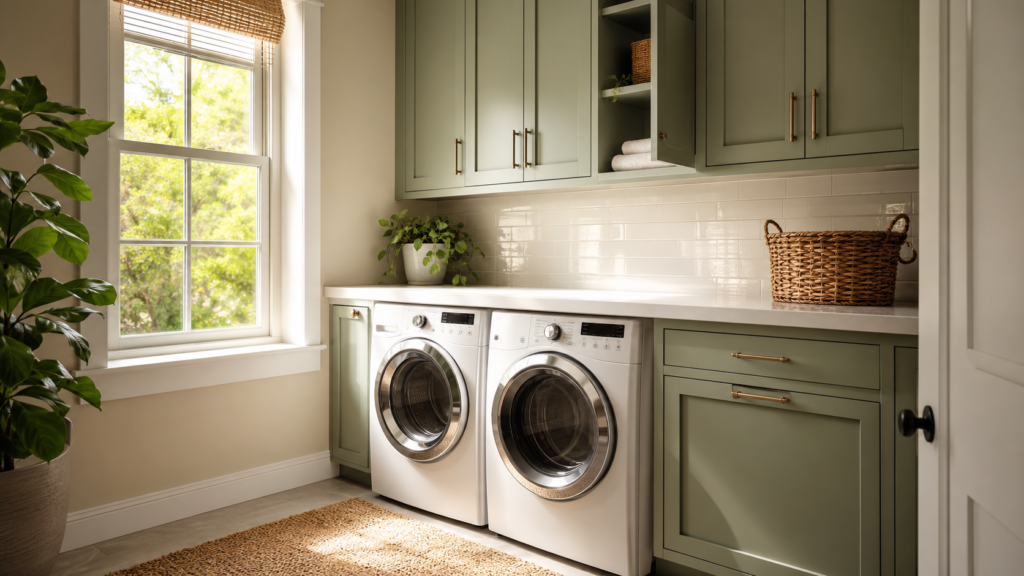
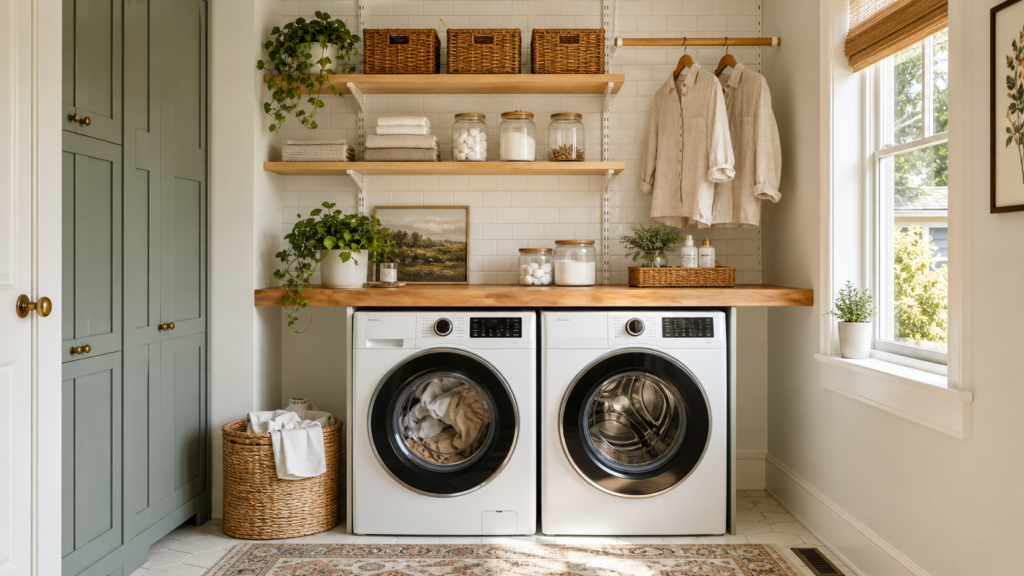
1. The Laundry Room & Utility Closet
- Remove Dumping Ground Overflow: Relocate non-laundry items like lawn tools, coolers, and old paint cans out of the laundry area.
- Purge Expired Cleaners: Safely discard dried-out cleaning wipes, empty soap bottles, and harsh chemicals you no longer use.
- Clear the Washer Top: Keep machine tops completely clear to serve as your primary sorting and folding surface.
CHECK OUR LAUNDRY ROOM ORGANIZATION GUIDE
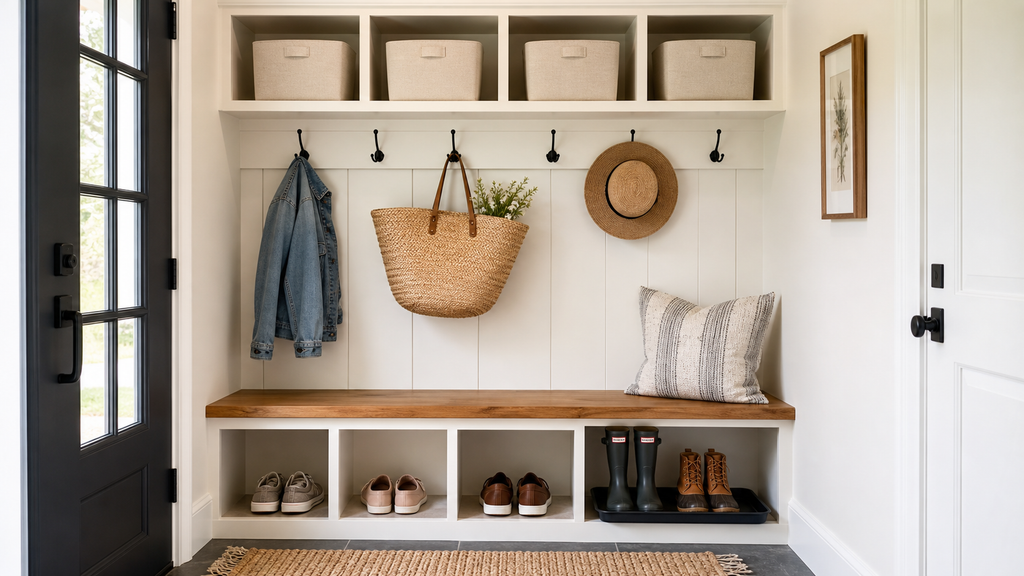
2. The Entryway & Mudroom Drop Zone
- Clear Mail Piles: Process mail immediately over the recycling bin—shred financial documents, file action items, and discard junk mail.
- Limit Active Shoes & Coats: Keep only 1–2 pairs of current daily shoes and weather-appropriate jackets in the entry; move off-season gear to bedroom closets.
PETCHCREA MUDROOM & DROP ZONE IDEAS]
CHECK OUR MUDROOM & DROP ZONE IDEAS
3. Kitchen & Pantry
- Clear Countertop Appliances: Keep only daily-use appliances (like the coffee maker) on the counter; tuck toaster ovens or blenders into lower cabinets.
- Purge Expired Food: Check expiration dates on canned goods, spices, and bulk pantry items. Group remaining baking supplies and snacks into clear bins.
4. Bedrooms & Closets
- Eliminate the « Laundry Chair »: Fold or hang clean clothes immediately rather than letting them accumulate on bedroom chairs or benches.
- The Hanger Flip Trick: Turn all clothing hangers backward. When you wear an item, turn the hanger forward. After 6 months, donate any clothes still hanging backward.
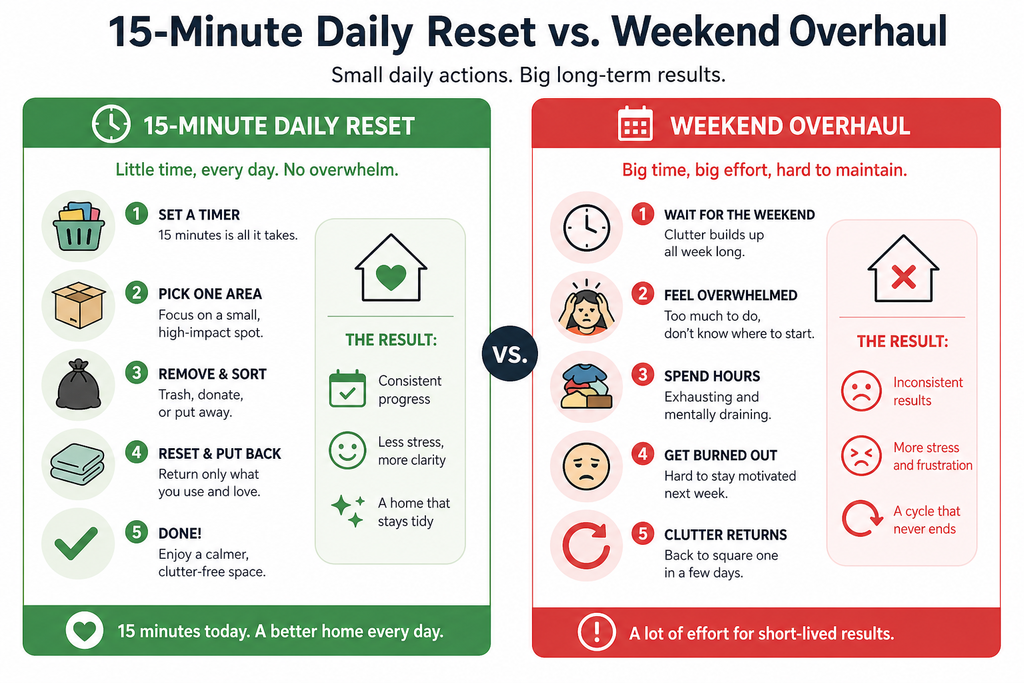
Decluttering Strategies: Marathon Blitz vs. 15-Minute Daily Resets
| Method | Best For | Key Advantage | Main Drawback |
|---|---|---|---|
| Weekend Marathon Blitz | Moving, major life transitions, or spring cleaning | Clears large areas quickly in 1–2 days | High physical and mental exhaustion; hard to schedule |
| 15-Minute Daily Resets | Busy parents, working professionals, small homes | Low stress; builds permanent long-term habits | Progress feels slower initially |
| One-In, One-Out Rule | Maintaining decluttered spaces long-term | Prevents new clutter from building up | Requires discipline when buying new items |
Small-Space Storage Hacks to Keep Clutter Away
Once you have purged unnecessary items, maximize your remaining space with these smart storage solutions:
- Vertical Door Space: Utilize over-the-door hanging organizers for cleaning sprays, shoes, or pantry items to free up shelf space.
- Clear Acrylic Dividers: Use drawer dividers and clear acrylic bins to keep smaller items—like batteries, cables, and cosmetics—from tangling into a jumbled mess.
- Under-Bed Storage Rolling Bins: Store off-season clothing, extra linens, or extra paper goods in low-profile rolling bins hidden underneath bed frames.
Frequently Asked Questions (FAQ)
1. How do I start decluttering when I feel completely overwhelmed?
Start small! Pick one single drawer, a small entry counter, or a single shelf rather than a whole room. Tackling a 15-minute micro-project gives you an immediate win and builds momentum without exhausting your energy.
2. What should I do if my partner or family members are hesitant to let go of clutter?
Focus on your own personal items and shared common spaces first. Set up friction-free systems—like labeled hampers, drop baskets, and designated shoe trays—that make putting things away easier than leaving them out.
3. How do I stop clutter from coming back after I finish?
Adopt the « One-In, One-Out » rule: whenever you bring a new item home (such as a pair of shoes, a coat, or a mug), donate or recycle an existing one. Pair this with a 5-minute night reset to clear flat surfaces before bed.
4. Where should I store items I am unsure about keeping?
Create a « Maybe Box. » Place questionable items inside, seal the box, and label it with a date 6 months in the future. If you do not open the box to retrieve anything during those 6 months, donate the entire box without opening it.
Conclusion & Final Takeaway
Decluttering is not about creating a sterile, picture-perfect home—it is about creating a functional, peaceful living environment that serves your daily life. By purging unused items first, keeping flat surfaces clear, and establishing a simple 15-minute daily reset, you eliminate daily friction and make maintaining your home effortless.