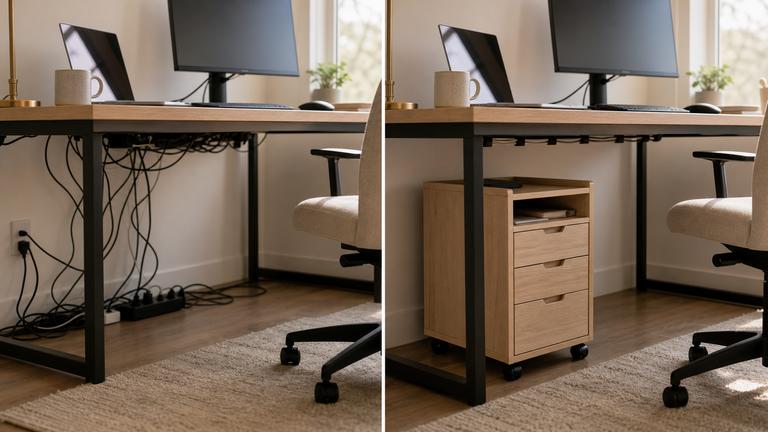
Small Home Office Organization: The Complete Guide
💡 Affiliate Disclosure: PetchCrea is reader-supported. When you buy through links on our site, we may earn an affiliate commission at no additional cost to you. As an Amazon Associate, I earn from qualifying purchases. We only recommend products that genuinely help you optimize and organize your space.
A small home office can become messy very quickly. Papers pile up, cables get tangled, supplies spread across the desk, and suddenly the workspace feels much smaller than it really is. When that happens, it becomes harder to focus, harder to work efficiently, and harder to keep the space enjoyable.
The good news is that a small home office can still be highly functional. You do not need a large room or expensive furniture to create a workspace that works well. What you need is a clear organization system, smart storage, and a simple layout that supports the way you actually work.
In this complete guide, you’ll learn how to organize a small home office step by step. We’ll cover desk setup, storage ideas, paper management, cable control, vertical organization, and practical ways to keep the space clean and productive every day.
For a more detailed article, you can also read:
- Small desk organization ideas
- Small office storage solutions
- Home office cable management
- Vertical storage for workspaces
- Small room office layout ideas
Quick Navigation
ToggleThe Biggest Challenges in a Small Home Office
Small home offices usually struggle with the same problems:
not enough desk space
too many supplies on the surface
paper clutter
messy cables
no clear storage system
furniture that takes up too much room
distractions caused by visual clutter
The biggest issue is often not the size of the room, but the lack of structure. When work items are stored randomly, the room feels crowded and stressful. When everything has a place, the same room feels calmer, more open, and much easier to use.
How to Organize Your Desk

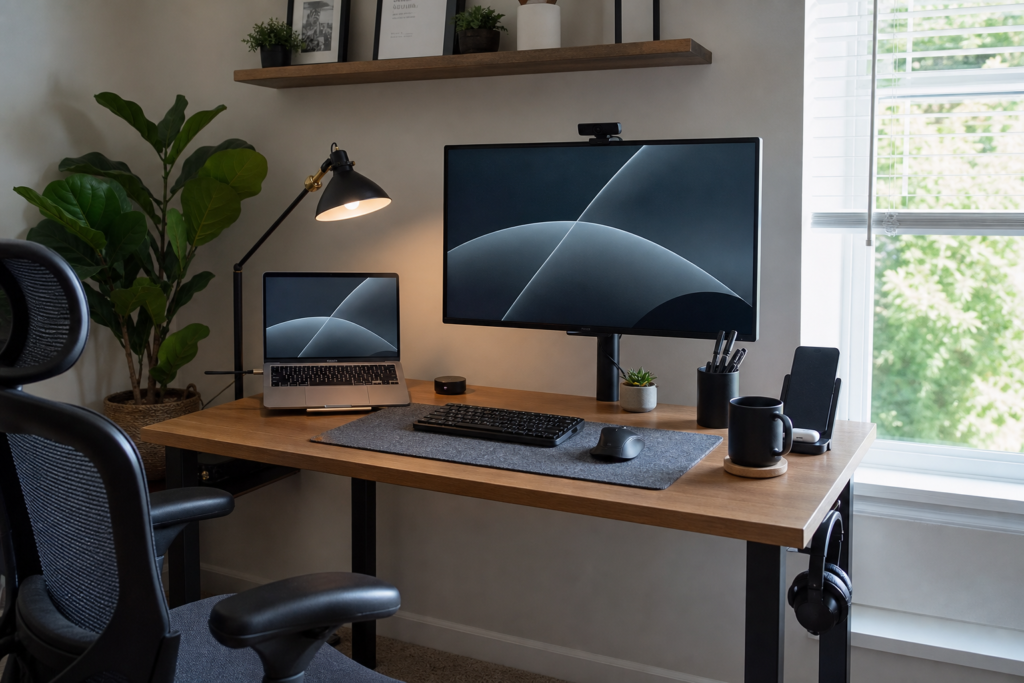
Your desk should be the most functional part of the office. It should support your work, not hold everything you own.
1. Keep only what you use daily
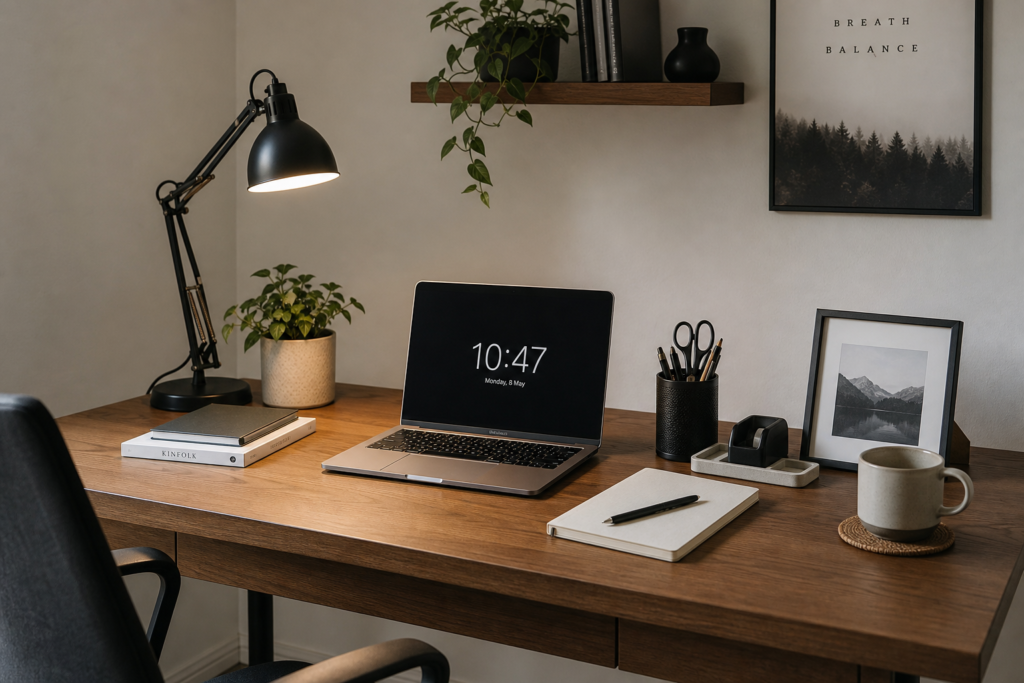
A small desk should contain only the essentials:
notebook
pen holder
lamp
one or two work tools you use often
Everything else should be stored in drawers, bins, shelves, or cabinets.
2. Create zones on the desk
Even a small desk can have simple zones:
work zone
writing zone
charging zone
note-taking zone
This helps prevent the surface from becoming a random mix of objects.
3. Avoid overdecorating
A few personal items are fine, but too many decorations can make the space feel busier than it is. Keep the desktop calm and useful.
How to Store Office Supplies
Office supplies are small, but they can create a lot of clutter when they are not organized properly.
Group supplies by category
For example:
writing tools
sticky notes
paper clips
chargers
notebooks
labels
printer supplies
Use containers that fit the space
Small bins, drawer trays, and desktop organizers can help separate items without taking up too much room. Clear containers are especially helpful because they let you see what you have.
Keep duplicates under control
It’s easy to buy too many pens, notebooks, or folders. Try to keep only the amount you realistically need. That makes storage easier and reduces clutter.

How to Manage Papers and Documents
Paper clutter is one of the most common problems in a home office. Even if you work mostly digitally, papers still tend to accumulate.
Sort papers into simple groups
You can organize papers into categories such as:
to do
to file
to scan
to shred
important documents
reference material
Use one paper system
Do not mix loose papers with notebooks, folders, and random piles. Pick one system and keep it consistent.
Store important documents safely
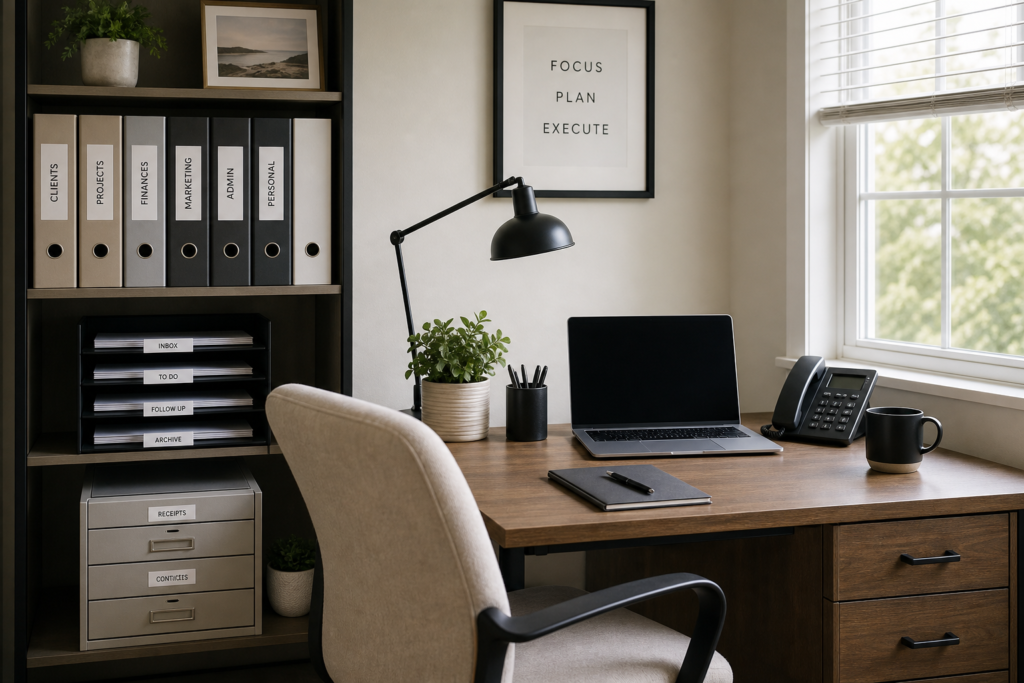
Use labeled folders, file boxes, or binders for documents you need to keep. This is especially important in a small office because loose documents quickly make the room look messy.
Reduce paper whenever possible
Go digital where you can. Scan documents, store files on your computer or cloud system, and only keep printed materials that are truly necessary.
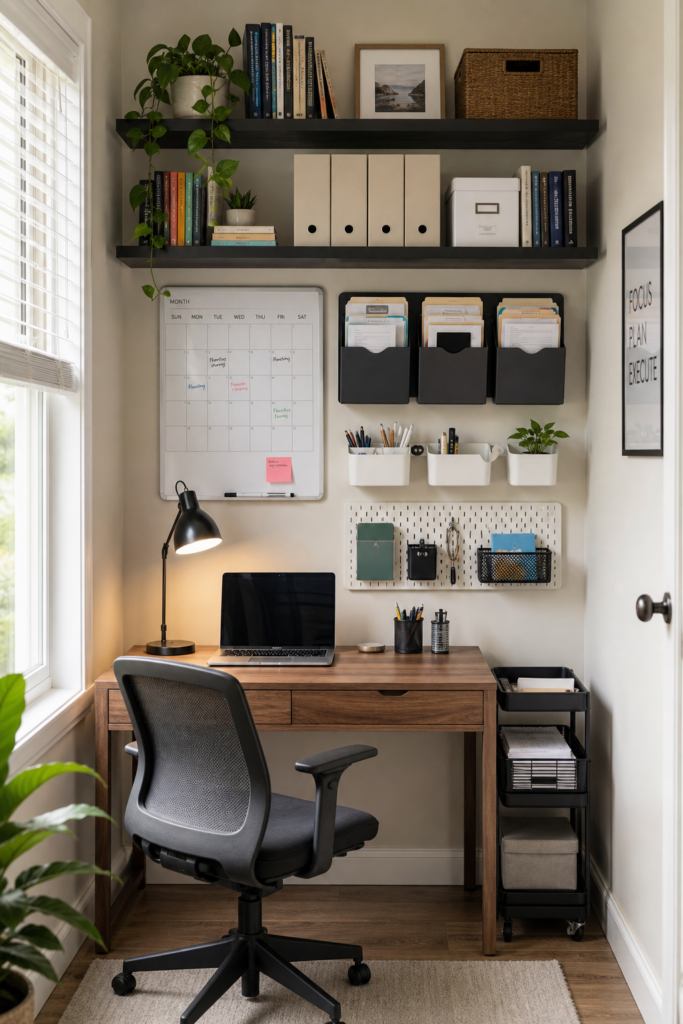
How to Use Vertical Space

When floor space is limited, the best way to gain storage is to go upward.
Good vertical storage options
wall shelves
pegboards
floating shelves
hanging organizers
wall-mounted file holders
hooks for headphones or bags
tall narrow storage units
Vertical storage helps free up the desk and floor while still giving you room for supplies and documents.
Keep the wall storage intentional
Do not turn the wall into visual clutter. Use vertical space for items you access often or items that help keep the desk clear.
How to Organize Cables and Electronics
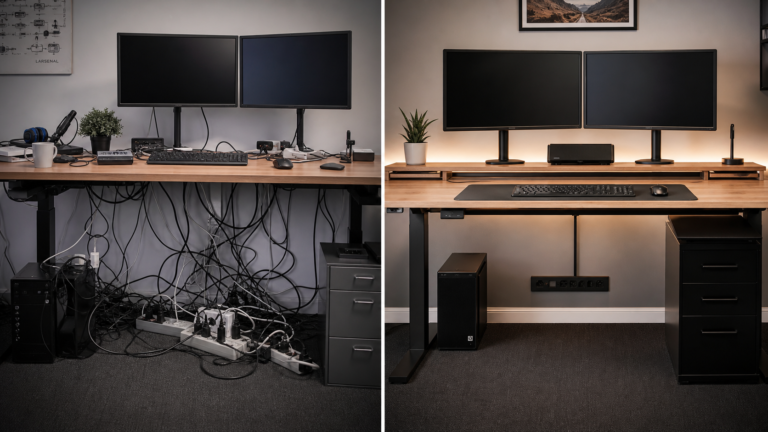
Cables can make a small office look messy even when everything else is tidy.
Start by removing unnecessary cables
Keep only the chargers, cords, and devices you really use. Store backups separately if needed.
Bundle cables neatly
Use:
Give electronics a dedicated spot
Your printer, charger, speakers, or other devices should each have a defined place. This helps prevent the office from becoming overloaded with equipment spread across the room.
How to Choose the Right Furniture
Furniture can make a small home office feel either organized or overcrowded.
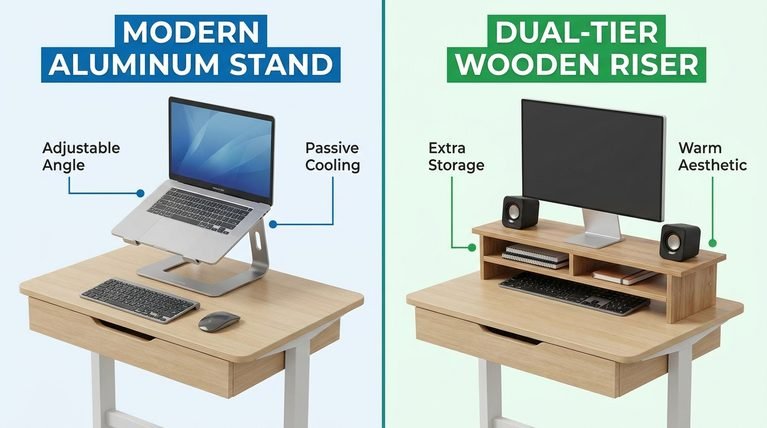
Best furniture for small home offices
a compact desk
a desk with drawers
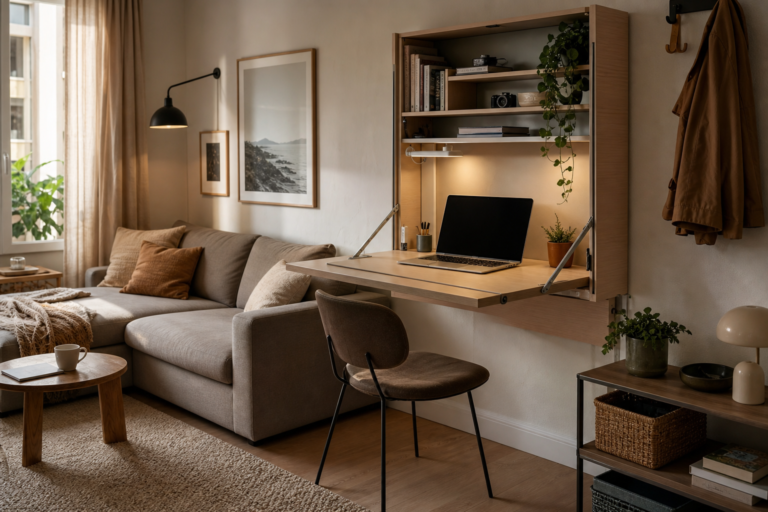
a wall-mounted desk
a slim filing cabinet
a narrow shelf unit
a comfortable but not oversized chair
Choose furniture by function
Before buying, ask:
does this fit the room?
does it support the way I work?
does it add storage?
does it block movement?
is it multi-purpose?
In a small office, furniture should solve problems, not create them.
How to Keep a Small Home Office Organized Every Day
A small office only stays organized if it is easy to maintain.
Simple habits that help
clear the desk at the end of the day
put supplies back in their place
file papers immediately
unplug and manage cables regularly
keep only current projects visible
Do a quick reset often
You do not need a long cleaning session every day. A 5-minute reset can be enough to keep the space under control.
Avoid letting the desk become storage
The desk is for working. If it becomes the place where everything gets dropped, the whole office will feel less functional.
FAQ
How do I organize a very small home office?
Start by decluttering, then create clear zones for your desk, supplies, papers, and storage. Use vertical space and choose compact furniture that fits the room.
What should I keep on my desk?
Keep only the items you use daily, such as your laptop, notebook, pen holder, lamp, and maybe one or two tools you need often.
How do I store office supplies in a small space?
Group supplies by category and use small containers, drawer trays, or shelves to keep them organized. Avoid storing too many duplicates.
How do I manage paper clutter in a home office?
Sort papers into categories like to do, to file, to scan, and to shred. Use folders or file boxes and reduce paper whenever possible.
How do I make a small office look less cluttered?
Keep the desk clear, use vertical storage, control cables, and avoid filling the space with too many items or decorations.
Conclusion
Small home office organization is not about having more space. It is about using the space you have in a smarter way. When you declutter, organize supplies, manage papers, use vertical storage, and choose the right furniture, even a compact workspace can feel efficient, calm, and productive.
When working from home in a compact house or apartment, organizing the surrounding living areas is just as important for keeping distractions low and focus high:
- Multipurpose Bedrooms: If your desk shares space with your sleeping area, check out our complete guide to Small Bedroom Organization to keep clothes, closets, and clutter from invading your workspace.
- Kitchen & Break Areas: Clear off counters and keep meal prep efficient by learning How to Organize a Small Kitchen with smart cabinet and pantry zones.
- Household Workflows: Keep daily chores running on autopilot in tight quarters with our practical Small Laundry Room Organization Guide.