Smart Space Saving Bedroom Furniture Ideas for Tiny Rooms
💡 Affiliate Disclosure: PetchCrea is reader-supported. When you buy through links on our site, we may earn an affiliate commission at no additional cost to you. As an Amazon Associate, I earn from qualifying purchases. We only recommend products that genuinely help you optimize and organize your space.
Ever tried turning around in your bedroom and bumping into something you absolutely do not remember placing there? That’s usually the moment people start looking for space saving bedroom furniture. Small bedrooms get crowded fast because they’re asked to do too much: sleep, store clothes, hold a desk, maybe even pretend to be a mini office. It’s no wonder they start feeling packed.
The good news is there isn’t one perfect system, because every room is a little stubborn in its own way. What works in a narrow rental might be a terrible idea in a tiny guest room. In this guide, we’ll walk through the smartest ways to make a small bedroom feel calmer, lighter, and way less annoying to live in. Think practical furniture choices, better layouts, and a few simple tricks that make the room work with you instead of against you.
Start With the Real Problem: Small Bedroom, Big Amount of Stuff
A small bedroom usually doesn’t feel small because of the walls. It feels small because everything inside it is fighting for the same few square feet. A bed, wardrobe, desk, laundry basket, maybe a chair that somehow turned into a clothing hanger — and suddenly the room is doing its best impression of a storage closet with pillowcases.
That’s where space saving bedroom furniture starts making sense. The trick is to stop thinking in single-purpose pieces and start looking for furniture that earns its spot. A bed that stores things underneath, a nightstand that replaces a bulky dresser, shelving that uses the wall instead of the floor — all of that helps the room breathe a little.
The goal is simple: keep as much floor space visible as possible. That doesn’t just make the room look bigger; it makes it easier to move around without doing a weird sideways shuffle every morning. Vertical storage helps too, because walls are very underused in small bedrooms and honestly, they deserve better.
A 9×10 bedroom with a bed, wardrobe, desk, and laundry basket can feel cramped fast. But if one piece does two jobs and another gets lifted off the floor, the whole room changes.
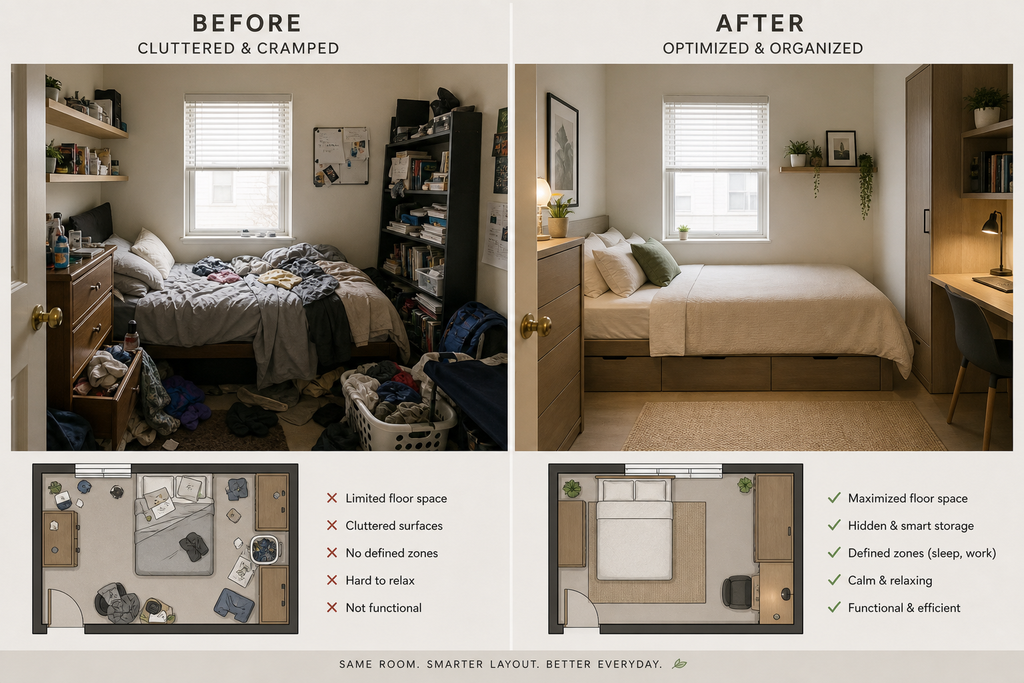
The real magic happens when every item has a job, and none of them are getting too comfortable.
What Actually Counts as Space Saving Bedroom Furniture?
Not every “small” piece is actually space-saving. A tiny chair that still takes up floor space is just a tiny problem in a smaller package. Real space saving bedroom furniture solves more than one issue at once.
That usually means pieces like beds with storage drawers, wall-mounted nightstands, slim wardrobes, foldaway desks, ottomans with hidden storage, modular shelving, and under-bed organizers. The pattern is pretty simple: if a piece can store, fold, float, or replace something else, it’s doing the job.
The easiest way to use this idea is to look at what your room is missing most. Need more clothing storage? A bed with drawers can replace a separate dresser. Need a place for books and chargers without crowding the floor? A wall-mounted nightstand keeps the room lighter. Trying to fit work and sleep into one room? A foldaway desk can disappear when the laptop closes, which is honestly a lovely concept.
The tradeoff is that some of these pieces can cost more or require a little planning before you buy. A storage bed, for example, works best if you actually need the storage and can still open the drawers easily.
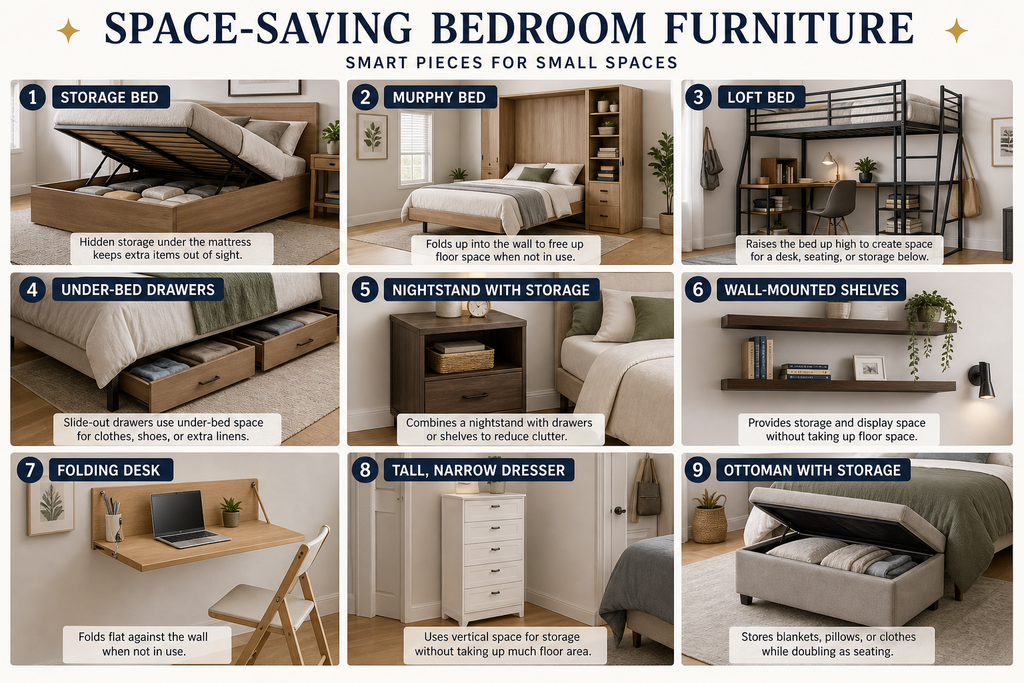
The best rule is simple: if it saves space and makes the room easier to live in, it counts.
The Best Space Saving Furniture Starts With the Bed
Beds With Built-In Storage
If the bedroom is tight, the bed should earn its keep. The space under it is usually doing absolutely nothing except collecting dust bunnies and the occasional missing sock, so built-in storage is an easy win. A bed with drawers, a lift-up base, or enough clearance for bins can quietly replace a whole chunk of extra furniture.
That’s why this type of space saving bedroom furniture works so well: it solves storage without asking the room to grow a foot wider. Winter clothes, spare bedding, and shoes can live under the bed instead of taking over a second closet or spilling out of a dresser that already has trust issues.

- 【Large Storage Space】 Fluest Twin bed frame with storage make a smart sleep solution for anyone who enjoys maximizing th…
- 【Customizable Lights for Ambiance and Mood】You can match the lighting to your mood. Whether you’re winding down with a b…
- 【Headboard with Charging Station】The headboard features a built-in charging station at its top, comprising two AC outlet…
The only catch is access. If the drawers can’t open properly, or the lift-up frame is awkward to use, the “smart” part gets old pretty fast. It helps to measure carefully and think about what you’ll store before buying.
Murphy Beds and Fold-Down Beds
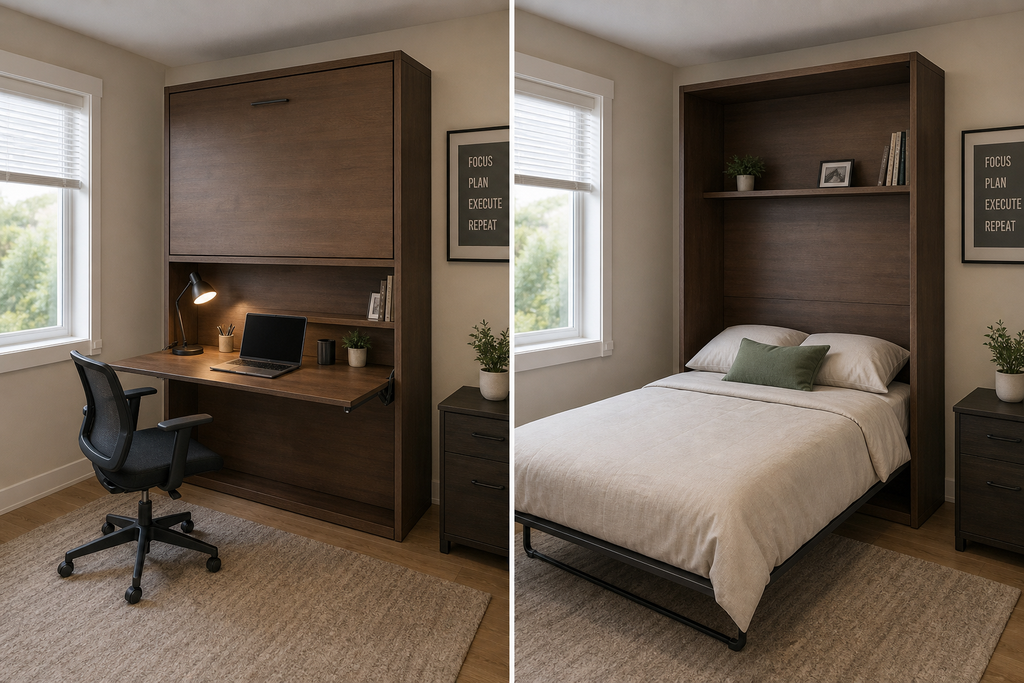
When the bed itself is the biggest problem, a Murphy bed or fold-down bed starts looking very clever indeed. These are ideal for rooms that need to switch roles during the day. A studio bedroom can feel like a home office in the morning and a sleeping space at night, without the bed squatting in the middle of everything.
The tradeoff is that these beds need more planning, and they’re not always the cheapest option. Still, if the room has to work hard, the payoff can be huge.
Loft Beds for Height, Not Just Kids’ Rooms
If the floor is full but the ceiling has room to spare, a loft bed makes perfect sense. Raising the bed frees up space underneath for a desk, dresser, or even a small seating area. It’s a very “use the room you already have” kind of move, which is always satisfying.
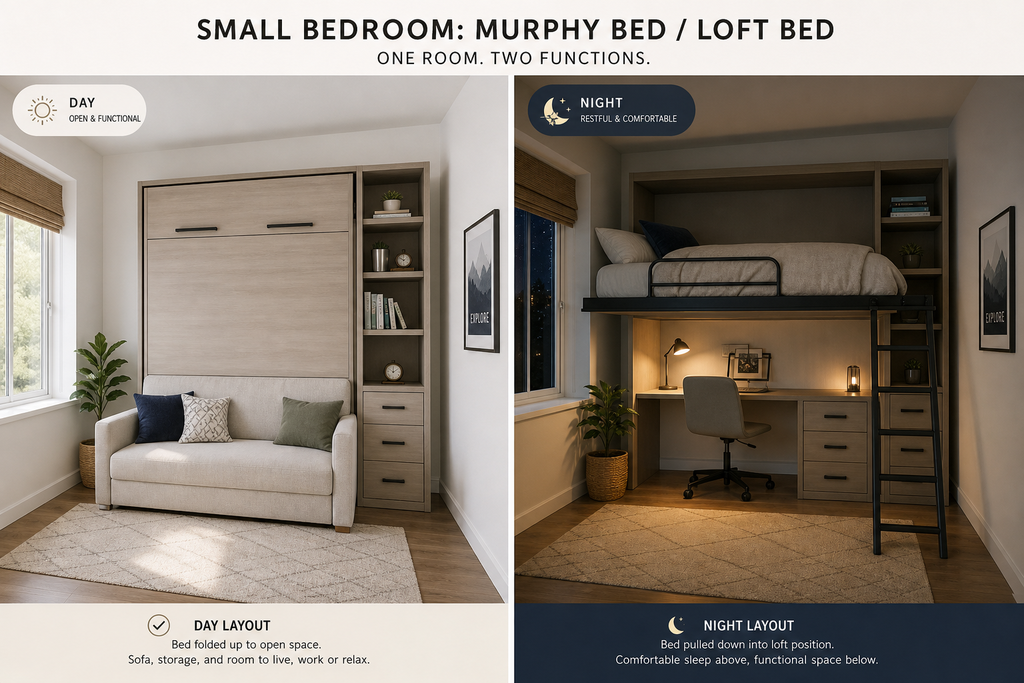
Furniture That Works Double Duty
Small bedrooms get overwhelmed fast when every need gets its own piece of furniture. A chair for sitting, a bench for blankets, a dresser for clothes, a box for random extras… suddenly the room is full before it even feels finished. That’s why space saving bedroom furniture works best when one item does two jobs instead of one.
A storage ottoman can hide extra bedding and still give you a place to sit. A bench with hidden storage is great at the end of the bed, where it can stash throw blankets, bags, or seasonal stuff without hogging the walkway. A nightstand with drawers keeps chargers, books, and the usual bedside mess tucked away, while a desk that doubles as a vanity saves you from buying two separate surfaces. Even a headboard with shelves can help when you need a place for your phone, lamp, or the book you swear you’ll finish this month.
A bench at the end of the bed is a perfect example. It stores blankets, gives you a spot to sit while putting on shoes, and doesn’t demand extra floor space just to exist.
The tradeoff is that double-duty pieces can sometimes be a little bigger or pricier than basic furniture. It’s worth checking whether the storage is actually easy to use, because hidden storage is only helpful if you can reach it without a struggle.
Go Vertical Before You Go Bigger
When a bedroom feels crowded, the problem is often less about the amount of furniture and more about where it’s sitting. Too many pieces are fighting for the same patch of floor, and that’s when the room starts feeling busy in the exhausting way. The fix is simple enough: look up.
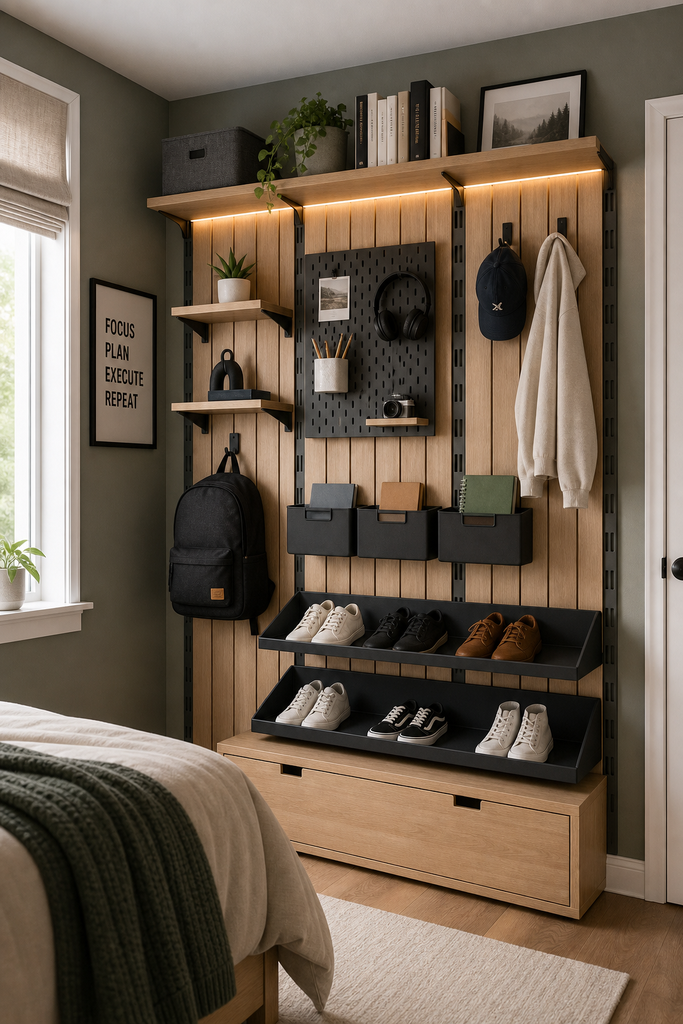
Using wall height is one of the easiest ways to make space saving bedroom furniture work harder. Tall shelving, wall-mounted hooks, floating shelves, peg rails, and over-the-door storage all pull storage off the floor and move it into spots that would otherwise go unused. That leaves the room easier to walk through, easier to clean, and a little less like it’s closing in on you.
A narrow bedroom corner is a good example. Instead of squeezing in a bulky bookcase, one tall shelf can hold books, baskets, and a lamp without crowding the rest of the room. It feels lighter, and the room suddenly has room to breathe. The tradeoff is that vertical storage can look cluttered if it’s overloaded, so a bit of editing helps. Keep the things you use often within easy reach, and let the rest stay tucked away.
Pick Slimmer Pieces, Not Just Smaller Ones
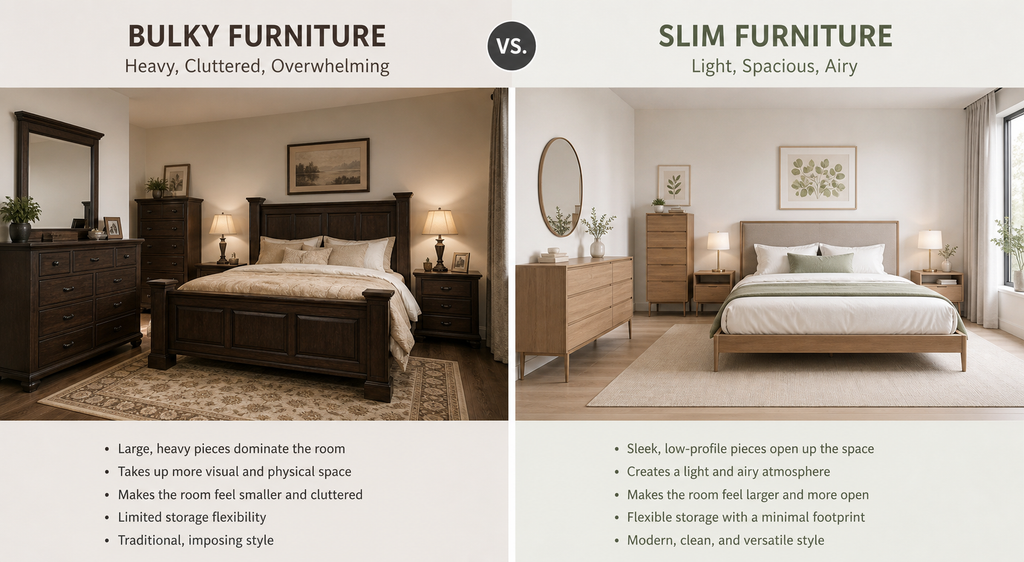
A small bedroom can still feel crowded if every piece of furniture is visually heavy. That chunky dresser might technically fit, but if it looks like it was built to survive a hurricane, it can make the whole room feel tighter than it really is. With space saving bedroom furniture, the shape matters just as much as the size.
That’s why slimmer pieces often work better. Open legs make furniture feel lighter. Narrower profiles leave more breathing room. Simple shapes and lighter materials keep the room from feeling boxed in. Even a modest nightstand can feel more spacious if it has an open shelf instead of a solid blocky base.
A slim nightstand with open shelving is a good example. It still gives you a place for a lamp, a book, and your phone charger, but it doesn’t add as much visual weight as a thick cabinet. That matters more than people think. In a tiny room, the eye needs a little space to rest too.
The tradeoff is that slimmer furniture sometimes offers less storage, so it helps to be realistic about what you actually need to keep nearby. A practical tip: when comparing pieces, don’t just check the measurements. Step back and ask whether the furniture feels airy or heavy. That small difference can change the whole room.
The Hidden Storage Spots People Forget About
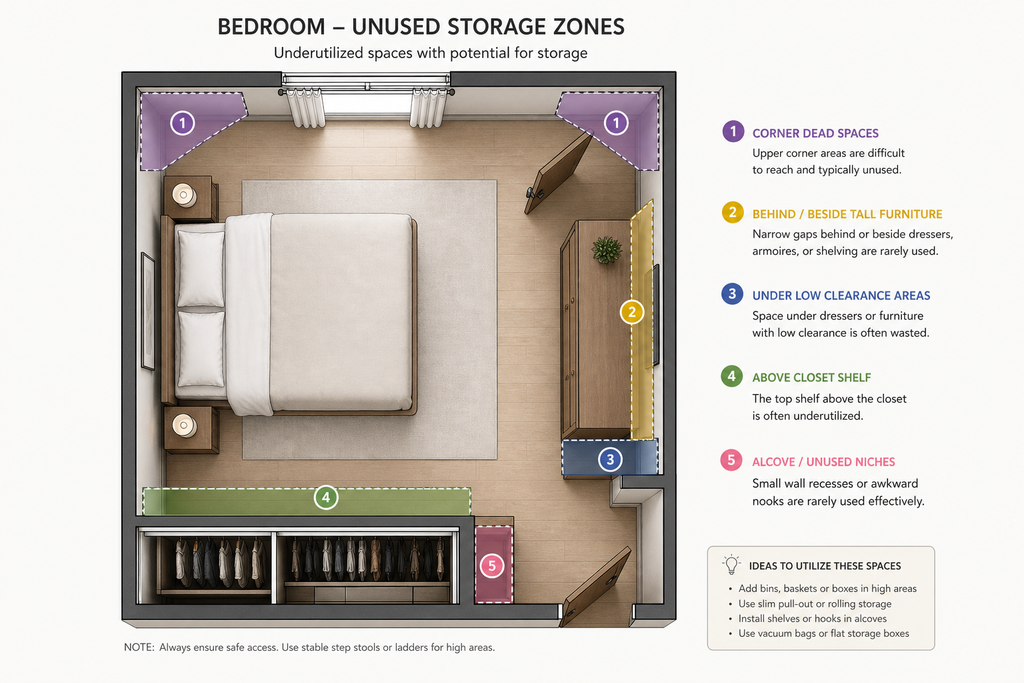
Before buying more furniture, it’s worth checking whether the room is already hiding storage in plain sight. A lot of small bedrooms feel overloaded simply because the useful little gaps get ignored. That’s where space saving bedroom furniture really shines — not just in the big pieces, but in the spots people forget to use.
Think under the bed, behind the door, inside the headboard, under a bench, above the wardrobe, and in that awkward little gap beside the bed that looks useless until you find a rolling cart that fits perfectly. Those spaces are small, but together they can save a surprising amount of floor clutter.
A rolling cart tucked between the dresser and the wall is a great example. It can hold books, toiletries, or folded clothes without demanding its own full corner like a dramatic piece of furniture with opinions. That’s the beauty of hidden storage: it gives you more room without making the bedroom feel more furnished.
The tradeoff is that these spots can get messy fast if they’re not organized well. A practical tip is to use containers that match the space, so you’re not fighting the room every time you need something. If the storage is hard to reach or awkward to open, it may not be worth it.
How to Arrange Space Saving Bedroom Furniture So the Room Still Feels Peaceful
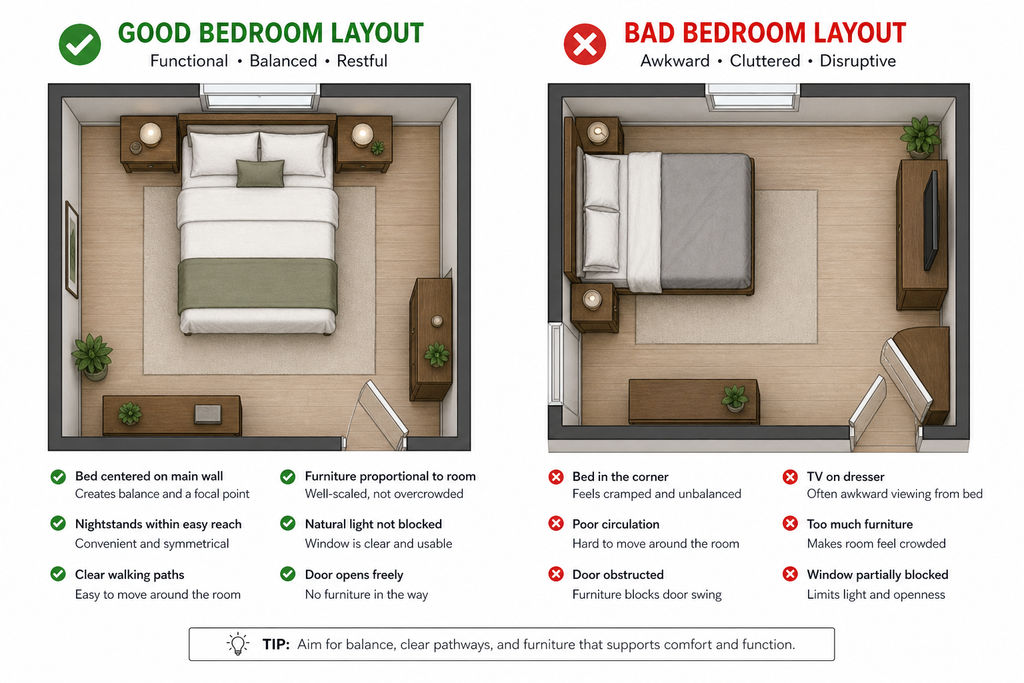
Even the smartest space saving bedroom furniture can feel cluttered if the layout is working against you. A room can have all the right pieces and still feel oddly tense, like everyone showed up but nobody knows where to stand. The fix usually isn’t buying more — it’s giving the room a little breathing room.
Start with the basics: keep pathways clear so you can move without doing furniture parkour. Put the biggest item in first, usually the bed, then build around it instead of squeezing it in last. It also helps to avoid blocking windows, because natural light does a lot of heavy lifting in a small bedroom. And while it may be tempting to line every wall with storage, leaving one open zone helps the room feel calmer and less boxed in.
A good example is moving the desk away from the bed instead of wedging it right beside it. That one change can make a room feel less like a cramped dorm setup and more like an actual place to live and sleep.
The tradeoff is that you may have to give up the idea of fitting everything in one perfect corner. A practical tip: sketch the room before moving anything, even roughly. Sometimes the best layout is the one that leaves a little space unused on purpose.
Simple Room-by-Room Furniture Ideas for Different Small Bedrooms
For a renter
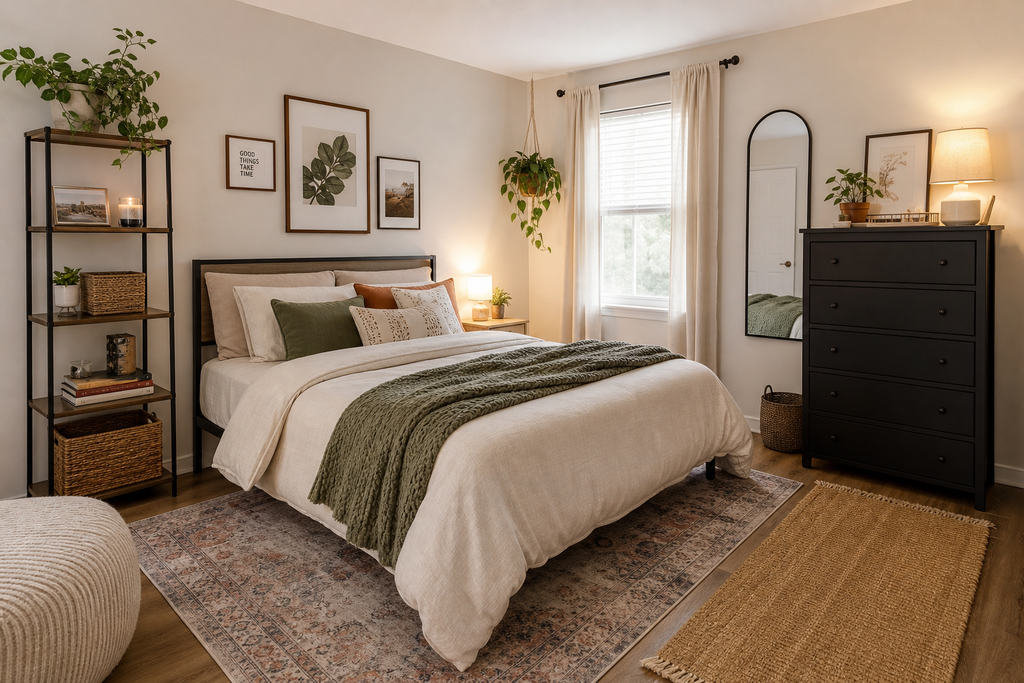
Renters usually need space saving bedroom furniture that solves storage problems without asking for a drill, a landlord, or a long apology later. That means sticking with freestanding, lightweight, non-permanent pieces that can move when you move. A storage bed is a strong starting point, and a rolling nightstand or a few wall hooks can do a surprising amount of work without making the room feel crowded.
A good renter setup might be a bed with drawers underneath, a slim cart beside it, and hooks near the door for bags or jackets. It keeps the room tidy without turning it into a construction project. The only catch is that portable pieces can shift around more easily, so it helps to choose items that are sturdy enough for daily use.
For a kid’s room
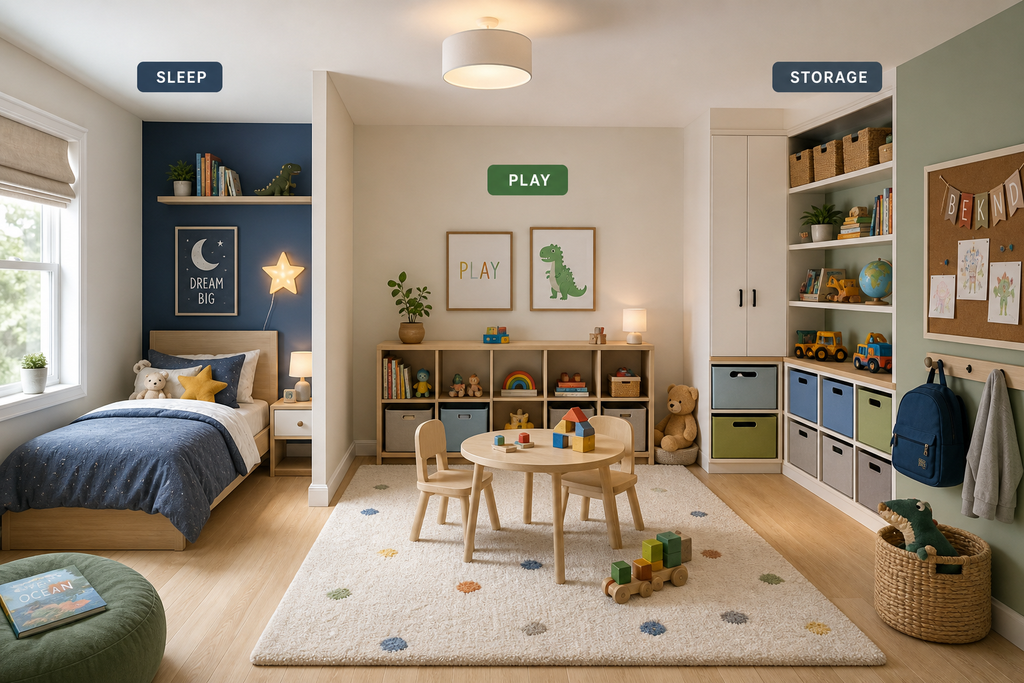
Kids’ rooms have a special talent for collecting toys, clothes, books, and chaos all at once. A loft bed can free up the floor for a play area or study nook, while a toy storage bench and stackable bins keep the mess from spreading everywhere. It works because the room gets zones instead of one giant pile of “stuff.”
For a studio or guest room
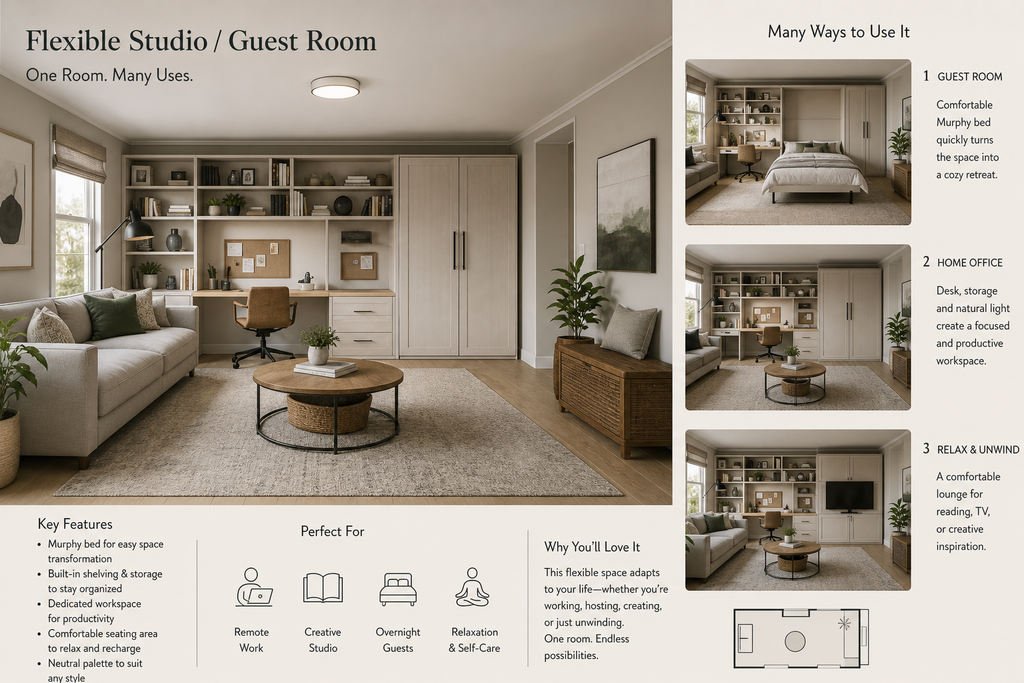
When one room has to switch jobs constantly, flexibility matters more than anything. Foldable beds, hidden storage, and multipurpose seating make it easier to go from daytime living to nighttime sleeping without a full furniture shuffle. A sofa bed, nesting tables, and a fold-down desk can do that nicely. The tradeoff is that these pieces need to be chosen carefully so they still feel comfortable and easy to use.
How to Choose the Right Pieces Without Overbuying
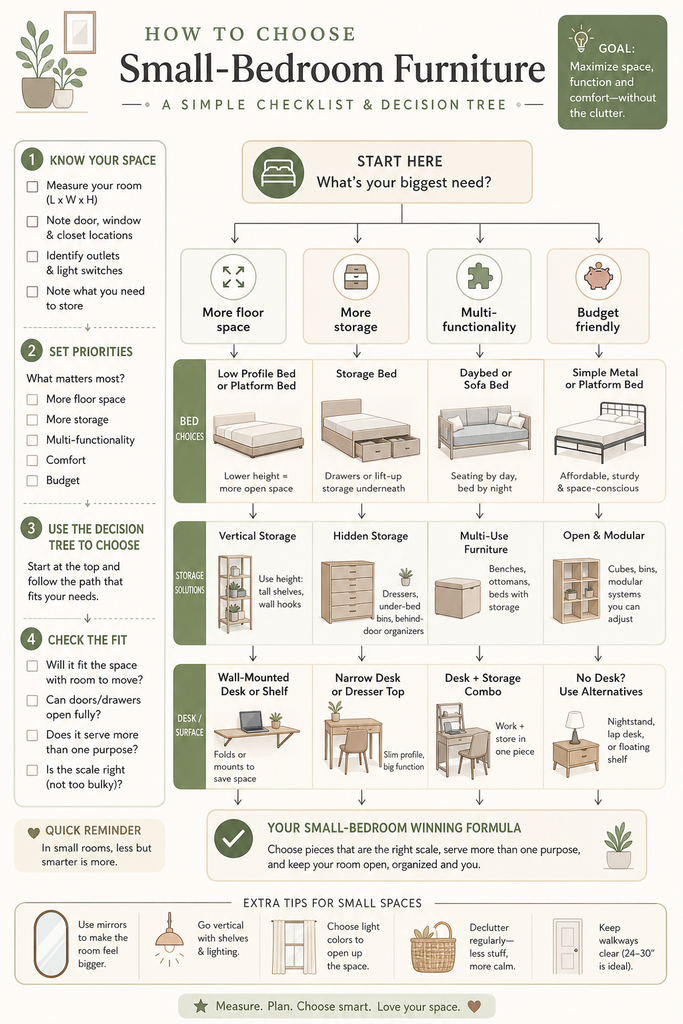
It’s surprisingly easy to buy furniture that looks smart on paper and still doesn’t fix the actual problem. A room can end up with three “space-saving” pieces that somehow use even more space, which is very on-brand for small bedrooms, unfortunately. The better approach is to ask a few simple questions before buying any space saving bedroom furniture.
What do I actually need to store? What piece could replace two others? Will this make walking around easier, or am I just rearranging the clutter? Can I use vertical space instead? Is the item visually light, or does it look like it belongs in a castle dungeon? That little checklist keeps you focused on function instead of falling for furniture that sounds clever but works awkwardly in real life.
A good example is choosing one tall shelving unit instead of buying a separate dresser and bookshelf. It stores both clothes and books, uses the wall instead of the floor, and usually makes the room feel cleaner right away.
The tradeoff is that a single piece may not solve everything, so it helps to know your biggest pain point first. A practical tip: measure the room, then mark out how much walking space you want to keep. If a piece eats into that, it’s probably not the one.
Final Takeaway: Small Bedroom, Less Drama
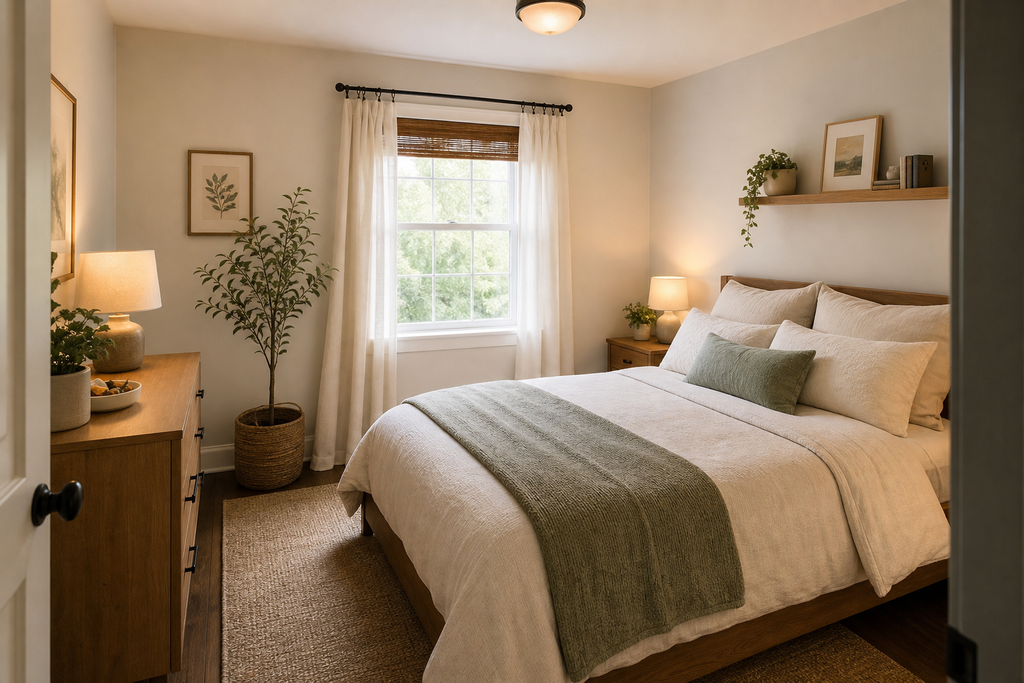
A small bedroom doesn’t need to feel like a daily obstacle course. It just needs furniture that pulls its weight. The best space saving bedroom furniture earns its footprint, hides more than it shows, keeps movement easy, and actually supports the way you live instead of just looking cute in a photo.
That usually means choosing pieces that do more than one job, using wall space better, and leaving a little breathing room on purpose. A room feels calmer when every item has a reason to be there. No random chair. No giant cabinet just because it “fit.” No extra furniture that quietly made the room worse while pretending to help.
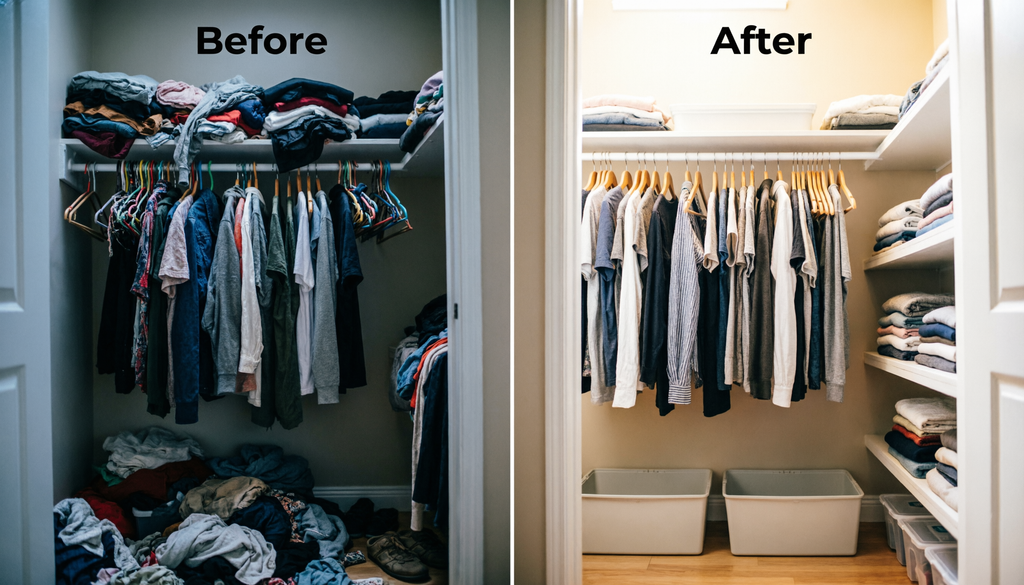
A tiny bedroom can still feel peaceful when the bed stores things, the walls carry some of the load, and the layout stays simple. Even a room that once felt packed can start to feel organized and surprisingly grown-up once each piece has a clear job.
The tradeoff, of course, is that small-space furniture sometimes asks you to be a bit more thoughtful. But that’s a fair deal. A practical tip: before buying anything, ask whether it solves a problem or just fills a corner.
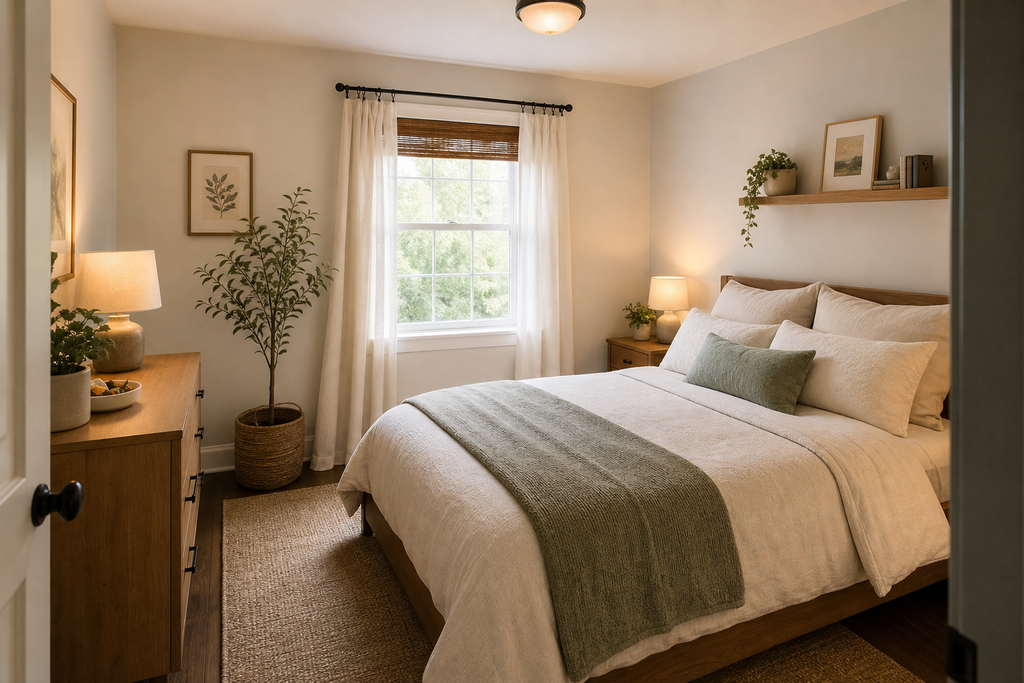
Conclusion
The nice thing about space saving bedroom furniture is that it doesn’t have to solve everything at once. A bed with storage, a slimmer nightstand, a taller shelf, or even a better layout can make a small bedroom feel a lot less chaotic very quickly. The real trick is choosing pieces that earn their spot and make the room easier to live in, not just easier to look at.
If you’re not sure where to start, pick one small change and build from there. Maybe it’s clearing the floor with under-bed storage, or swapping a bulky piece for something slimmer. Every room has its own quirks, so the best setup is the one that fits your habits, your stuff, and your patience level on a Monday morning.
If you want to keep going, you could also check Top 7 Small Laundry Room Storage Ideas, or Small Bedroom Organization: The Complete Guide.
What’s the first piece in your bedroom that’s ready for a smarter job?