Smart Small-Space Living: Reimagining Compact Homes With Creative Design
This article contains affiliate links. If you purchase through these links, we may earn a small commission at no extra cost to you.
Small homes can feel cramped—or surprisingly comfortable. The difference often comes down to how well you use every inch.
Smart small-space living is not about squeezing more furniture into less room. It is about choosing what deserves your space and making each piece work harder. With the right layout, storage, and furniture, even a compact home can feel organized, stylish, and comfortable.
This guide explains how to rethink a small home from the ground up. You will learn how to plan your layout, choose multifunctional furniture, create clever storage, make rooms look larger, and improve small spaces without overspending.
The first step toward better small-space living is changing how you think about limited square footage.
A small home does not have to mean a limited lifestyle. Instead, fewer square feet can encourage more deliberate choices. The goal is to create a home where every object has a purpose and every area supports the way you live.
This approach is central to the idea of “never too small: reimagining small-space living.” Instead of asking what you cannot fit, ask what you actually need.
Start With the Small-Space Edit
Before buying storage bins, shelves, or new furniture, edit what you already own.
Go through your belongings one category at a time. Ask whether each item earns its place in your home. If something is rarely used, duplicated, broken, or simply taking up space, consider removing it.
This simple process can make a bigger difference than buying expensive organizers.
Focus on:
- Clothing you no longer wear
- Kitchen tools you rarely use
- Duplicate household items
- Decorative objects with no practical or emotional value
- Bulky items that serve only one purpose
- Boxes and containers filled with things you have forgotten
Once you remove unnecessary items, your storage needs become much easier to manage.
Follow the “Measure Twice” Rule
Next, measure your space before buying anything.
Record the width and height of walls, windows, doors, hallways, and other fixed features. Also measure elevators, stairways, and door frames if you are moving large furniture into an apartment.
A beautiful sofa is not useful if it cannot get through the front door.
Traffic flow matters, too. Major walkways should have roughly 30 to 36 inches of clearance. Smaller gaps around seating and coffee tables should still provide enough breathing room for comfortable movement.
Do not plan only for furniture. Plan for people.
Finally, study how natural light moves through the room. A darker room may need lighter finishes and layered lighting. A bright room gives you more freedom to experiment with deeper colors and stronger visual accents.
Smart Space Storage Furniture That Does Double Duty
After editing your belongings and measuring the room, choose furniture that solves more than one problem.
In compact homes, multifunctional furniture can reduce clutter while improving comfort. Instead of adding separate pieces for seating, storage, and sleeping, look for products that combine several functions.
Choose High-Performance Small-Space Storage Furniture
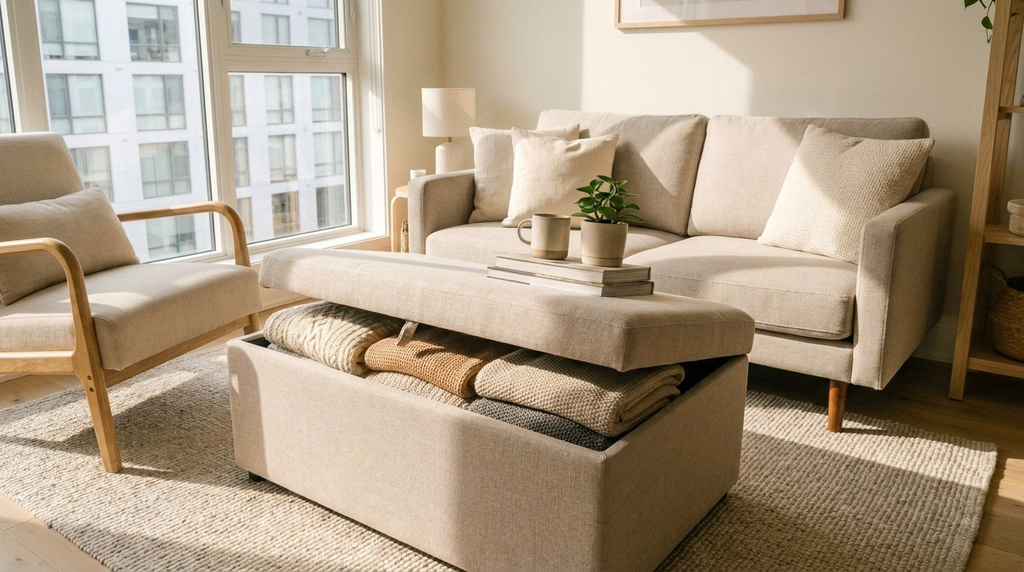
A storage ottoman is one of the simplest examples.
It can work as a footrest, extra seat, coffee table, and hidden storage container. Use it for blankets, pillows, books, games, or other items that need to stay nearby but out of sight.
A sleeper sofa is another useful option. It provides everyday seating while giving guests a place to sleep without requiring a dedicated guest room.
For especially tight homes, consider furniture that disappears when you do not need it.
Useful examples include:
- Wall-mounted fold-down desks
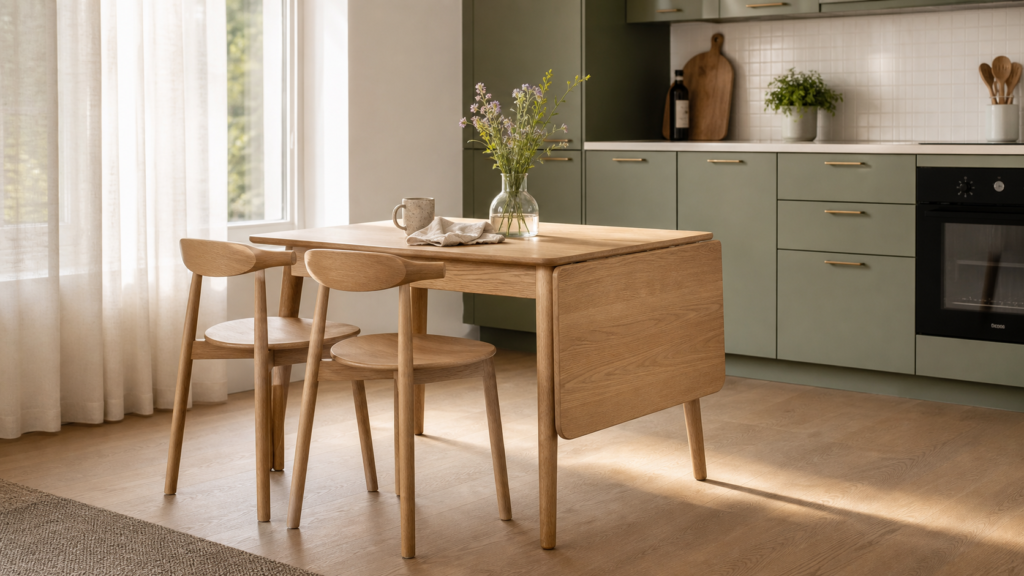
- Drop-leaf dining tables
- Murphy beds
- Folding chairs
- Nesting tables
- Storage benches
- Sectionals with storage chaises
The principle is simple: one piece should ideally perform several jobs.
Storage Solutions for Small Spaces: IKEA and Budget Hacks
Affordable modular furniture can also help you customize a compact home.
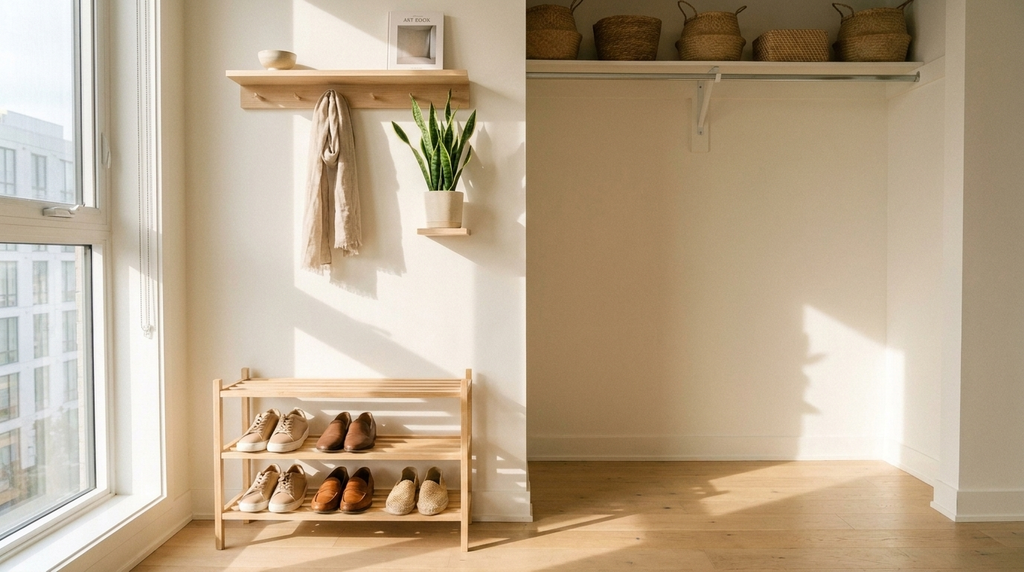
For example, a narrow shoe cabinet can create an organized entryway without consuming the floor space of a large storage unit. The IKEA Hemnes and Ställ lines are examples of narrow storage approaches highlighted in the outline.
Modular wardrobes can also be adapted to different storage needs. A system such as IKEA PAX can provide organized closet storage and may even work for pantry-style organization.
Baskets and modular crates offer another flexible solution. Stack them where appropriate, then place them behind cabinet doors or beneath shelves to hide everyday clutter.
The key is not the brand. It is the flexibility of the system.
Clever Storage Ideas for Small Spaces Bedroom Retreats
Bedrooms often become storage rooms by accident.
Clothes, bedding, shoes, luggage, books, and personal items can quickly overwhelm a small bedroom. Fortunately, the bed itself can become one of your biggest storage opportunities.
Reclaim Floor Space With a Platform Storage Bed
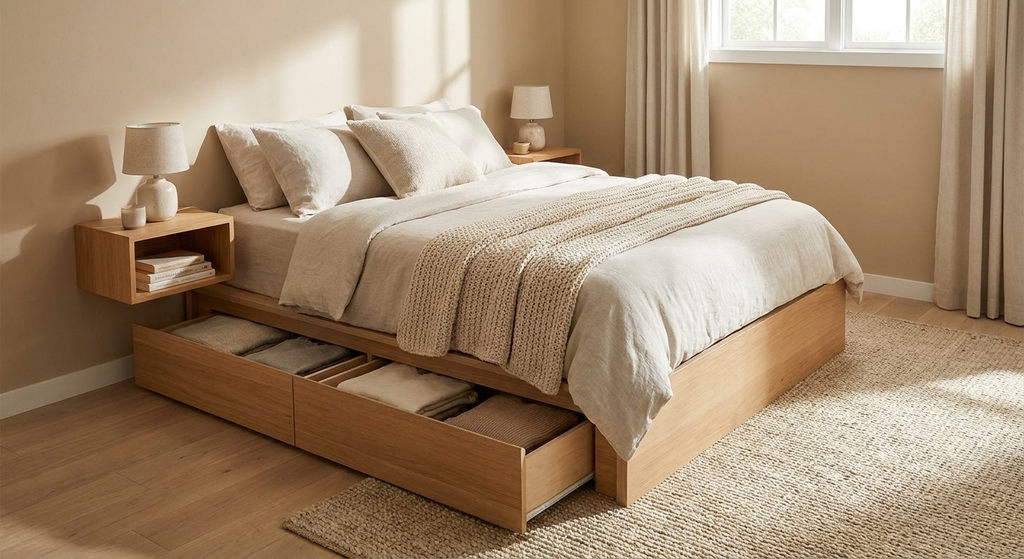
A platform bed with built-in drawers can replace a separate dresser.
That change can free valuable floor space while keeping clothing and bedding close at hand. Choose drawers that are easy to access and deep enough for the items you actually need to store.
For smaller bedrooms, also consider wall-mounted nightstands.
Floating shelves provide a place for a lamp, phone, book, or small personal items without adding another piece of furniture to the floor. Slim C-shaped tables can offer a similar benefit while sliding close to the bed.
Add Seating Without Crowding the Room
You can create a small reading area without adding a bulky chair.
Low-profile, armless slipper chairs can fit neatly into unused corners. Models around 20 to 24 inches wide can provide comfortable seating while preserving walking space.
Keep the visual weight low whenever possible. Furniture that does not dominate the room helps maintain a sense of openness.
Reduce the Physical Volume of Your Belongings
Storage is not always about finding more space. Sometimes it means making your belongings smaller.
Vacuum storage bags can compress seasonal clothing, coats, and bulky bedding. Store those items under the bed or in another low-use area.
For everyday items, use shallow under-bed storage bins. Clear containers with handles or wheels make it easier to find and retrieve what you need.
This is one of the most practical storage ideas for small spaces bedroom areas can use because it turns unused space into functional storage.
Unique Storage Ideas for Small Spaces in the Living Room, Kitchen, and Bathroom
Once the bedroom is under control, apply the same principles to shared areas.
Living rooms often feel crowded because large furniture sits directly on the floor. Kitchens suffer from limited cabinets and countertops. Bathrooms can become visually cluttered very quickly.
The solution is to use vertical space and reduce visual weight.
Small Apartment Ideas: Living Room Strategies
One effective rule is to float furniture off the floor.
Choose sofas, chairs, and media consoles with raised legs. The visible floor beneath them allows light and sightlines to continue across the room.
This can make furniture feel less heavy.
Armless seating can also help. Removing bulky sofa arms can create several extra inches of usable walking room. Swivel chairs are especially useful because one chair can serve different zones.
For example, a swivel chair can face the television, turn toward a desk, or join a conversation area.
Use Open Shelving as a Room Divider
Studio apartments often need separate zones without permanent walls.
A double-sided open bookcase can divide a living room from a dining or sleeping area. Because the shelves remain open, they separate activities without blocking natural light.
Use books, baskets, plants, and decorative objects to create structure while keeping the divider useful.
Start With One Anchor Piece
Do not buy every piece of furniture separately and hope it works together.
Instead, start with one major anchor piece. This could be a modular sectional, sofa, or accent chair.
Use its size, shape, and visual weight to guide the rest of the room. This creates a more deliberate layout and reduces the risk of overcrowding.
In a small room, the sofa deserves particular attention because it is usually the largest piece of furniture.
Maximize Vertical Space in the Kitchen
Countertops are valuable real estate.
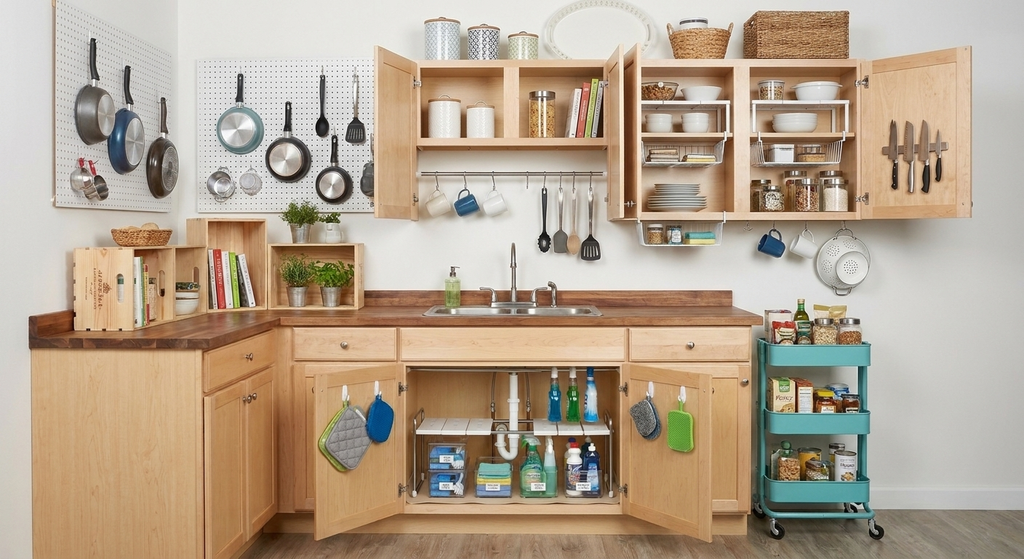
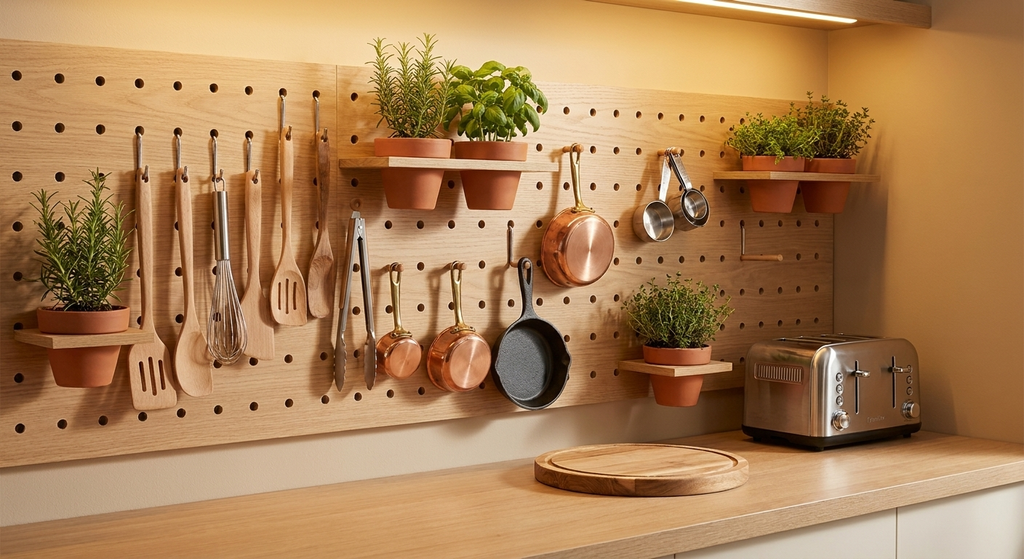
Move frequently used tools upward with wall-mounted pegboards, rails, hooks, and magnetic storage. A system such as IKEA Skådis can organize small kitchen accessories while keeping counters clearer.
Use vertical storage for items such as:
- Cooking utensils
- Cutting boards
- Measuring tools
- Mugs
- Small pans
- Kitchen accessories
The less cluttered your counters are, the larger the kitchen can feel.
Make a Small Bathroom Feel Larger
Bathrooms benefit from reducing visual obstacles.
Floating vanities expose more floor area. Clear glass shower screens remove a visual barrier. Over-the-toilet cabinets add storage without consuming valuable floor space.
Together, these changes can make a compact bathroom feel more open and organized.
Genius Storage Ideas for Small Spaces on a Budget
You do not need a large renovation budget to improve a small home.
Some of the most effective storage ideas for small spaces on a budget use areas that are normally ignored.
Use the Back of Doors
Doors provide hidden vertical storage.
Over-the-door mesh racks, pocket organizers, and adhesive hooks can hold small items without taking floor space.
Try them for:
- Keys
- Accessories
- Cleaning supplies
- Shoes
- Small toiletries
- Household tools
Because the storage sits behind the door, it remains relatively unobtrusive.
Add Shelves Above Doorways
The space above a doorway is another overlooked area.
A long, narrow shelf can store books, baskets, seasonal decorations, or other items that you do not need every day.
Keep heavier items secure and make sure the shelf does not interfere with doors, lighting, or safe movement.
Use Mirrors to Create Depth
Storage is only half of small-space design.
You also need to manage how the room looks and feels.
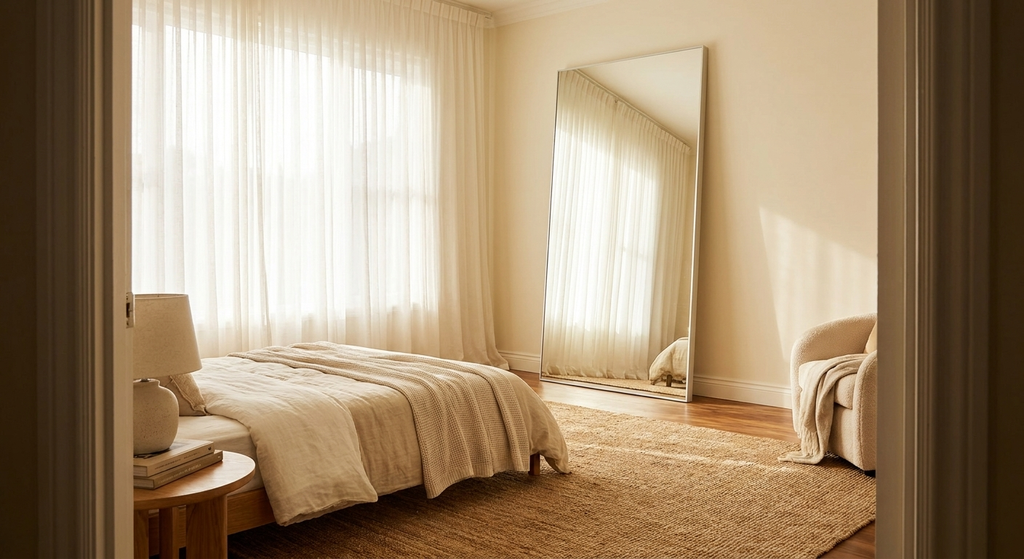
A large mirror can reflect natural light and create the impression of greater depth. Placing a mirror opposite a window can make the room feel brighter and more open.
Full-width or floor-to-ceiling mirrors can have an especially strong visual effect.
Hang Curtains From Ceiling to Floor
Curtains can change how you perceive a room’s proportions.
Mounting light, sheer curtains close to the ceiling and extending them to the floor can emphasize vertical height. This makes windows appear taller and draws the eye upward.
Avoid stopping curtains directly at the bottom of the window if your goal is to increase the sense of height.
Try a Warm Monochromatic Palette
Too many colors can visually divide a small room.
A warm monochromatic palette can create stronger visual continuity. Warm white, ivory, sand, and greige are examples of shades that can work well.
You do not need everything to match perfectly. Instead, keep walls, trim, and larger surfaces within a related color family.
This creates a calmer visual flow.
How to Make Small-Space Living Work for Your Lifestyle
Good design is not only about measurements and storage.
Your home should reflect how you actually live.
If you work from home, prioritize a desk that can disappear or serve another function. If you entertain frequently, choose expandable dining furniture and stackable chairs.
If you rarely cook, you may not need extensive countertop equipment. If you own many books, vertical shelving may deserve more space than decorative furniture.
The best compact-home design starts with your habits.
Ask yourself:
- What do I use every day?
- What needs to stay accessible?
- What can be stored out of sight?
- Which activities need dedicated space?
- Which furniture pieces can perform multiple jobs?
Your answers should determine the layout.
FAQs About Smart Small-Space Living
How can I maximize space in an apartment living room?
Use modular seating, wall-mounted shelving, and multifunctional storage furniture.
Keep major walking routes clear. Smaller furniture gaps should also provide comfortable breathing room.
Choose furniture that fits your actual measurements rather than furniture that simply looks attractive online.
What is the ideal sofa depth and size for small apartments?
For tight living rooms, consider sofas under 38 inches deep.
A depth of around 30 to 36 inches can provide comfort without consuming excessive floor space. Sofa lengths around 72 to 84 inches can also work well in many compact layouts.
Raised, slender legs can further reduce the sofa’s visual weight.
What is the single most important piece of furniture for a small living room?
In most cases, it is the sofa.
The sofa is usually the room’s largest furniture item. Its scale influences how everything else feels.
Choose the sofa first, then build the rest of the layout around it.
Can I safely use dark furniture or bold paint in a small room?
Yes.
Small rooms do not have to be completely white. Dark furniture can create a strong anchor and add character.
Balance darker elements with warm lighting, lighter surrounding surfaces, and reflective materials such as mirrors.
The goal is balance rather than avoiding color.
Are folding or stackable chairs durable enough for everyday dining?
Yes, modern folding and stackable chairs can work well for daily use.
Look for sturdy construction, comfortable seats, and quality materials. Wooden frames, padded seats, and high-density foam can provide greater comfort.
For very small dining areas, pair stackable chairs with a solid-wood drop-leaf table. Keep the table against a wall when you need maximum floor space.
Embracing the Abundance of Compact Living
Smart small-space living is not about owning as little as possible.
It is about owning exactly what you need and choosing pieces that work hard. A storage ottoman can replace several furniture functions. A platform bed can eliminate the need for a dresser. A wall-mounted shelf can turn an unused surface into valuable storage.
The same principle applies to layout.
Measure before buying. Protect your walking paths. Use vertical space. Keep visual clutter under control. Let natural light guide your choices.
Most importantly, treat constraints as an opportunity for better decisions.
You do not need a huge home to create a comfortable one.
Start today by measuring one room. Choose one anchor piece. Then identify one area where unused space could become useful storage.