9 Small Closet Organization Ideas That Actually Work
This article contains affiliate links. If you purchase through these links, we may earn a small commission at no extra cost to you.
Ever open your closet and think, “How is this tiny space already full?” That’s usually where small closet organization starts: with a little frustration and a lot of stuff that no longer has a clear home. The problem is rarely the closet itself. It’s the mix of too many items, not enough space, and storage solutions that looked helpful right up until they got shoved into a corner.
And honestly, closets have a funny way of making us feel like we should be more organized than we actually are. There’s no perfect system that works for everyone, especially in a small space. What does work is choosing simple fixes that fit your space and your habits. In this article, you’ll learn how to clear the clutter, use every inch wisely, and build a setup that stays manageable without turning into a second job.
Start by clearing the clutter, not buying bins
Small closet organization gets a lot easier when you stop trying to “organize” stuff that probably shouldn’t be in the closet in the first place. A tiny closet can only do so much. If it’s already packed with random extras, no bin on earth is going to save it. That’s the annoying truth, but also the good news: the fix usually starts with removing things, not adding more things.
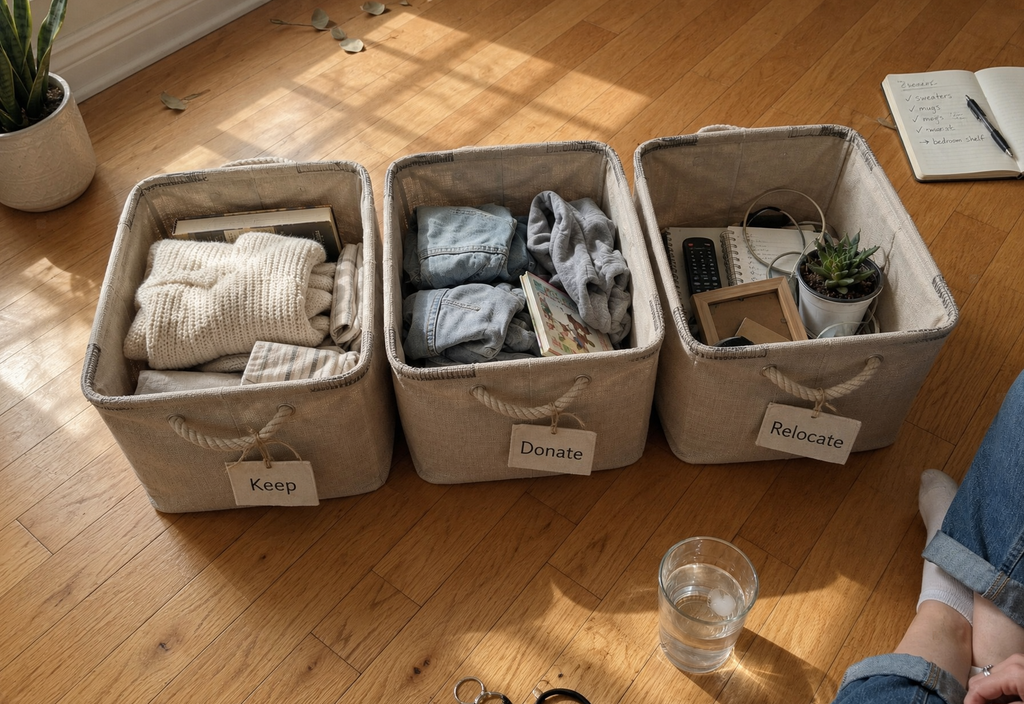
The easiest way to begin is with a quick edit. Pull everything out, then sort it into keep, donate, relocate, and toss. That sounds a little dramatic for a closet, but it works because it forces you to look at the space honestly. Old handbags you never reach for? Donate. Laundry supplies that belong in the bathroom or laundry area? Relocate. Off-season coats in the middle of summer? Store them somewhere else if you can. The only things that should go back in are the items that actually belong there and get used often enough to earn their spot.
A one-bedroom apartment closet is a perfect example. It starts out with a little hanging space, then somehow it’s also holding coats, backup toiletries, old handbags, two mystery shopping bags, and three sweaters nobody has worn since who-knows-when. That’s not a storage system. That’s a closet doing unpaid emotional labor.
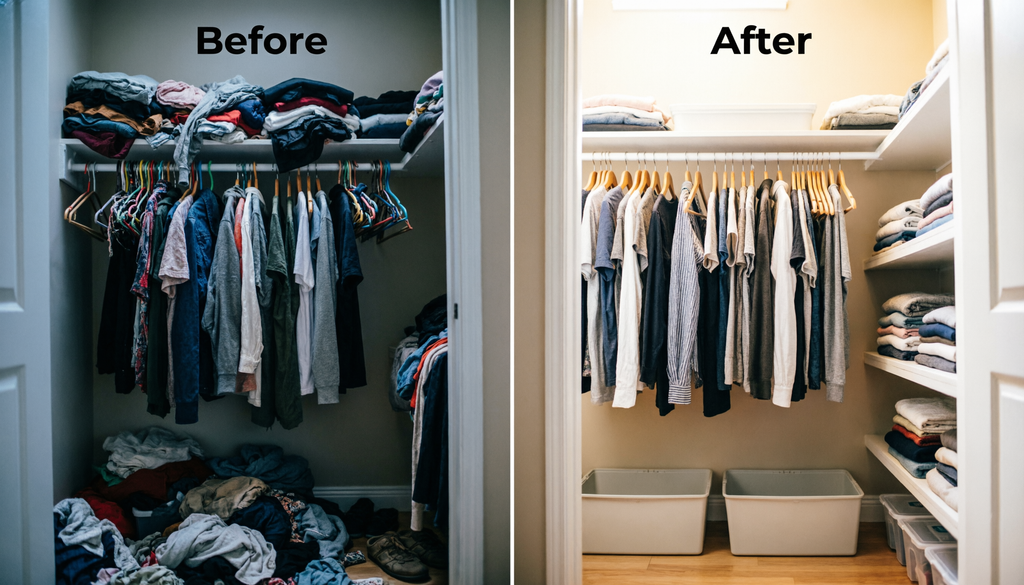
This first step matters because small closet organization is mostly about making better use of limited space. When you remove the extras, you can finally see what the closet is supposed to do. And yes, it may look messier for a few minutes while everything is out on the bed or floor, but that little chaos is what makes the real progress possible.
A practical tip: keep a donation bag nearby while you sort. If something hasn’t been used in ages, don’t let it keep occupying prime closet real estate. The “one-touch” rule helps here too — if you pull it out and already know you don’t need it, don’t put it back just because it’s easier in the moment. Future you will be much happier without the clutter hanging around.
There is one small tradeoff: clearing clutter takes time, and it can feel less satisfying than buying a shiny storage basket. A donation bag or laundry basket can help keep the process moving, especially if you’re sorting in a tight space, but the bag is only useful if it helps you finish the edit. It’s not the star of the show. The clutter purge is.
That’s also why a simple keep/donate/relocate system makes the whole thing easier to repeat later. When every item has a category, you’re less likely to stand there holding a random scarf and thinking, “Well… it lives here now, I guess.” A clear sorting system gives the closet a job, and that makes it much easier to keep tidy after the initial cleanout.
Use the “one-touch” rule
If you haven’t used something in ages, it probably does not deserve front-row seating in a small closet. The one-touch rule is simple: if you pick it up and immediately know you don’t need it, make the decision then and there. Don’t tuck it back in “just for now.” That little habit is how closets quietly fill up again.
This works especially well in small spaces because every item has to earn its place. A bulky coat you wear all winter? Sure. A stack of forgotten bags from three summers ago? Probably not. The less hesitation you allow, the faster the closet becomes usable again.
Make a keep/donate/relocate system easy to follow
The point of this step isn’t perfection. It’s making the closet easier to live with. A simple sorting system prevents the same mess from creeping back two weeks later, which is usually when the “I’ll deal with it later” items start multiplying like rabbits.
Keep one spot for donations, one for things that belong elsewhere, and one for items that are actually staying. If you want to make it even easier, use clearly labeled bins or separate laundry baskets during the sort. That way, you’re not just creating piles on the floor and hoping for the best. Small closet organization works best when the system is simple enough that you’ll actually use it again.
Measure the closet before you organize it
Small closet organization gets a lot less stressful when you stop guessing and start measuring. Tiny closets are extremely picky roommates. A storage idea that looks perfect online can turn into a nuisance if it steals hanging space, blocks the door, or sits there doing absolutely nothing useful.
Before you buy or rearrange anything, measure the shelf height, hanging rod width, floor space, and door clearance. Those numbers tell you what the closet can actually handle, not what you wish it could handle on a good day. That matters because a narrow closet with one short shelf and just enough room for shirts and dresses needs a very different setup from a deeper closet with more vertical space.
A slim hanger might be enough to free up a little room. A hanging shelf can help if the top zone is underused. A small over-the-door organizer makes sense when the door has space to spare. The trick is choosing storage that fits the closet you have, not the fantasy version where everything magically stacks neatly forever.
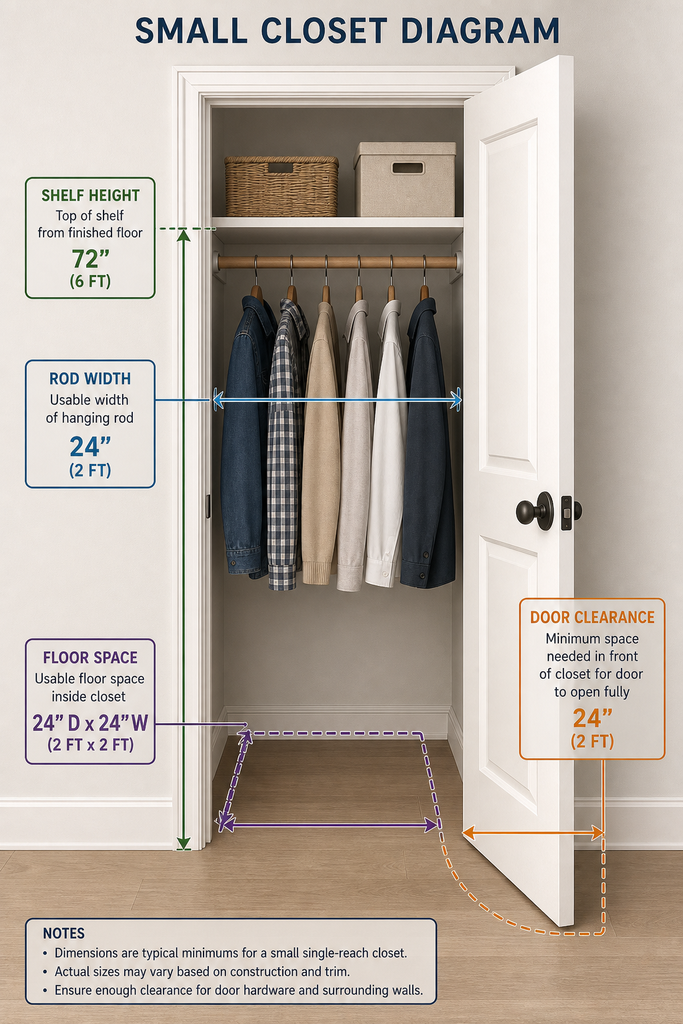
Identify the closet’s strongest zones
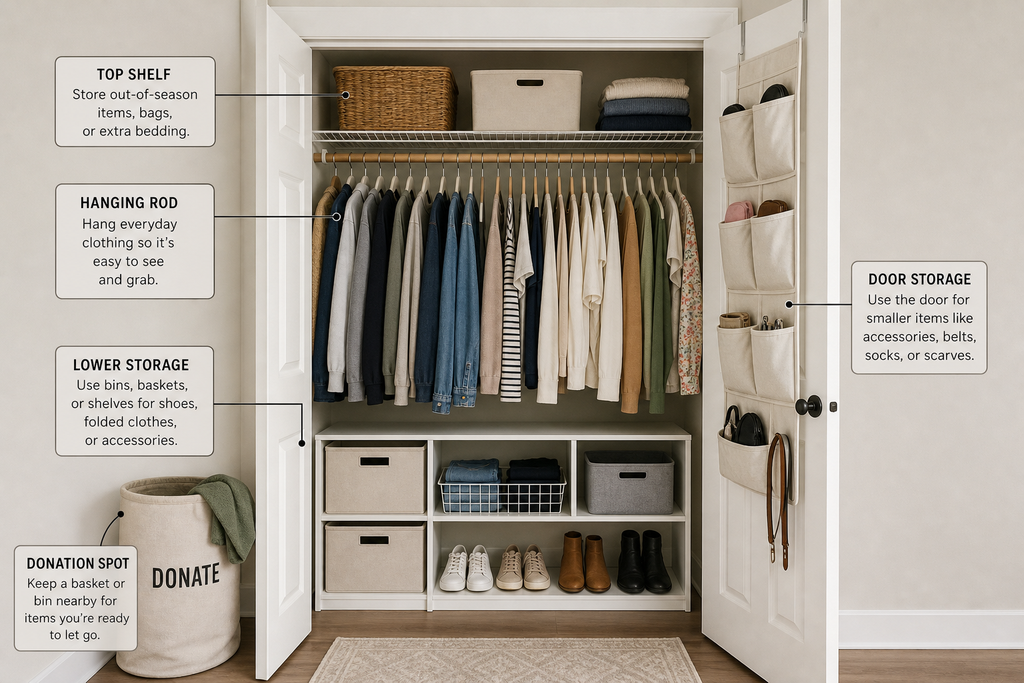
Once you know the measurements, the closet usually starts telling you where things should go. The top shelf is often best for lighter or less-used items. The hanging section is for clothes that wrinkle easily. The floor can handle shoes or a low bin. The door is great for accessories, and the corners are where slim, awkward storage can live without getting in the way.
Decide what each zone should hold
This is where the closet starts becoming useful instead of just full. Clothes up top, shoes below, accessories on the door — simple, but weirdly effective. A little planning here saves a lot of frustration later, because every zone has a job and nothing has to fight for space.
Make vertical space do the heavy lifting
Small closet organization gets a lot easier once you stop treating the closet like a one-layer shelf and start using the height. In a tiny closet, horizontal space disappears fast. That’s usually the first thing to go. One more sweater, one more bag, one more “I’ll figure this out later” item, and suddenly the closet is doing a very dramatic impression of being full.
The fix is to work upward. Double-hang shorter clothes when you can, use shelf dividers to keep stacks from toppling over, and store less-used items higher up where they’re not in your way every day. Hanging organizers can also help turn empty air into actual storage, which is always satisfying in a small space.
A simple example: one long hanging section can become two useful levels. Shirts and blouses go on top, while pants or skirts hang underneath. That one change can make the whole closet feel less cramped without needing a full makeover.
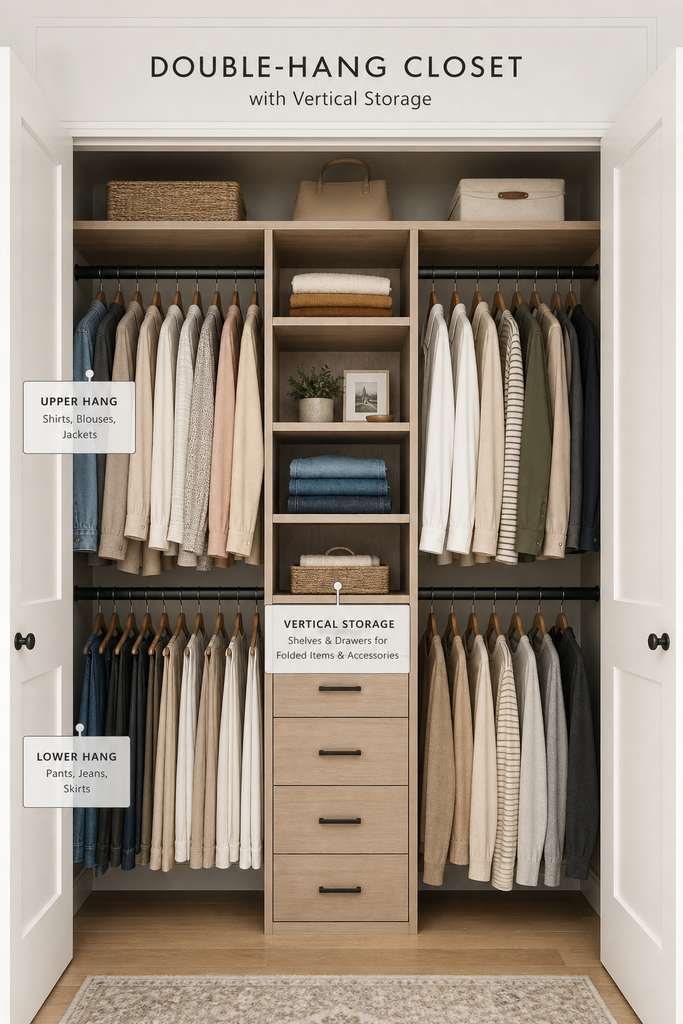
Double-hang for shorter clothes
This works best for shirts, blouses, skirts, and folded pants. A second rod can be a smart product to mention here, especially if the closet has enough height to handle it. Just check the clearance first, because a second rod in the wrong spot can turn into a very fancy obstacle.
Use the top shelf like a storage attic
The top shelf is perfect for off-season items, spare bedding, or anything you don’t reach for every week. Keep the lighter, less-used stuff up there, and save the easy-access spots for the things you actually need. That little swap makes the closet feel calmer fast.
Choose storage that fits the closet, not the aisle at the store
Small closet organization gets tricky when storage products look helpful but quietly steal the space you were trying to save. That giant bin might be cute in the store. In a real closet, though, it can crowd the shelf and make everything harder to reach. Tiny closets are not impressed by “nice-looking” containers. They care about inches.
That’s why slimmer, stackable, or multi-use pieces usually work better. Slim hangers save rod space. Hanging shelves add structure without needing a dresser-sized footprint. Clear bins make it easier to see what’s inside, and drawer inserts or under-shelf baskets help use awkward little gaps without creating clutter. A narrow bin for scarves is often much more useful than three mismatched boxes that eat up the whole shelf.
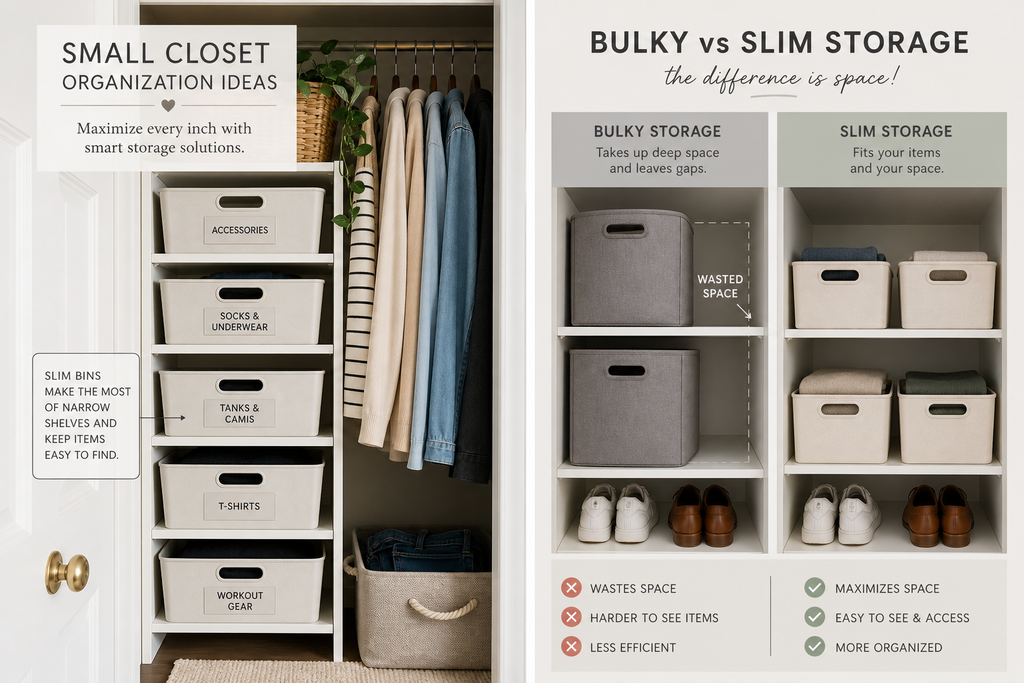
Slim beats bulky in a small closet
A few inches matter more than people expect. Bulky storage can look organized for about five minutes, then it starts making the closet feel crowded again. If a product takes up a lot of room, it should earn its keep by solving a real problem, not just looking tidy.
Clear storage can reduce “mystery clutter”
If you can’t see it, you may forget it exists. Clear bins are especially handy for accessories, seasonal items, or folded extras that tend to disappear into the back of the shelf. Just check whether you prefer everything visible or whether you’d rather hide visual clutter behind a label. Both work — the best choice is the one you’ll actually maintain.
Don’t ignore the floor, door, and weird little gaps
Small closet organization gets much easier when you stop looking only at the obvious spots. Closets have a funny way of hiding useful space in the places we overlook: the door, the floor, the corners, and those awkward little gaps that seem too small for anything useful. That dead space adds up fast.
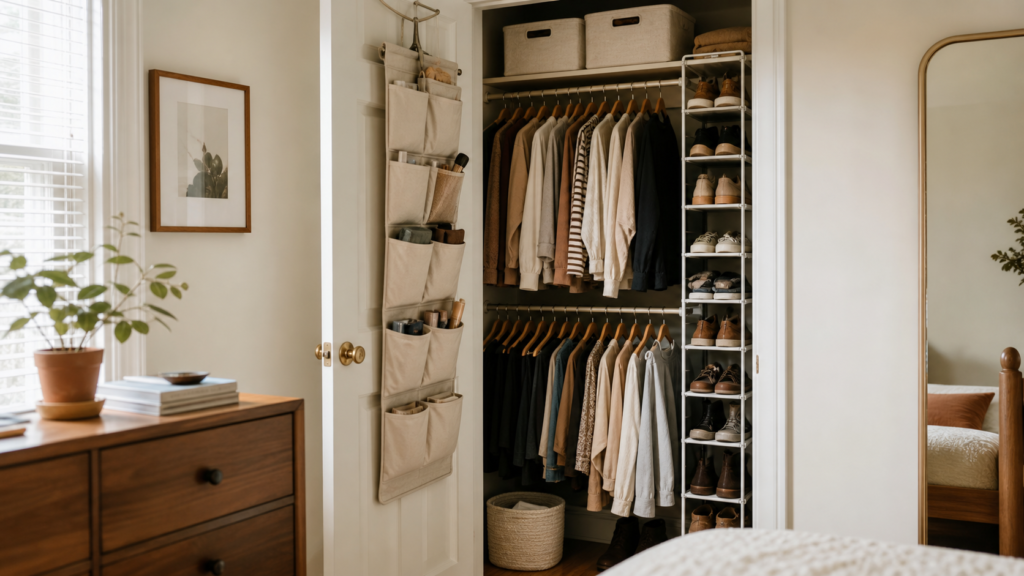
The door is a great place to start. Over-the-door hooks or organizers can hold belts, scarves, bags, or even shoes, depending on how much room you have. If the floor is the only open area left, keep it useful instead of messy. A narrow shoe rack or a pair of tidy bins under hanging clothes can do a lot without making the closet feel cramped. Slim baskets in corners can also catch the random things that always seem to wander off on their own.
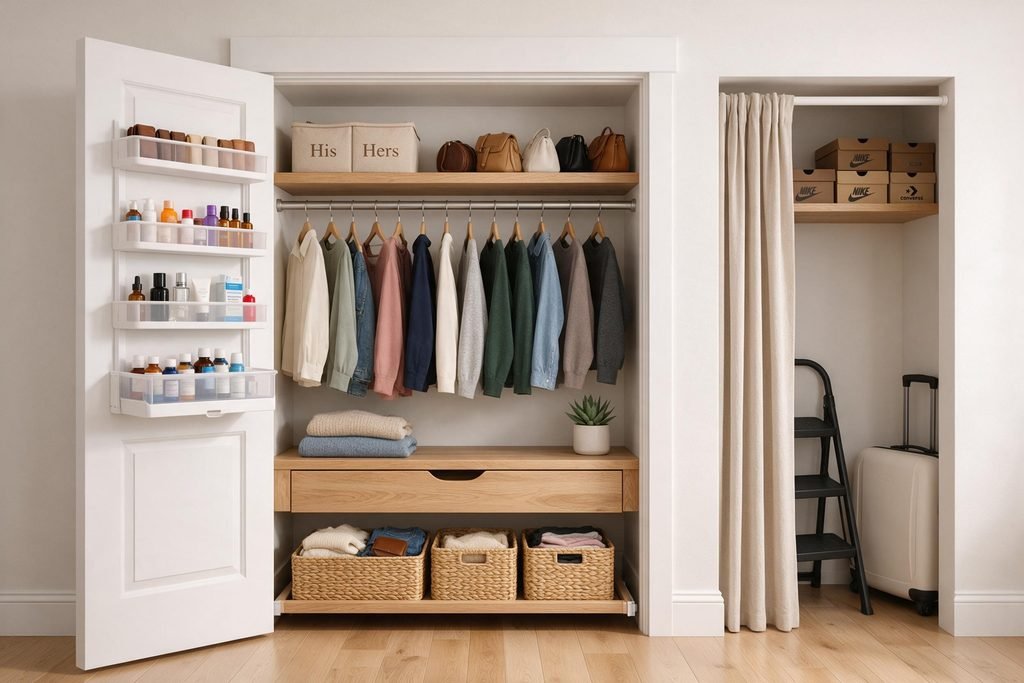
A realistic example? A narrow closet floor might fit a small shoe rack and still leave enough room for a couple of bins underneath the hanging section. That’s the kind of setup that quietly makes everyday life easier.
The tradeoff is simple: these spots can turn into clutter traps if you overfill them. A practical tip is to give each hidden space one job and stop there. That keeps the closet useful instead of turning it into a pile of “I’ll deal with that later” energy.
Make use of the door
The door is great for belts, scarves, bags, or shoes. It’s one of the easiest places to add storage without touching the main hanging area, which makes it especially useful in tight closets. Just make sure the organizer still lets the door open and close smoothly.
Use the floor without turning it into a pile
The goal is storage, not a mountain of “I’ll deal with that later.” A small shoe rack, a basket, or a low bin can help keep the floor intentional instead of random. Once the floor starts doing useful work, the whole closet feels calmer.
Make your closet easier to maintain every week
A small closet organization system only works if it’s easy to live with. That’s the part people forget. A closet can look great on a Sunday afternoon and still fall apart by Wednesday if there’s no simple upkeep routine built in. The goal is not perfection. It’s making the closet easy enough to reset without needing a full life overhaul.
The best approach is to build tiny habits that barely feel like chores. Put things back where they belong before they start migrating to the floor. Do a quick five-minute reset once a week. Keep one donation bag nearby so anything that no longer fits, gets worn, or earns its keep has a place to go right away. Every few months, revisit seasonal items and pull out anything you’re not using anymore.
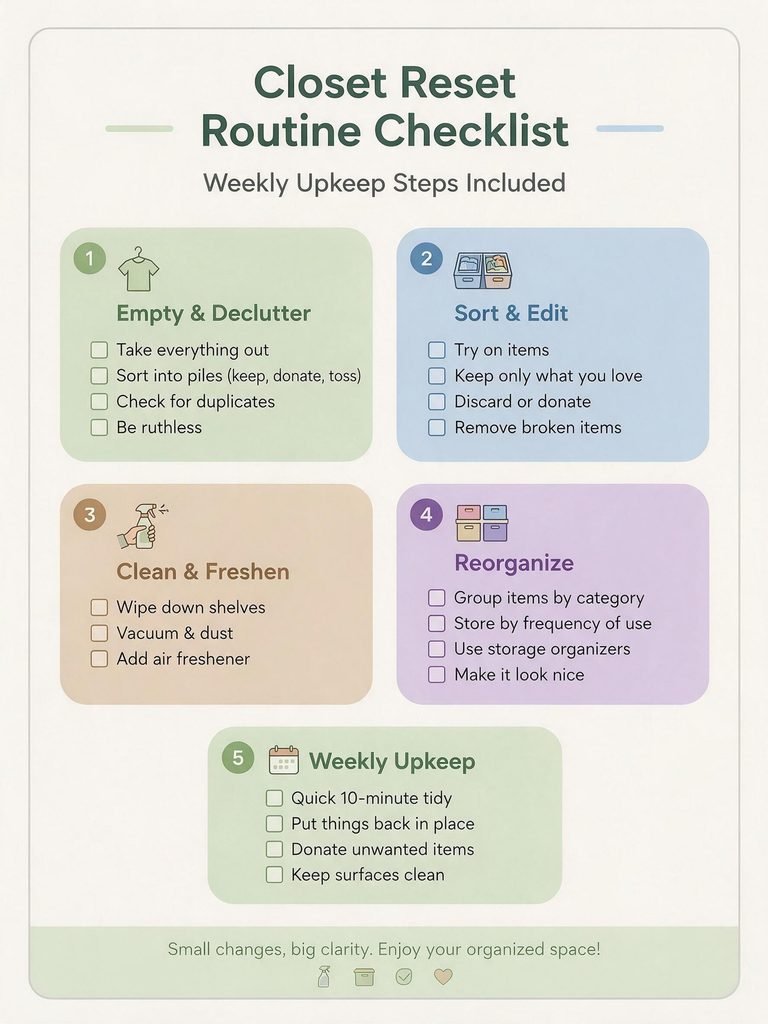
A realistic example is a quick Sunday tidy-up that keeps the closet from becoming a disaster again by Wednesday. Not glamorous, but extremely effective.
Use a donation bag as a standing habit
If something doesn’t fit or hasn’t been worn in forever, it goes in the bag. A hamper or donation bin can help here if you need a dedicated spot, especially in a small room where clutter likes to multiply.
Make the system easy enough to stick with
Fancy organization is useless if it’s annoying to maintain. The easier the system, the more likely it is to survive real life — which is kind of the whole point.
Small closet organization mistakes to avoid
A lot of small closet organization frustration comes from setup mistakes, not from the closet itself. When the space feels impossible, the problem is often that it’s been asked to hold too much, in too many awkward ways, for too long. Tiny closets are not magic. They need a plan that fits the space they actually have.
The biggest traps are easy to spot once you know them: oversized bins that crowd the shelf, shelves packed so full nothing can be reached, long clothes hanging together with no breathing room, random category mixing, and those “just in case” items that somehow live rent-free forever. A closet can look neat from the doorway and still be a headache to use if everything is stuffed in too tightly. That’s the sneaky part.
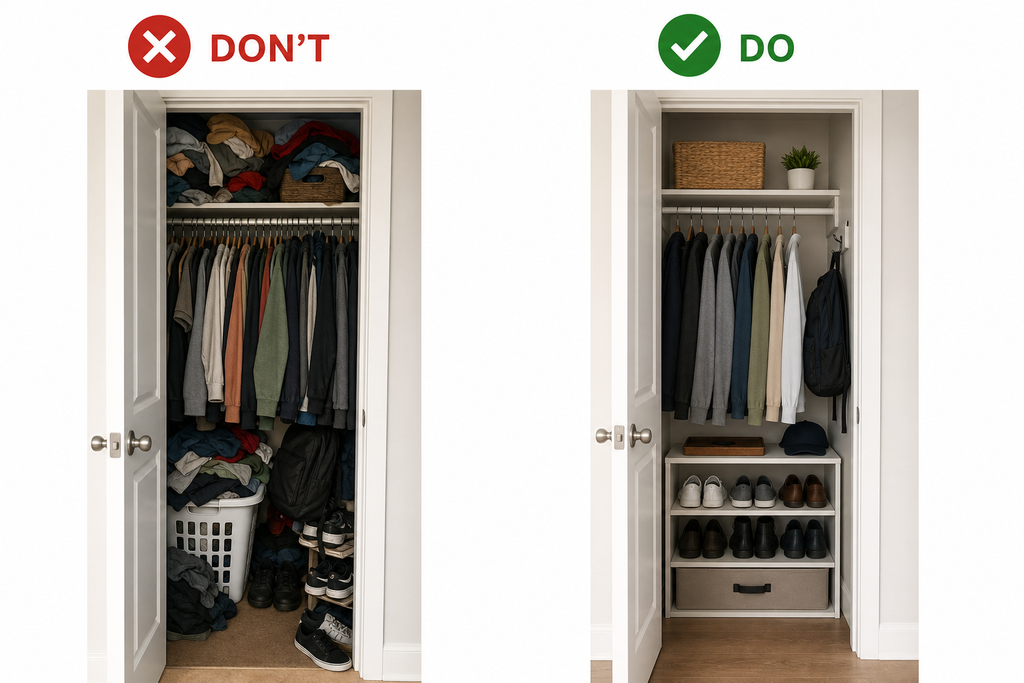
Don’t organize clutter
First edit, then organize. If something doesn’t belong in the closet, no storage box will make it behave.
Don’t make every item hard to reach
Convenience matters more than perfection in a small space. If you need to dig through three layers of stuff to find one shirt, the system is too packed.
A practical tip: if a product seems bulky, ask whether it solves a real problem or just creates a prettier version of the same clutter. Small spaces tend to reward simplicity, not ambition.
A simple small closet setup you can copy today
By the time you’ve cleaned out the clutter, measured the space, and stopped buying bins with big dreams, the closet is finally ready for a simple system. That’s the part readers usually need most: not more ideas, just a setup they can actually copy without overthinking it.
For small closet organization, a basic starter layout goes a long way. Keep off-season items on the top shelf, hang everyday clothes on the rod, use the lower space for shoes or a couple of bins, and let the door handle the smaller stuff like accessories or compact odds and ends. Add one catch-all spot for laundry or donations, and suddenly the closet has a job for every zone. No drama, no guesswork.
A single-bedroom apartment closet with no built-ins can still feel surprisingly calm with this kind of structure. It may not look like a magazine spread, but it works in real life, which is much more useful on a Tuesday morning.
The bare-minimum version
This is for anyone who wants a quick win, not a full closet makeover. Use what you already have, keep the categories simple, and don’t stress about making everything match.
The slightly more polished version
If you want the closet to feel a little neater, add a few essentials like slim hangers, one or two labeled bins, or a small over-the-door organizer. Just keep it light. The goal is a system that feels tidy without becoming fussy, because small spaces tend to reward practical over perfect.
Small closet organization works best when you stop trying to make the closet do more than it can. Clear out the extras, measure the space, use height wisely, choose storage that actually fits, and make the whole thing easy to maintain. That’s really the heart of it: a closet doesn’t need to be perfect, it needs to be useful.
Start with one small change — maybe a quick declutter, maybe moving things to the top shelf, maybe finally putting the donation bag to work. Little wins add up fast in a small space.
Decluttering a small bedroom
How to organize a small bedroom
The best system is the one that matches your closet, your routine, and your level of patience on a busy morning.
What’s the first tiny change you’re going to make?